
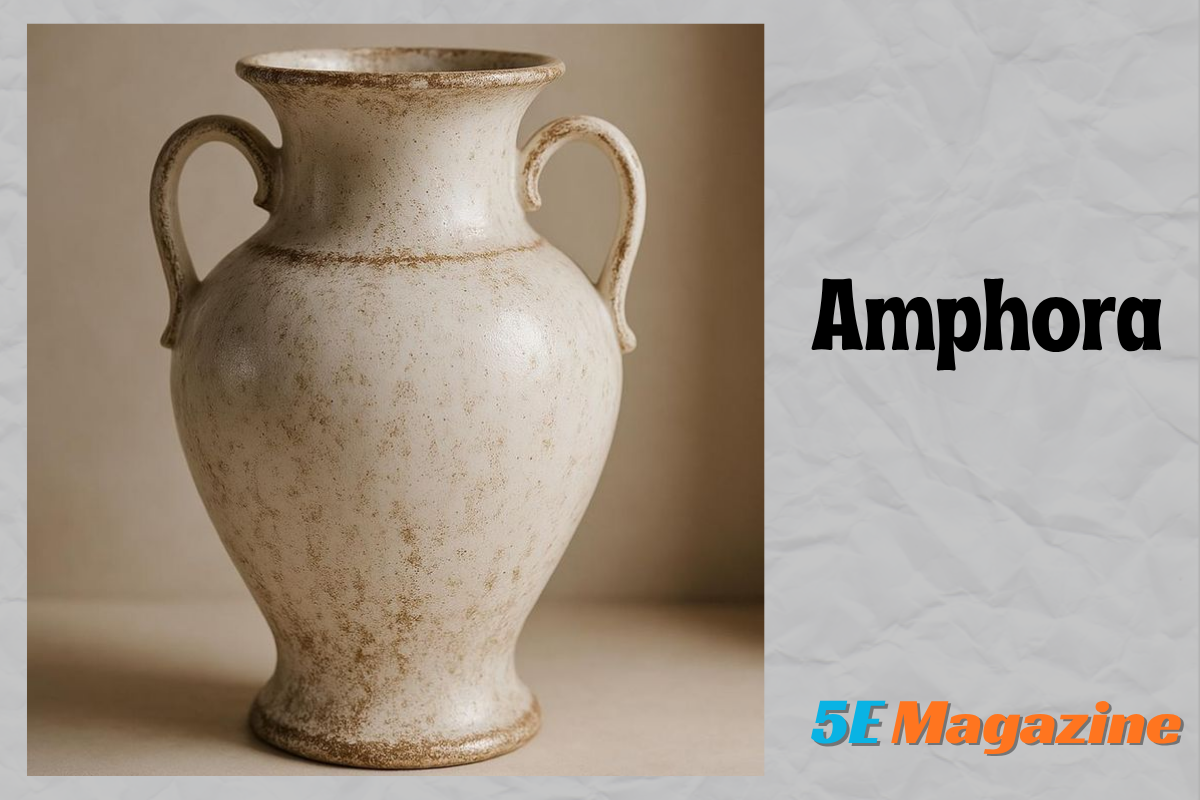
An amphora is one of the most recognizable vessels from the ancient Mediterranean world. Usually made from clay, it has two handles, a relatively narrow neck, and a body designed to hold or transport goods. Amphorae were widely used by ancient Mediterranean societies and are especially associated today with ancient Greece and Rome.
These vessels were far more practical than their elegant shape might suggest. Many amphorae served as containers for valuable products, particularly wine and olive oil. Other examples carried foods and preserved products. Transport amphorae could travel considerable distances as part of Mediterranean commerce.
Not every amphora looked alike or served the same purpose. Shape, size, decoration, and construction varied according to place, period, and use. Understanding those differences helps explain the amphora’s history, design, types, capacity, production, role in trade, and lasting importance to archaeology.
What Is an Amphora?
In simple terms, an amphora is a two-handled ceramic vessel used in the ancient world, often for storing or transporting products. A typical example has a mouth at the top, a narrow neck, two vertical handles, shoulders, a larger body, and a base or pointed lower end.
Although museums may classify amphorae among ancient vases, “amphora” is more specific than the general word vase. Amphorae belonged to recognizable vessel traditions and appeared in many forms across different regions and centuries.
The traditional plural of amphora is amphorae, although “amphoras” is also used in modern English.
The Meaning and Origin of the Word Amphora
The English word amphora ultimately comes from Greek. The ancient Greek term is connected with the idea of being carried on both sides, a fitting description of a vessel equipped with two handles.
In English, amphora is commonly pronounced roughly as AM-for-uh. Archaeologists and historians now use the term for a broad range of related ancient vessels rather than one single standardized container.
The History of Amphorae in the Ancient World
The amphora has deep roots in Mediterranean pottery traditions. Its design was used by major trading cultures and became particularly important in the Greek and Roman worlds. Greek communities used amphorae for storage, transport, prizes, and other purposes. The Romans continued using transport amphorae on a very large scale as commerce connected regions throughout their territories.
The design did not remain unchanged. Amphorae made in different production centers developed recognizable shapes. Some became taller and slimmer, while others had rounder bodies or different handles and bases.
For this reason, there is no single “ancient amphora” design that represents every example ever made.
The Distinctive Shape and Design of an Amphora
The two handles are the feature most closely associated with an amphora, but the rest of its design mattered too. The mouth provided access to the contents, while the neck could make pouring and sealing easier. The shoulders connected the neck to the wider body, where most of the contents were held.
Many transport amphorae were tall and relatively narrow. Handles made them easier to lift and manage. Some had pointed or tapered lower ends rather than the flat bases familiar from modern bottles and jars. Such forms could work well with ancient systems of packing and storage. The Met notes that transport amphorae could have thick walls, narrow mouths and tapered feet suited to efficient transport and storage.
Shape could also provide clues about where a vessel was made and what it was intended to carry.
What Amphorae Were Used For?
Storage and transportation were among the most important amphora uses. Wine and olive oil are particularly well documented, but amphorae could also contain products such as fish sauce, preserved fruit, olives and other foods.
Not every amphora was a commercial shipping container. Some were decorated, used in special settings, or created for particular purposes. Panathenaic prize amphorae, for example, contained valuable olive oil awarded to winners at Athens’ Panathenaic Games.
The word therefore describes a family of vessels whose functions extended beyond simply storing wine.
Greek Amphorae and Their Role in Ancient Greece
Greek amphorae appeared in both everyday and special contexts. Plain transport vessels moved commodities, while more carefully decorated amphorae could serve different social, ceremonial, or artistic purposes.
Some Greek amphorae carried elaborate painted scenes. Surviving examples show people, animals, mythology, athletics, and other subjects. A Corinthian neck amphora dating to around 620–590 BCE, for example, is decorated with animals and plant patterns.
Panathenaic amphorae had an especially clear function. Winners in the Panathenaic Games received vessels containing olive oil from sacred Attic groves. Their decoration traditionally included Athena on one side and the relevant athletic event on the other.
Roman Amphorae and Mediterranean Trade
Under Roman rule, amphorae became important evidence of large-scale Mediterranean commerce. Ships and other transport systems moved vessels filled with products between producing regions and distant markets.
Wine and olive oil were especially significant. A Roman wine amphora at The Metropolitan Museum of Art came from a shipwreck whose cargo contained roughly 1,200–1,500 wine amphorae and was apparently headed toward markets in Gaul.
Roman amphorae can also carry stamps and painted markings. Such evidence may help researchers identify producers, contents, weights, shipping information, or places of origin, depending on the particular marking and context.
Major Types of Amphorae
There was no universal classification covering every amphora in exactly the same way. Archaeologists instead use shape, origin, date, function, and other characteristics to organize surviving examples.
Two broad Greek forms are the neck amphora, where the neck is visibly distinct from the body, and the belly amphora, whose profile flows more continuously from neck into body. Transport amphorae form another important functional group.
Panathenaic amphorae were special prize vessels associated with Athens. Roman amphora research also commonly uses typologies connected with Heinrich Dressel. The well-known Dressel 20 form, for example, is strongly associated with olive oil exported from Baetica in southern Spain.
These categories should not be treated as variations of one fixed template. Amphora forms developed over long periods and in many production regions.
How Amphorae Were Made?
Amphorae were generally ceramic vessels made from clay. Potters shaped their components and assembled them before firing the completed vessel in a kiln. Handles were attached to the body, and surfaces could be left relatively plain or given more elaborate finishing and decoration.
Production depended heavily on purpose. Commercial transport containers needed to function reliably and could be produced in large numbers. Decorated vessels demanded additional attention from potters and painters.
Differences in clay, manufacturing methods, shape, and markings can now help archaeologists investigate where ancient amphorae originated.
Amphora Size and Capacity
There is no single capacity that applies to every amphora. Dimensions varied substantially with time, region, vessel type, and purpose.
A general transport amphora might hold around a few tens of liters, but individual types could differ considerably. The term amphora was also connected with ancient units of capacity, which can create confusion when a historical measurement is treated as though it described every physical amphora.
Panathenaic prize amphorae illustrate why specific context matters. Examples used for the Panathenaic Games held roughly 38–40 liters of olive oil.
So the best answer to “How much did an amphora hold?” is: it depends on which amphora is being discussed.
Amphorae as Ancient Shipping Containers
Transport amphorae performed a role that can loosely be compared with standardized commercial packaging today. They protected goods while allowing them to be handled, stored, and transported.
Their importance is especially visible underwater. Ancient shipwrecks have preserved groups of amphorae that once formed commercial cargoes. One wreck investigated near southern France contained Roman wine amphorae, while other discoveries across the Mediterranean demonstrate how widely such containers traveled.
Because the containers often survive after their contents disappear, amphorae provide unusually durable evidence of ancient shipping.
Decorated Amphorae and Everyday Transport Amphorae
The beautifully painted Greek amphora seen in a museum can create a misleading impression that all amphorae were works of decorative art.
Many were not. Ordinary transport amphorae were practical commercial containers. Their value lay mainly in what they could store and move. Decorated amphorae, by contrast, could feature carefully planned imagery and have ceremonial, commemorative, funerary, or other specialized roles.
Recognizing this difference makes the amphora easier to understand: it could be an artistic object, but for much of ancient life it was also practical packaging.
What Amphorae Reveal to Archaeologists?
Even a broken amphora can provide useful evidence. Its shape, clay, handle, rim, base, manufacturing details, or markings may help specialists classify it and investigate when and where it was produced.
Stamped examples can be particularly informative. A Rhodian amphora in The Met, for instance, carries handle stamps naming a magistrate, a month, and the maker.
When archaeologists compare large numbers of finds from different locations, patterns can emerge. These patterns help researchers investigate trade routes, production centers, consumption, chronology, and economic connections between ancient communities.
Famous Amphora Finds and Surviving Evidence
Amphorae have been recovered from settlements, ports, tombs, warehouses, and shipwrecks. Large concentrations can be particularly revealing because they provide evidence on a scale that individual museum pieces cannot.
One remarkable example is Monte Testaccio in Rome, an artificial mound made largely from discarded amphora fragments. Much of the material consists of Dressel 20 vessels associated with olive oil imported from Baetica. The site offers important evidence for the enormous scale and organization of Roman oil supply.
Shipwreck finds provide another kind of evidence by preserving cargoes that were traveling together when a vessel sank.
Amphora, Amphorae, and Similar Ancient Vessels
Amphora is singular, while amphorae is the traditional plural. Modern English also accepts amphoras.
An amphora should not automatically be identified simply because an ancient jar has handles. Ancient Mediterranean pottery included many vessel forms intended for different tasks. Archaeological classification considers features such as the rim, neck, handles, body, base, clay, production tradition, and archaeological context.
This is why two vessels that look broadly similar to a modern viewer may receive different archaeological names.
Conclusion
The amphora was much more than an attractive ancient vase. Its two handles and distinctive body formed part of a practical container that helped ancient societies store goods, move valuable products, and support trade across the Mediterranean.
At the same time, amphorae could take on artistic and ceremonial roles, as the decorated vessels of ancient Greece demonstrate. Their forms differed across regions and centuries, so no single shape, size, or capacity defines every example.
Today, surviving amphorae offer something their makers could hardly have intended: a durable record of ancient life. From a painted Greek prize vessel to thousands of broken Roman oil containers, amphorae help reveal what people produced, consumed, transported, valued, and exchanged across the ancient Mediterranean.
FAQs
Is an amphora the same as a vase?
An amphora can be described broadly as a type of ancient vase or jar, but the term is more specific. It traditionally refers to a recognizable two-handled vessel form.
What is the plural of amphora?
The traditional plural is amphorae. The English plural amphoras is also used.
What were amphorae mainly used for?
Many amphorae were used for storing and transporting products, particularly wine and olive oil. Other goods were carried as well.
Why did amphorae have two handles?
The handles made vessels easier to grip, lift, carry, and manage. The name itself is connected with the idea of carrying on both sides.
Why did some amphorae have pointed bottoms?
Pointed or tapered bases were characteristic of many transport forms and suited ancient methods of packing and storing vessels. Not all amphorae had pointed bottoms.
Were amphorae used only for wine?
No. Amphorae carried olive oil, fish products, preserved foods, and various other goods in addition to wine.
How much could an amphora hold?
There was no universal capacity. Many transport amphorae held quantities measured in tens of liters, but capacity depended on the specific type and period.
Did both Greeks and Romans use amphorae?
Yes. Amphorae were important in both Greek and Roman societies, as well as in other Mediterranean cultures.
Why are amphorae important to archaeologists?
Their shapes, materials, stamps, inscriptions, locations, and surviving contents or residues can provide evidence about chronology, production, trade, diet, and economic connections.
Are ancient amphorae still being discovered today?
Yes. Archaeological investigations continue to uncover amphorae and fragments at terrestrial and underwater sites. Even fragments can add useful evidence when their archaeological context is properly recorded.
