
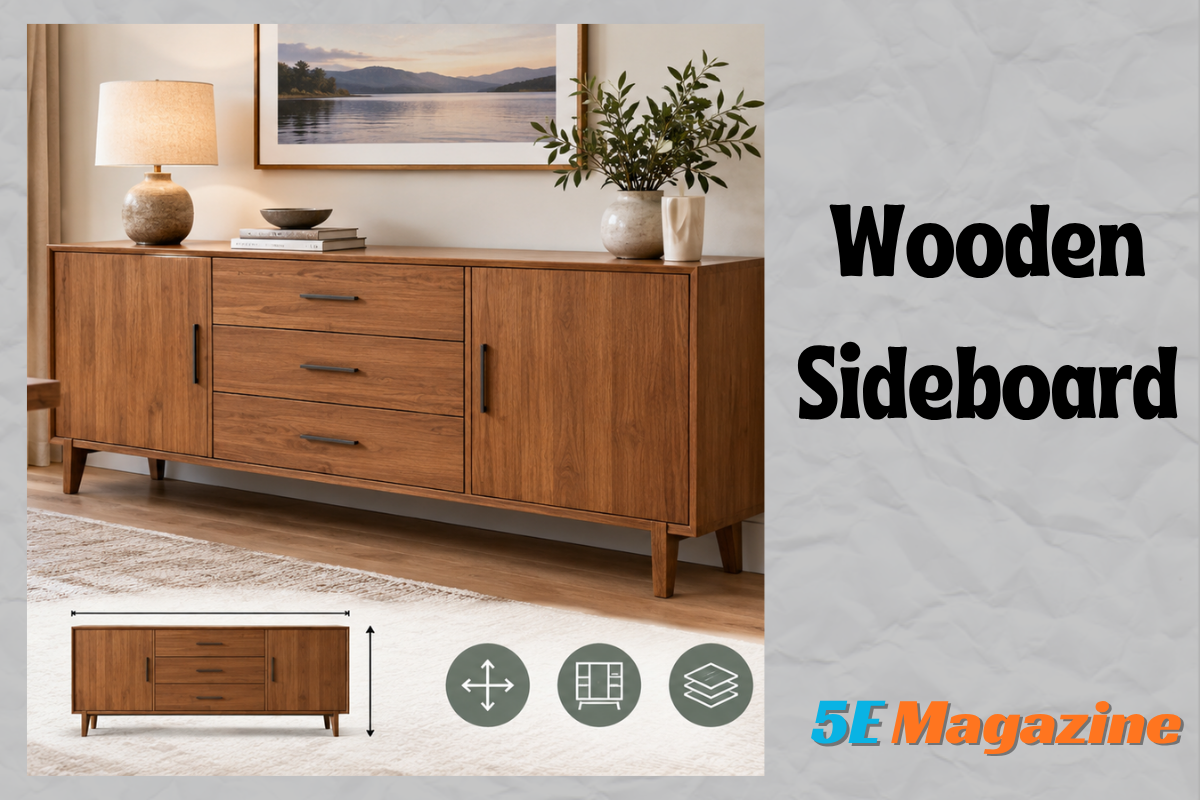
A sideboard influences more than storage. Its width can bring structure to an empty wall, its finish can introduce warmth, and its surface can provide a setting for lighting or artwork. Choosing one well means considering how the furniture will serve everyday life and how it will sit within the wider room.
Before focusing on decorative details, think about what needs storing, where the piece will stand and how much space surrounds it. These decisions make it easier to find a sideboard that feels considered rather than simply impressive in a photograph.
Start with Space and Proportion
Measure the available wall, then check the proposed width, height and depth. A sideboard should have enough presence to anchor its position without restricting movement or competing with nearby furniture. In a dining room, allow for chairs being pulled out and people passing behind them.
Door and drawer clearance deserves equal attention. A cabinet may fit against the wall yet become awkward when opened. Mark its footprint with masking tape and test the surrounding routes before ordering. Check skirting boards, sockets and radiators, which can affect placement.
When comparing sideboards from sideboards from K&B London consider the base as well as the dimensions. Raised legs expose more floor and can make a broad cabinet appear lighter, while a substantial plinth gives the furniture a more grounded presence.
Choose Storage for the Way You Live
The exterior tells only part of the story. Shelves can accommodate dinnerware and serving pieces, while drawers provide useful separation for cutlery, table linen or smaller belongings. Check internal measurements rather than assuming that a wide cabinet will hold everything comfortably.
In a living room, identify the objects you would prefer to keep out of sight. Books, games and paperwork require different arrangements from tall glassware. Adjustable shelves can offer flexibility, but their availability depends on the individual design.
Consider how often the contents will be used. Everyday items should be easy to reach, and heavier objects are generally better kept lower down. Follow the manufacturer’s guidance on loading and any wall fixing required.
Let Materials Define the Character
Wood brings grain, tonal variation and a natural visual rhythm. Pale finishes can sit comfortably within restrained interiors, while darker tones create a stronger focal point. A sideboard does not need to match the dining table exactly; a related undertone can connect the pieces without making the scheme feel uniform.
Exploring wooden cabinets and storage furniture can help clarify which forms and finishes suit the room. Read each specification carefully: solid timber, real wood veneer and engineered components describe different aspects of construction. A photograph alone cannot establish the complete material composition.
Metal introduces another layer of expression. Warm brass tones can complement timber and soft upholstery, while silver finishes offer a cooler contrast. Fluted, sculpted or textured fronts create interest through the way light moves across the surface.
For a more architectural accent, compare metal sideboards and cabinets with simpler surrounding furniture. Check whether the finish is solid metal, plated, coated or combined with other materials, and follow the care instructions for that particular piece.
Delivery access is another practical consideration. Measure doorways, corridors and stair turns, and confirm whether the cabinet arrives assembled. Ask about its weight and installation requirements before arranging delivery. Planning these details early protects the purchase from becoming a logistical problem and helps you position the furniture safely in its intended place within your home.
Style the Surface with Restraint
A sideboard already occupies a significant visual area, so its top rarely needs many objects. A table lamp, a ceramic vessel and a small stack of books can establish variation in height while leaving the finish visible. Keep part of the surface clear for practical use.
Artwork or a mirror above the cabinet should relate to its scale and position. Consider the arrangement from the doorway and from the seating area, checking that it feels balanced from both viewpoints.
The strongest choice combines useful storage, comfortable access and a material palette that belongs in the room. When these elements work together, a sideboard becomes a lasting part of the interior rather than an isolated decorative purchase.
