
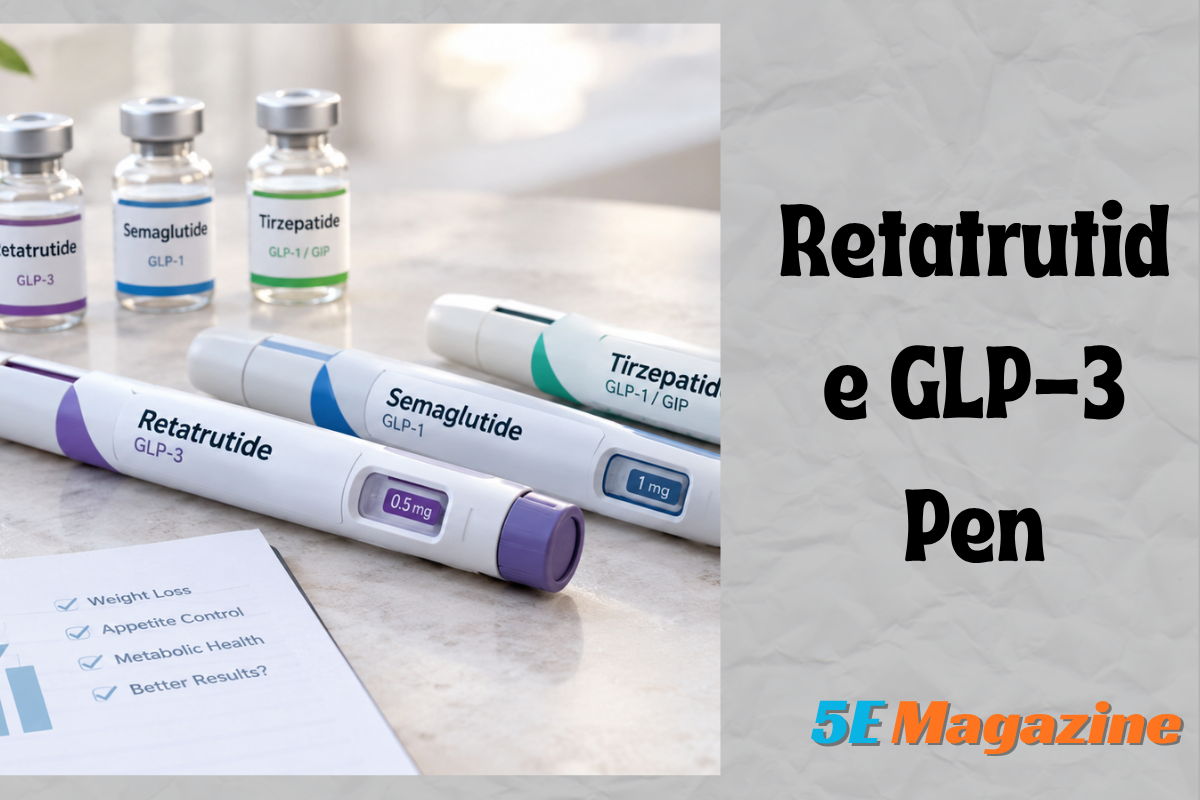
Semaglutide and tirzepatide have become familiar names in peptide and metabolic research. Retatrutide, meanwhile, has attracted growing attention because it takes a different approach by interacting with three receptor pathways rather than one or two.
This is also where the term Retatrutide GLP-3 Pen has started appearing more frequently in online discussions. The name can be confusing, particularly for people who already understand terms such as GLP-1 and GIP but are less familiar with retatrutide.
So, what actually makes these compounds different?
The simplest way to understand them is to look at the receptor pathways they target. Semaglutide primarily focuses on GLP-1, tirzepatide acts on GLP-1 and GIP, while retatrutide is designed to interact with GLP-1, GIP and glucagon receptors.
Starting With Semaglutide
Semaglutide is probably the easiest starting point because it represents the single-pathway approach.
It is a GLP-1 receptor agonist, meaning its primary research focus is the GLP-1 signalling pathway. GLP-1 is a naturally occurring hormone involved in several physiological processes, including appetite regulation, glucose metabolism and gastrointestinal activity.
Researchers became particularly interested in semaglutide because of the way GLP-1 receptor activation influences these processes.
From a research perspective, semaglutide is therefore useful as a reference point. When researchers investigate newer multi-pathway peptides, semaglutide often provides a familiar comparison because its mechanism is centred around one major receptor pathway.
This does not mean that a single-pathway peptide is automatically less useful than a multi-pathway compound. It simply represents a different research strategy.
Where Tirzepatide Fits In
Tirzepatide moves beyond the GLP-1-only model.
It has activity at both the GLP-1 and GIP receptors, which is why it is commonly described as a dual agonist. GIP stands for glucose-dependent insulinotropic polypeptide and is another naturally occurring hormone involved in metabolic signalling.
The combination of GLP-1 and GIP activity makes tirzepatide particularly interesting from a research perspective.
Instead of studying one receptor pathway in isolation, researchers can investigate how two related pathways interact when targeted by the same peptide.
This makes tirzepatide an important step in the development of multi-receptor peptide research. It also provides a useful bridge between compounds such as semaglutide and newer candidates such as retatrutide.
What Makes Retatrutide Different?
Retatrutide takes the multi-pathway concept one step further.
It is designed to activate three receptor pathways:
- GLP-1
- GIP
- Glucagon
This is why retatrutide is generally described as a triple agonist.
The addition of glucagon is one of the main features that separates retatrutide from semaglutide and tirzepatide.
Glucagon plays an important role in energy regulation and glucose metabolism. By incorporating glucagon receptor activity alongside GLP-1 and GIP activity, researchers can investigate a broader combination of metabolic signalling pathways within a single peptide.
This three-pathway approach is the main reason retatrutide has generated so much interest in current peptide research.
Why Is It Sometimes Called a “GLP-3 Pen”?
The phrase “GLP-3” can create some confusion.
Retatrutide is sometimes referred to online as a GLP-3 or “GLP-3 peptide”, but this is not an official scientific classification of a third GLP hormone. The term is largely used as an informal way of distinguishing retatrutide from better-known GLP-1-based compounds.
The scientifically useful description is that retatrutide is a triple receptor agonist targeting GLP-1, GIP and glucagon receptors.
Similarly, when people use the term Retatrutide GLP-3 Pen, they are generally referring to a pen-format research product containing retatrutide. The “GLP-3” wording is more of a market or informal research-community term than a formal pharmacological category.
Understanding this distinction makes it easier to separate terminology from the actual mechanism being researched.
A Simple Side-by-Side Comparison
Looking at the three compounds together makes the differences easier to understand.
Semaglutide
Primary activity: GLP-1 receptor
Semaglutide represents a GLP-1-focused approach. It has been extensively studied and is useful as a reference compound when looking at newer peptide candidates.
Tirzepatide
Primary activity: GLP-1 + GIP receptors
Tirzepatide adds GIP activity to GLP-1 signalling. This makes it a dual agonist and an important example of multi-receptor peptide research.
Retatrutide
Primary activity: GLP-1 + GIP + glucagon receptors
Retatrutide adds glucagon receptor activity to the GLP-1 and GIP combination. This gives researchers another layer of metabolic signalling to investigate.
The key difference is therefore not simply that one compound is “newer” than another. It is that each one represents a different receptor-targeting strategy.
Why Researchers Compare All Three
Comparing these compounds can help researchers understand how different receptor combinations influence biological responses.
Semaglutide provides a single-pathway GLP-1 model.
Tirzepatide provides a two-pathway GLP-1/GIP model.
Retatrutide provides a three-pathway GLP-1/GIP/glucagon model.
This creates an interesting progression for peptide research. Instead of looking at each receptor independently, researchers can examine how combinations of pathways may produce different physiological effects.
For anyone researching these compounds, this progression is more useful than simply asking which peptide is the strongest.
There is no universal answer to that question because research objectives differ. A compound designed to interact with three receptors is not automatically the right choice for every research application.
What Should Researchers Consider?
Mechanism is only one part of evaluating a research peptide.
Researchers also need to consider factors such as identity, purity, batch information, storage requirements and available analytical documentation.
For example, a reputable research-peptide supplier should be able to provide meaningful information about the material being supplied rather than relying solely on marketing terminology.
This is one area where suppliers such as British Peptides can be useful for researchers looking for clearly presented product and batch information.
A certificate of analysis, where available, can provide additional information about the testing associated with a particular batch. Researchers should still understand what the document actually shows rather than treating the presence of a COA as an automatic guarantee of every aspect of product quality.
How Retatrutide Fits Into Modern Peptide Research
The development of compounds such as semaglutide, tirzepatide and retatrutide shows how peptide research has increasingly explored combinations of biological pathways.
Semaglutide demonstrates what can be studied through GLP-1 receptor activity.
Tirzepatide expands that research into GLP-1 and GIP signalling.
Retatrutide adds glucagon receptor activity to the same general framework.
This progression does not necessarily mean that research is moving towards replacing older compounds. Instead, it gives researchers more models for studying complex metabolic signalling.
For beginners, this is perhaps the most important point to understand. The difference between these compounds is primarily about what receptors they interact with, rather than simply which one has the most impressive reputation online.
Research Material Is Not the Same as an Approved Medicine
Another important distinction is the difference between a research peptide and an approved medicine.
Research-grade materials may be supplied for laboratory and scientific research purposes, while medicines are subject to specific regulatory requirements for their intended use.
Anyone reading about a Retatrutide GLP-3 Pen should therefore avoid assuming that a product’s format or marketing terminology means it is an approved treatment.
The same principle applies when comparing research versions of semaglutide, tirzepatide or retatrutide with regulated pharmaceutical products.
The Bigger Picture
Semaglutide, tirzepatide and retatrutide are useful examples of how peptide research has developed from single-receptor approaches towards increasingly complex combinations of biological pathways.
Semaglutide focuses on GLP-1.
Tirzepatide combines GLP-1 and GIP.
Retatrutide combines GLP-1, GIP and glucagon activity.
That difference is the key to understanding where retatrutide fits into the wider research landscape.
Ultimately, the most useful comparison is not about declaring a winner. It is about understanding what each peptide is designed to investigate and choosing the research model that fits the scientific question.
