
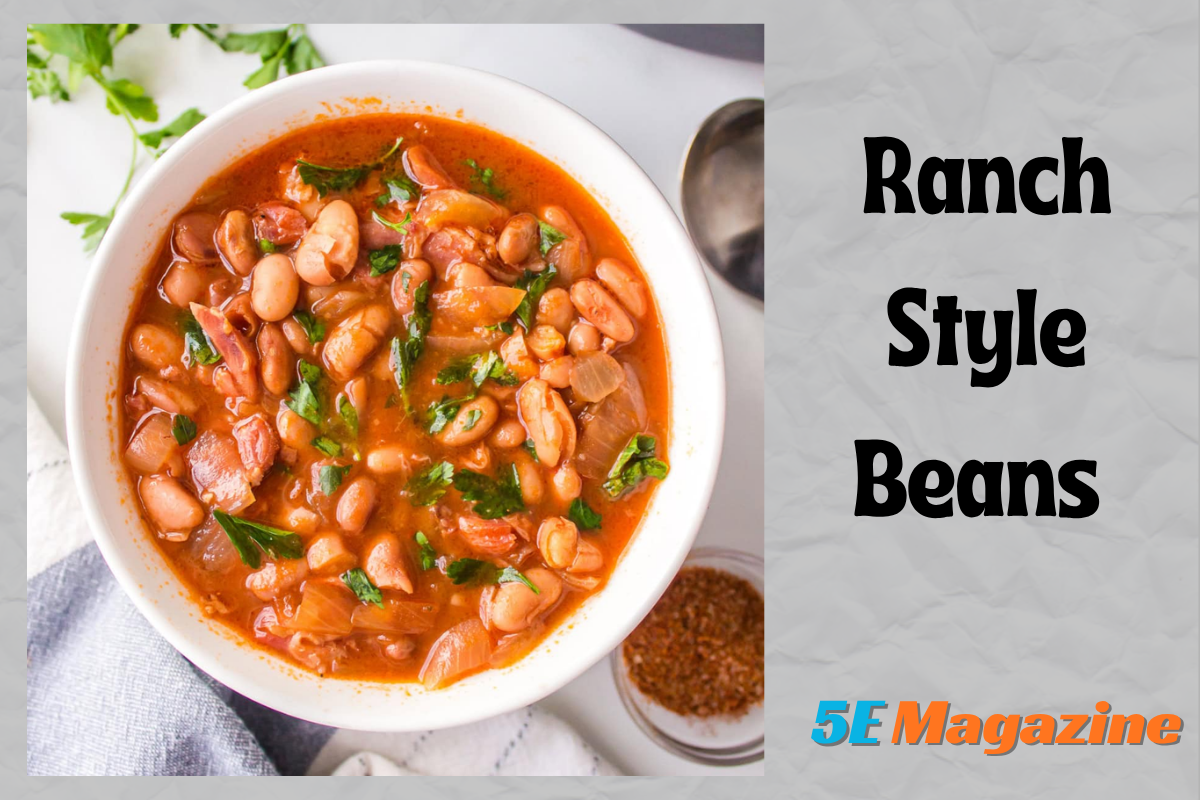
Ranch style beans are pinto beans served in a savory, seasoned sauce, usually built around tomatoes, onion, garlic, and warm spices. They have more flavor than plain pinto beans but are generally less sweet than traditional baked beans. The result is a hearty bean dish that works well as a side or as part of a larger meal.
The name can cause some confusion. Ranch Style Beans is also the name of a well-known canned product. Conagra describes its original version as pinto beans with a distinctive blend of spices and a Southwestern flavor. Homemade ranch-style beans, however, are a broader category. Recipes try to create a similar savory, tomato-seasoned character, but they are not necessarily exact copies of the canned product.
This guide explains what ranch style beans are, what gives them their flavor, how dried and canned pinto beans differ, and how the dish is commonly prepared. It also covers substitutes, serving ideas, storage, and common questions.
What Are Ranch Style Beans?
At their simplest, ranch style beans are seasoned pinto beans in a savory sauce. Pinto beans provide the soft, creamy center and earthy bean flavor, while the sauce adds tomato, spice, garlic, onion, and other seasonings.
That sauce is what separates ranch style beans from a pot of ordinary pinto beans. Plain pintos may be cooked simply with water, salt, or a few aromatics. Ranch-style versions are deliberately more strongly seasoned.
The terms “ranch beans” and “ranch-style beans” are also used for homemade dishes inspired by this general flavor profile. There is no single universal homemade formula. One cook may use tomato paste and chili powder, while another may use tomato sauce and a different combination of spices.
What keeps these variations connected is the same basic idea: tender beans surrounded by a rich, savory, seasoned sauce rather than a strongly sweet one.
The Flavor That Makes Ranch Style Beans Distinctive
Ranch style beans tend to have a bold but balanced flavor. Tomato provides the base, while onion and garlic add savory depth. Chili-style spices contribute warmth and can give the sauce a slightly smoky or earthy quality.
They do not have to be very hot. Chili powder and similar seasonings can provide flavor without making the beans intensely spicy. Homemade versions can easily be made hotter with extra chile or milder by reducing the stronger seasonings.
The original commercial product has its own formulation, so a homemade pot should not automatically be expected to taste identical. Even small changes in tomatoes, spices, salt, sweetness, and cooking time can noticeably change the final flavor.
When seasoning homemade ranch style beans, it is usually better to build flavor gradually. Taste near the end and add more spice if needed rather than beginning with so much seasoning that the natural flavor of the pinto beans disappears.
Ranch Style Beans Ingredients and What Each One Does
Pinto beans form the foundation. Their mild, earthy taste works well with tomato and spices, while their soft interior gives the finished dish a satisfying texture.
A homemade version commonly uses tomato sauce, tomato puree, or tomato paste diluted with liquid. Chili powder or individual chile-based spices provide warmth, while onion and garlic strengthen the savory character. Salt brings the flavors together. Some recipes also use a small amount of sugar to balance acidity rather than make the beans noticeably sweet.
Other homemade variations may include cumin, paprika, fresh or dried chiles, vinegar, or additional aromatics. These ingredients are choices rather than requirements for every version.
It is useful to distinguish these homemade possibilities from the actual canned product. A current ingredient listing for original Ranch Style canned pinto beans includes prepared pinto beans, water and tomato puree, followed by smaller amounts of canola oil, salt, sugar, spices, soy lecithin, onion powder, distilled vinegar, garlic powder, paprika extract and natural flavor. The product contains soy.
That label also shows why a homemade “copycat” recipe should be described as an interpretation, not as the manufacturer’s exact formula.
Dried or Canned Pinto Beans: Choosing the Right Starting Point
Both dried and canned pinto beans can work well.
Dried beans take more time, but they give you greater control over tenderness and seasoning. They are useful when making a large batch and when you want the beans to spend more time developing flavor.
Canned pinto beans are already cooked, making them much faster. They are especially practical for a weeknight version because you can focus on preparing the seasoned sauce rather than waiting for dry beans to soften.
Soaking dried beans is optional for many stovetop preparations, but it can shorten cooking time and help the beans cook more evenly. Colorado State University Extension notes that soaking is optional and recommends sorting and rinsing dried beans before cooking.
One detail matters when dried beans meet the tomato sauce: acidic ingredients such as tomatoes can slow softening. If your recipe uses dried beans, it is often better to get them tender or nearly tender before adding a large amount of tomato.
How Ranch Style Beans Are Made?
The exact method depends on whether you begin with dried or canned beans.
With dried pintos, first sort and rinse them. Soak them if you prefer, then cook them in fresh water until tender. Depending on the beans and cooking conditions, this can take considerably longer than using canned beans.
Meanwhile, the ranch-style flavor can be developed with tomatoes, onion, garlic, and seasonings. Once the dried beans have softened, combine them with the seasoned tomato mixture and simmer until the sauce and beans taste integrated.
With canned pinto beans, the process is much shorter because the beans are already tender. Prepare the sauce, add the beans, and simmer gently until the sauce reaches the desired consistency.
Whichever method you use, judge doneness by texture rather than the clock alone. A properly cooked pinto bean should be tender throughout without collapsing into mush.
Taste again near the end. This is the best time to decide whether the beans need more salt, spice, acidity, or liquid.
Getting the Texture and Sauce Just Right
Good ranch style beans should be tender and surrounded by enough sauce to coat them without becoming either dry or soup-like.
If the sauce is thin, simmer the pot uncovered so excess water can evaporate. Gently mashing a small portion of the beans into the sauce can also add body without introducing a separate thickener.
If the mixture becomes too thick, stir in a little water or unsalted broth. Add only a small amount at a time so you do not turn the sauce watery.
Overcooking can cause pinto beans to split and lose their shape. A hard boil is usually unnecessary once everything is combined; a gentle simmer gives you more control.
For an overly salty batch, adding unsalted beans or more unsalted sauce is more dependable than trying to hide the salt with another strong flavor. If the beans are too spicy, increasing the amount of beans or tomato base can help dilute the heat.
Slow Cooker Ranch Style Beans
A slow cooker is useful when you want a mostly hands-off method, but dried beans deserve extra care.
Food-safety guidance from University of Minnesota Extension recommends soaking dried beans, rinsing them, and boiling them on the stovetop for at least 10 minutes before putting them into a slow cooker. This precaution is particularly important because dried beans—especially kidney beans—contain naturally occurring lectins, and slow cookers may not always reach a sufficiently high temperature quickly enough.
For ranch style beans made from dried pintos, another practical issue is the tomato. Because acidic ingredients can interfere with beans softening efficiently, allow the beans to become tender before adding a strongly tomato-based sauce.
Canned pinto beans simplify slow-cooker preparation because they are already cooked. In that case, the goal is mainly to heat the beans and allow the seasonings to blend without cooking them so long that they become mushy.
Compared with stovetop cooking, a slow cooker requires less attention but gives you less immediate control over reduction. Use liquid carefully because very little evaporates under the lid.
Ranch Style Beans vs. Pinto, Chili, and Baked Beans
These names can overlap in recipes, but they do not mean exactly the same thing.
Plain pinto beans describe the bean itself and can be prepared in many ways. Ranch style beans commonly start with pintos but add a seasoned tomato-based sauce.
Chili beans are also beans packed or cooked with chili-style seasonings. Their exact sauce and spice level vary by product or recipe, so they may resemble ranch style beans without being identical.
Baked beans usually follow a different flavor direction. Many familiar versions emphasize sweetness from ingredients such as brown sugar, molasses, or other sweeteners. Ranch style beans generally lean more toward savory tomato and chile flavors.
For that reason, these beans should not always be swapped without considering the recipe. A sweet baked bean, for example, can noticeably change a dish that was designed around savory ranch style beans.
Ranch Style Beans Substitutes That Make Sense
If canned Ranch Style Beans are unavailable, plain pinto beans are usually the most flexible starting point because they preserve the correct basic bean.
Add a tomato component along with onion, garlic, chili-style seasoning, and salt to move plain pintos toward a ranch-style flavor. This approach also lets you control the heat and sweetness.
Seasoned chili beans can sometimes work when convenience matters, particularly in recipes where other strong flavors are already present. Check their seasoning first because some brands may be hotter, sweeter, or differently spiced.
Baked beans are a less direct substitute. Their sweetness can alter the character of chili, casseroles, or other savory dishes.
The best substitute therefore depends on what the beans are doing in the recipe. Match the bean, sauce, and flavor profile, rather than choosing another canned bean simply because it is seasoned.
What to Serve With Ranch Style Beans?
Ranch style beans are naturally suited to meals with bold, savory flavors. They can be served as a simple side with grilled meat, burgers, barbecue, or other grilled foods. Conagra itself suggests the canned product as a side for grilled foods and as an ingredient in dishes such as tacos, nachos, and chili.
Cornbread is another natural partner because its mild flavor works well with the seasoned sauce. Rice can turn the beans into a more substantial, simple meal and helps balance a strongly seasoned batch.
The main consideration is balance. Since ranch style beans already bring tomato, spice, and plenty of savory flavor, they often work best beside foods that do not compete with every element of the sauce.
Practical Ways to Use Leftover Ranch Style Beans
Leftover ranch style beans do not need much reinvention. Reheat them and serve them again as a side, or spoon them over rice and serve with cornbread.
They can also be used where seasoned pinto beans already make sense, such as in a bowl, taco filling, nachos, or chili. The existing sauce will add flavor, so taste the finished dish before adding extra salt or chili seasoning.
The sauce often thickens in the refrigerator. When reheating, stir in a small splash of water if necessary and warm gently.
Keeping leftovers close to their original flavor is often more useful than forcing them into an unrelated recipe.
Storing, Reheating, and Freezing Ranch Style Beans
Once cooked beans have cooled, place leftovers in a covered, airtight container and refrigerate them promptly. USDA food-safety guidance recommends refrigerating perishable food within two hours and using most cooked leftovers within 3 to 4 days. Leftovers should be reheated to 165°F (74°C).
Homemade ranch style beans can also be frozen. Portioning them into suitable freezer containers makes it easier to thaw only what you need. USDA guidance says frozen leftovers maintain best quality for about three to four months, although continuously frozen food can remain safe longer while quality gradually declines.
Thaw frozen beans in the refrigerator, or reheat them safely from frozen. Add a little liquid if the sauce has become thick.
Discard beans that were left at room temperature too long or show clear signs of spoilage. When safety is uncertain, tasting them is not a good way to test them.
Ranch Style Beans in Everyday Cooking
Ranch style beans are best understood as more than plain pinto beans and less as one rigid recipe. Their identity comes from combining tender beans with a savory tomato base and balanced seasonings that may include onion, garlic, chile spices, and other flavorings.
The canned Ranch Style Beans product has its own specific ingredient formula, while homemade ranch-style beans can vary considerably. Neither needs to be treated as an exact copy of the other.
Once you understand that distinction, the dish becomes easier to work with. You can choose dried or canned pintos according to your available time, adjust the seasoning to your taste, select sensible substitutes, and store leftovers safely—all while keeping the savory character that makes ranch style beans distinctive.
FAQs
Are ranch style beans made from pinto beans?
The classic canned Ranch Style Beans product uses pinto beans, and pinto beans are also the standard foundation for many homemade ranch-style versions.
Are ranch style beans spicy?
They are seasoned and may have some chile warmth, but they do not have to be very hot. Homemade recipes can easily be adjusted from mild to spicy.
Are ranch style beans the same as chili beans?
No. Both can contain beans in a chili-seasoned sauce, but their ingredients and flavor profiles vary. They may sometimes substitute for one another, but they are not automatically identical.
Are ranch style beans the same as baked beans?
No. Ranch style beans tend to emphasize savory tomato and spices, while many baked-bean recipes have a noticeably sweeter sauce.
Can ranch style beans be made from canned pinto beans?
Yes. Canned pintos are already cooked, so they make a convenient base for a quick homemade version.
Do dried pinto beans need to be soaked first?
Not always for stovetop cooking. Soaking is optional but can shorten cooking time and help beans cook more evenly.
How can you thicken ranch style beans?
Simmer them uncovered to reduce excess liquid. You can also mash a small amount of the beans into the sauce.
What is a good substitute for Ranch Style Beans?
Plain pinto beans seasoned with tomato, onion, garlic, and chili-style spices give you the most control. Chili beans can also work in some dishes if their flavor suits the recipe.
Can homemade ranch style beans be frozen?
Yes. Cool and package them properly before freezing. For best quality, USDA guidance recommends using frozen leftovers within about three to four months.
What foods go well with ranch style beans?
Cornbread, rice, grilled foods, barbecue, burgers, tacos, nachos, and chili can all work well, depending on whether you want the beans as a side or part of the main dish.
