

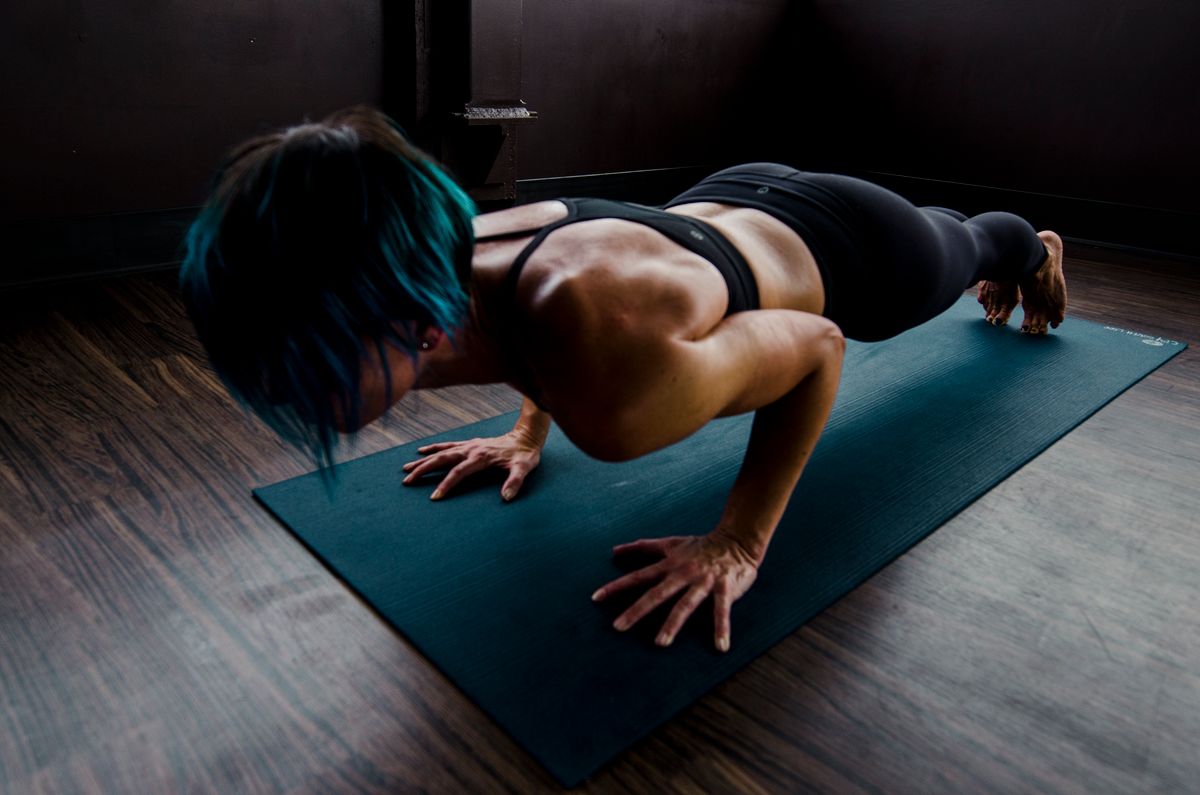
You do not need a gym membership or any equipment to start getting stronger. Bodyweight exercises for beginners use your own weight as resistance, so you can practise them at home. The goal at the start is not perfection or exhaustion: it is to learn a few simple movements well, do them regularly, and build strength gradually. This guide explains what bodyweight training is, how to do seven starter exercises with safe form, and how to follow a short routine two or three times a week.
What Is Bodyweight Training?
Bodyweight training means using your own body as the weight you lift, push, or hold. A squat, a push-up, a lunge, and a plank are all bodyweight exercises: you move against gravity, and your muscles work to control that movement. You can make an exercise easier or harder by changing your body position, range of motion, or support, rather than by adding weights.
That flexibility suits beginners well. A wall push-up is the same pushing pattern as a floor push-up, but much gentler, because the wall takes some of the load. As you get stronger, you can move to a lower surface, such as a sturdy table, and later to the floor, so the challenge grows in small steps.
Bodyweight training is a recognised form of muscle-strengthening activity: the NHS lists push-ups among its examples. The US Centers for Disease Control and Prevention (CDC) recommends that adults aged 18 to 64 do muscle-strengthening activities on at least two days a week, alongside at least 150 minutes of moderate-intensity aerobic activity such as brisk walking. A beginner bodyweight routine can count toward those strength days, while walking can cover the aerobic part.
Why Bodyweight Exercises Work Well For Beginners
The first advantage is simplicity. There is nothing to assemble or adjust, and you can start in minutes without travelling anywhere. That low barrier matters, because the hardest part of a new routine is often doing it consistently for the first few weeks.
The second advantage is control. You can stop easily, shorten the range of motion, or add support the moment something feels uncomfortable, which helps you focus on form. Form matters far more than speed or repetition count when you are starting out.
The third advantage is that these exercises train movements you use every day. Sitting, standing, stepping, and balancing all depend on leg, hip, core, and upper body strength, and squats, lunges, and planks practise exactly those patterns.
Before You Start: Safety Basics
Wear clothes you can move in and supportive shoes, or go barefoot on a non-slip surface if that feels stable. Clear a small space, keep water nearby, and use a sturdy, non-wheeled chair or wall for support where an exercise suggests it.
Warm up for a few minutes with gentle walking and shoulder rolls, and cool down the same way. Work at an effort level where you can still breathe and speak, and where the last few repetitions feel challenging but your form stays good. Mild muscle effort is normal. Sharp pain, dizziness, chest pain, or joint pain is not normal: if you feel any of those, stop, rest, and seek medical advice if symptoms do not settle quickly.
Important Disclaimer: This article is general information only and is not medical advice. It is not a substitute for professional medical guidance, diagnosis, or treatment. Please consult a healthcare professional before starting a new exercise routine, especially if you have a health condition, an injury, pain, or any concern about whether exercise is safe for you.
Seven Beginner Bodyweight Exercises With Safe Form Cues
These exercises cover the legs, hips, chest, arms, back, and core. Do them slowly, breathe normally, and never force a range of motion that hurts.
1. Wall Push-Ups For Upper Body Strength
Stand at arm’s length from a wall, hands flat against it at chest height, back straight. Bend your arms slowly, elbows close to your sides, lean in as far as is comfortable, then push gently back. The NHS suggests three sets of five to ten repetitions. Step further back to make it harder, or closer to make it easier.
2. Chair Squats For Legs And Hips
Stand in front of a sturdy chair, feet about hip-width apart. Slowly lower your hips as if about to sit, chest lifted and back straight, and lightly touch the chair seat, then press through your heels and stand tall. Keep your knees pointing the same way as your toes, without letting them collapse inward. Start with two sets of five to eight repetitions.
3. Glute Bridges For Hips And Core Stability
Lie on your back, knees bent, feet flat on the floor about hip-width apart. Press through your heels, squeeze your buttocks, and lift your hips until your body forms a straight line from shoulders to knees, then lower slowly without arching your lower back. Start with two sets of eight to ten repetitions.
4. Knee Push-Ups For Chest, Arms, And Core
Start on hands and knees, hands under shoulders, body straight from head to knees. Lower your chest toward the floor, elbows at a comfortable angle rather than flared wide, then push back up without letting your hips sag. Lower only as far as you can while keeping that straight line. Start with two sets of five to eight repetitions.
5. Supported Reverse Lunges For Balance And Leg Strength
Stand beside a sturdy chair or countertop and hold it lightly for balance. Step one foot back, lower your back knee toward the floor as far as is comfortable, and keep your front knee pointing the same way as your front toes. Press through your front heel to stand again, chest tall and steps short at first. Aim for two sets of five repetitions on each side.
6. Bird Dogs For Core Control And Balance
Start on hands and knees, hands under shoulders, knees under hips. Slowly extend one arm forward and the opposite leg back, hips level and back flat. Hold a few seconds while breathing normally, then switch sides, extending only as far as you can without rocking your hips or arching your back. Aim for two sets of five repetitions on each side.
7. Short Planks For Core Strength
A plank is a hold, not a race: short holds with good form beat a long hold with sagging hips. Start on forearms and knees, elbows under shoulders, body straight from head to knees. Tighten your stomach muscles gently and keep breathing. Hold ten to twenty seconds, rest, and repeat two or three times. If your hips sag or your lower back aches, try a shorter hold.
A Simple Starter Routine You Can Do At Home
Put the exercises together into one short session, two or three times a week, with rest days between sessions. Warm up first, work through the list once, rest about a minute between exercises, and cool down gently. The whole session takes about twenty minutes.
- Warm up for three to five minutes with gentle walking and arm circles.
- Wall push-ups: two sets of eight repetitions.
- Chair squats: two sets of eight repetitions.
- Glute bridges: two sets of ten repetitions.
- Supported reverse lunges: two sets of five repetitions on each side.
- Knee push-ups: two sets of five repetitions, only if wall push-ups already feel comfortable.
- Bird dogs: two sets of five repetitions on each side.
- Short plank: two holds of ten to twenty seconds.
- Cool down for three to five minutes with slow walking and gentle stretching.
If that feels like a lot on your first day, do one set of each exercise instead of two and build up over the next few weeks.
How To Progress Without Rushing
Progress is rarely dramatic from week to week, and that is normal. The most reliable sign is that an exercise that once felt hard now feels manageable with the same good form. When that happens, change only one thing at a time: add repetitions, add a set, slow the movement down, or move to a slightly harder version, such as from wall push-ups to knee push-ups.
Keep a simple note of what you do: the exercises, the sets, and how they felt. That record makes progress visible and helps you avoid jumping ahead too quickly, so stay with a new level for at least two weeks before progressing again. Mild soreness after a new session is common and usually fades within a couple of days. Sharp or joint pain, or pain that changes how you move, is different: rest and seek advice rather than pushing through it.
Common Mistakes Beginners Should Avoid
Most beginner mistakes come from enthusiasm rather than laziness: doing too much in the first session, copying an advanced routine from a video, or holding your breath during hard repetitions. All are easy to fix once you notice them.
- Rushing through repetitions to reach a target number, instead of moving slowly with control.
- Holding your breath during an exercise, instead of breathing steadily throughout.
- Letting your knees collapse inward during squats and lunges, or letting your hips sag during planks and push-ups.
- Skipping the warm-up and cool-down because the session itself feels short.
- Training hard every day without rest, instead of allowing at least one rest day between strength sessions.
If you notice one of these habits, treat it as useful information rather than a failure: slow down, shorten the set, add support, or take an extra rest day.
Rest, Recovery, And Staying Consistent
Rest is part of training, not a break from it. Muscles need time between strength sessions to recover and adapt, which is why two or three spaced-out sessions a week suit most beginners better than daily intense sessions. On rest days, gentle walking or easy stretching is usually a good fit.
Sleep, food, and water also support recovery, but you do not need a complicated plan: eat regular, balanced meals, drink water through the day, and keep a consistent sleep routine. Make the habit easy to repeat by picking a regular time and pairing your session with something you already do. If you miss a day, simply return at the next planned session.
Conclusion
Bodyweight exercises for beginners work because they are simple, adaptable, and easy to fit into everyday life. Start with gentle versions such as wall push-ups and chair squats, practise them slowly and regularly, and progress one small step at a time. Aim, over time, toward muscle-strengthening activity on at least two days a week, alongside regular aerobic activity such as brisk walking. You only need a starting point you can repeat and form you can trust.
Frequently Asked Questions
How Many Days A Week Should Beginners Do Bodyweight Exercises?
Two or three strength sessions a week, with at least one rest day between them, is a sensible starting point for most healthy adults, matching the general guidance for at least two strength days a week. If two sessions feel like plenty at first, start there.
Do I Need Any Equipment To Start Bodyweight Training?
No special equipment is needed. A sturdy chair, a wall, and a small clear floor space are enough for this routine. A mat can make floor exercises more comfortable, but it is not essential. Resistance bands are a low-cost later option, but not required for beginner progress.
Is It Normal To Feel Sore After My First Sessions?
Mild muscle soreness a day or two after a new session is common, especially when a movement is unfamiliar, and it usually fades as your body adapts. Soreness is not a reliable measure of a good workout. Sharp or joint pain, swelling, or pain that changes how you move is different and deserves rest and, if needed, medical advice.
