

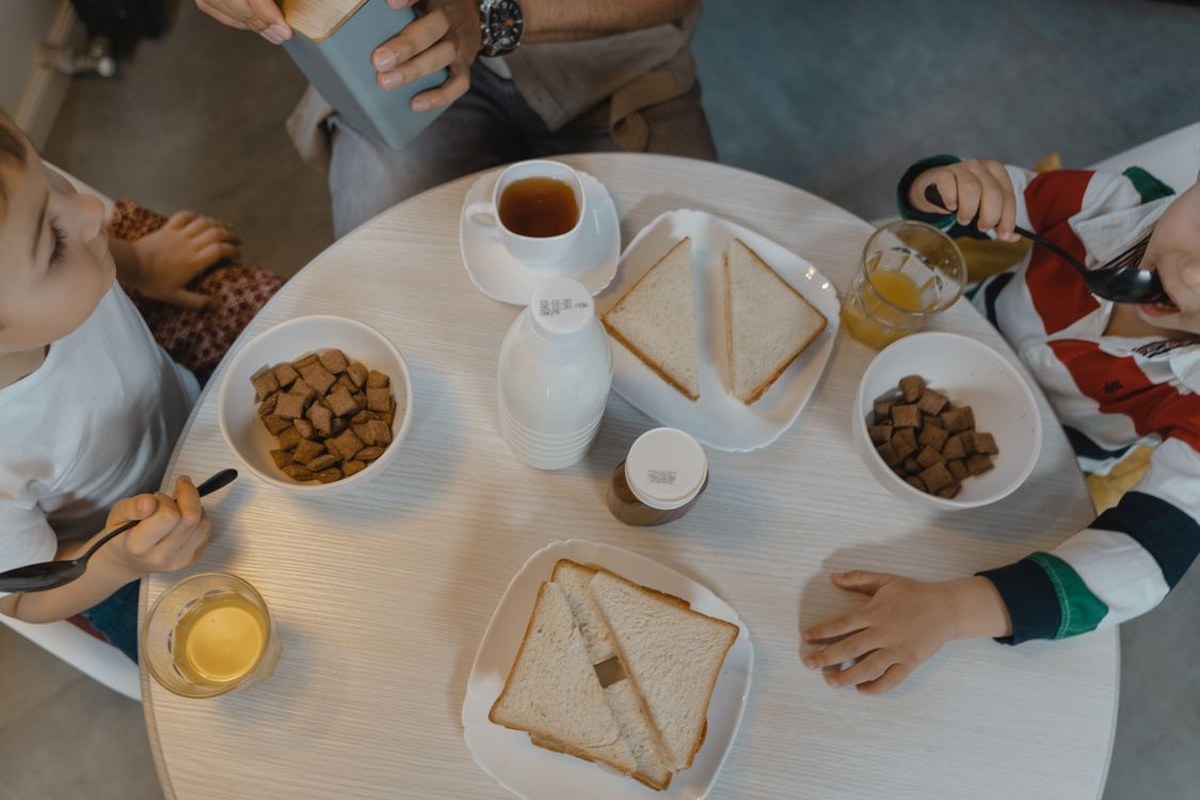
Finding healthy breakfast ideas for kids that actually work on a school morning is one of the small daily challenges almost every parent knows well. The morning is short, children are often not very hungry the moment they wake up, and the easiest options — a sugary cereal or a pastry grabbed on the way out — rarely keep a child feeling full until lunch. The good news is that a healthy breakfast does not have to be complicated, slow, or fancy. It just needs a little balance: something with staying power, something fresh, and something your child will actually eat.
This guide brings together practical, balanced breakfast ideas for children of different ages, from five-minute weekday options to make-ahead meals prepared on a Sunday evening. Every idea follows a simple pattern: combine a whole grain, a protein food, and a fruit or vegetable, and offer water or milk instead of a sugary drink. That combination helps breakfast feel satisfying rather than a quick sugar rush followed by a mid-morning slump.
What Makes A Breakfast Healthy For Kids
Before the recipes, it helps to know what you are aiming for. The United States Department of Agriculture’s MyPlate guide, widely used to help parents plan balanced meals for children, offers a few simple messages that apply just as well at breakfast as at any other meal: choose variety, make at least half of grains whole grains, and serve water or low-fat milk rather than sugary drinks. You do not need every food group at every single meal — the guide itself notes that if breakfast does not include a vegetable, fruit can take that place, and vegetables can be included later in the day. Think of balance across the whole day, not perfection on one plate.
For breakfast, three building blocks matter most: a whole grain such as oats or whole-wheat bread for slow-release energy, a protein food such as eggs, yogurt, milk, or nut butter to help the meal feel filling, and a fruit or vegetable for fiber and flavor. The American Academy of Pediatrics (AAP) includes eating a healthy breakfast that contains protein among its back-to-school tips for parents. A useful check for your child’s plate is simply this: does it have at least two of those three blocks, and is the drink water or milk rather than something sweetened?
Portion size also changes a lot with age: a toddler needs far less than a hungry teenager, and that is normal. Let your child’s appetite guide the amount, offer seconds rather than piling the plate high, and avoid turning breakfast into a negotiation.
Why Breakfast Matters On School Days
After a night’s sleep, a child’s body has gone many hours without food, and the morning meal is what restocks energy for the first part of the school day. The AAP notes that breakfast supports children’s energy and concentration at school, and research summarized by education and health organizations links eating breakfast with better attention and school performance compared with skipping it. This is not about one magic food. It is about giving a child fuel before a morning of learning, rather than asking them to concentrate on an empty stomach.
Skipping breakfast is surprisingly common among older children: according to the AAP, about 27 percent of children aged 12 to 19 do not eat breakfast. Teenagers are the group most likely to skip it, often because they are not hungry early or are rushing. If your teenager will not sit down to a full breakfast, a portable option — a smoothie, a yogurt pot, or a peanut butter sandwich on whole-grain bread — is far better than nothing at all.
Quick Healthy Breakfast Ideas For Kids
These ideas take five minutes or less, use everyday ingredients, and work well on busy school mornings.
Peanut Butter Banana Toast On Whole-Grain Bread
Toast a slice of whole-grain bread, spread it with peanut butter or another nut or seed butter, and top it with sliced banana. This is a complete little meal in itself: whole grain from the bread, protein and healthy fats from the nut butter, and fruit from the banana. For younger children, cut it into fingers or small triangles, which are easier to hold and more fun to eat. Check for nut allergies first: if your child has a nut allergy, use a seed butter such as sunflower seed butter instead. If your child’s school is nut-free, sunflower seed butter works the same way — just check the label and your school’s policy.
Yogurt Parfait With Berries And Oats
Layer plain or low-sugar yogurt with fresh or frozen berries and a spoonful of oats or a crushed whole-grain cereal. Children often enjoy building their own parfait, and letting them choose between strawberries, blueberries, or raspberries gives them a sense of control that makes them more likely to eat it. Plain yogurt keeps added sugar down; if your child finds it too sharp, a drizzle of honey for older children or a handful of sweet berries usually does the trick. Note that honey is not recommended for babies under one year old, so keep this version for older children.
Scrambled Eggs With Toast Soldiers
Scrambled eggs are one of the fastest protein breakfasts there is — two minutes in a pan, a pinch of salt, and they are done. Serve them with whole-grain toast cut into soldiers for dipping, and add a few cherry tomatoes or cucumber slices on the side for younger children who like to pick at finger foods. Eggs also work well for children who do not like sweet breakfasts, and they keep well in a lunchbox if your child prefers to eat a little later in the morning.
Banana Oat Smoothie
Blend a banana with milk or a fortified plant-based alternative, a spoonful of oats, and a spoonful of nut butter or yogurt. A smoothie is an excellent fallback for children who say they are not hungry, because drinking often feels easier than eating first thing. Skip sweetened juices or syrups — the banana alone provides plenty of sweetness — and pour it into a lidded cup for a portable school-morning breakfast.
Make-Ahead Healthy Breakfast Ideas For Kids
A little weekend preparation can transform weekday mornings. These ideas keep in the fridge for several days, so breakfast becomes a grab-and-go job rather than a cooking job.
Overnight Oats With Fruit
Mix rolled oats with milk and yogurt in a jar, add fruit such as grated apple, berries, or diced mango, and leave it in the fridge overnight. By morning the oats have softened into a creamy breakfast that needs no cooking. Make three or four jars on a Sunday evening and breakfast is sorted for most of the school week, and a sprinkle of cinnamon or seeds adds flavor without added sugar.
Egg Muffins With Vegetables
Whisk eggs with a splash of milk, pour into a muffin tin, add diced vegetables such as peppers, spinach, or sweetcorn, plus a little grated cheese, and bake until set. These egg muffins keep in the fridge for three to four days and can be eaten warm or cold, making them ideal for children who eat at different times or on the move.
Whole-Grain Pancakes From The Freezer
Make a batch of small whole-grain pancakes at the weekend, cool them, and freeze them in a bag. On a school morning they reheat in a toaster in a couple of minutes and can be served with fruit and yogurt instead of syrup. Keeping the pancakes small means children can eat one or two according to appetite.
Healthy Breakfast Ideas For Picky Eaters
Picky eating is a normal phase for many children, and breakfast is often where it shows up most clearly. The goal is not to win an argument about food, but to keep offering balanced options in low-pressure ways and to make small upgrades to foods your child already accepts.
- Upgrade, don’t replace: If your child will only eat white toast, try a 50-50 loaf that mixes white and whole-grain flour, or serve the toast with a protein topping they like. A small step they accept beats a perfect breakfast they refuse.
- Offer choice, not a lecture: “Yogurt or eggs today?” works better than “You need to eat a healthy breakfast.” Two acceptable options give a child control without turning the meal into a debate.
- Make it dippable or buildable: Toast soldiers, fruit skewers, yogurt with toppings to add, and mini wraps all let children assemble their own breakfast, which often makes them more willing to try it.
- Repeat without pressure: Children often need many exposures to a new food before they accept it. Keep offering small amounts alongside foods they already like, and avoid commenting on what they leave.
- Watch the drink: A large glass of juice can fill a small stomach before any food is eaten. Offer water or milk with breakfast and keep juice, if you serve it at all, to a small glass.
If your child consistently refuses whole food groups, eats very little, or is losing weight, talk to your pediatrician. Most picky eating is a phase, but a health professional can rule out anything needing attention.
What To Serve With Breakfast: Drinks And Sides
The drink alongside breakfast deserves as much thought as the food. The MyPlate guidance is straightforward: serve water or low-fat milk rather than sugary drinks. Milk adds protein and calcium, while water hydrates without calories or sugar. Flavored milks and sweetened drinks can turn an otherwise balanced breakfast into a sugary one, so save them for occasional treats rather than everyday defaults.
A simple side can quietly add balance: a handful of berries, a banana, or a cheese stick can round out a breakfast that would otherwise be a single food. The aim is to add one extra food group, not to build a second meal. If your child eats breakfast at school, remember that one good breakfast — at home or at school — is enough.
Building A Breakfast Routine That Sticks
The best breakfast ideas are the ones your family will actually repeat, so keep the range small — three or four reliable options everyone knows how to make — rather than trying a new recipe every morning. Prepare what you can the night before, and let older children take ownership of one simple breakfast, such as their own yogurt parfait or smoothie. Children who make their own breakfast are more likely to eat it.
Consistency helps, just as it does with other daily habits. Our guide to habits worth tracking explains how small, repeated actions — including a regular breakfast — become automatic over time. Breakfast is one of the easiest habits to anchor: it happens at the same time every day and takes only a few minutes.
Finally, a healthy breakfast does not have to look impressive. A banana and a glass of milk eaten calmly together beats an elaborate breakfast eaten in a rush and an argument. Keep it balanced, keep it simple, and keep it regular.
Conclusion
Healthy breakfast ideas for kids do not require special ingredients, early alarms, or a talent for cooking. Start with the simple formula — a whole grain, a protein food, and a fruit or vegetable, with water or milk to drink — and build a small set of options your children enjoy, from quick toast and yogurt parfaits to make-ahead overnight oats and egg muffins. Offer choice without pressure, prepare what you can the night before, and let the routine do the heavy lifting. Mornings will still be busy, but breakfast will no longer be the hardest part of them. A short family walk after eating can also help everyone start the day well — see our guide to the benefits of walking after eating.
What Is A Healthy Breakfast For Kids?
A healthy breakfast for kids combines a whole grain, a protein food, and a fruit or vegetable, with water or low-fat milk to drink. Examples include oatmeal with milk and berries, scrambled eggs on whole-grain toast, or yogurt with fruit and oats.
What Can I Make For Breakfast In 5 Minutes?
Peanut butter banana toast, a yogurt parfait with berries, scrambled eggs with toast, a banana oat smoothie, or a bowl of plain whole-grain cereal with milk and fruit all take about five minutes or less.
What Should Kids Drink With Breakfast?
Water or low-fat milk are the best everyday choices. The USDA’s MyPlate guidance recommends serving water or low-fat milk rather than sugary drinks, since sweetened drinks add sugar without the nutrients of a balanced meal.
How Can I Get A Picky Eater To Eat Breakfast?
Offer two acceptable choices, make small upgrades to foods they already like, and let them build or dip their own breakfast. Keep offering new foods without pressure — children often need many exposures before they accept a new food.
Can I Prepare Kids’ Breakfasts Ahead Of Time?
Yes. Overnight oats, egg muffins, freezer pancakes, and breakfast burritos can all be prepared in advance and kept in the fridge or freezer, making school mornings much quicker.
Is It OK If My Child Skips Breakfast Sometimes?
An occasional missed breakfast is not a crisis, but regular breakfast skipping is linked with lower concentration and energy at school. If your child often skips breakfast, try a portable option such as a smoothie or yogurt pot, and talk to your pediatrician if poor appetite is persistent.
