

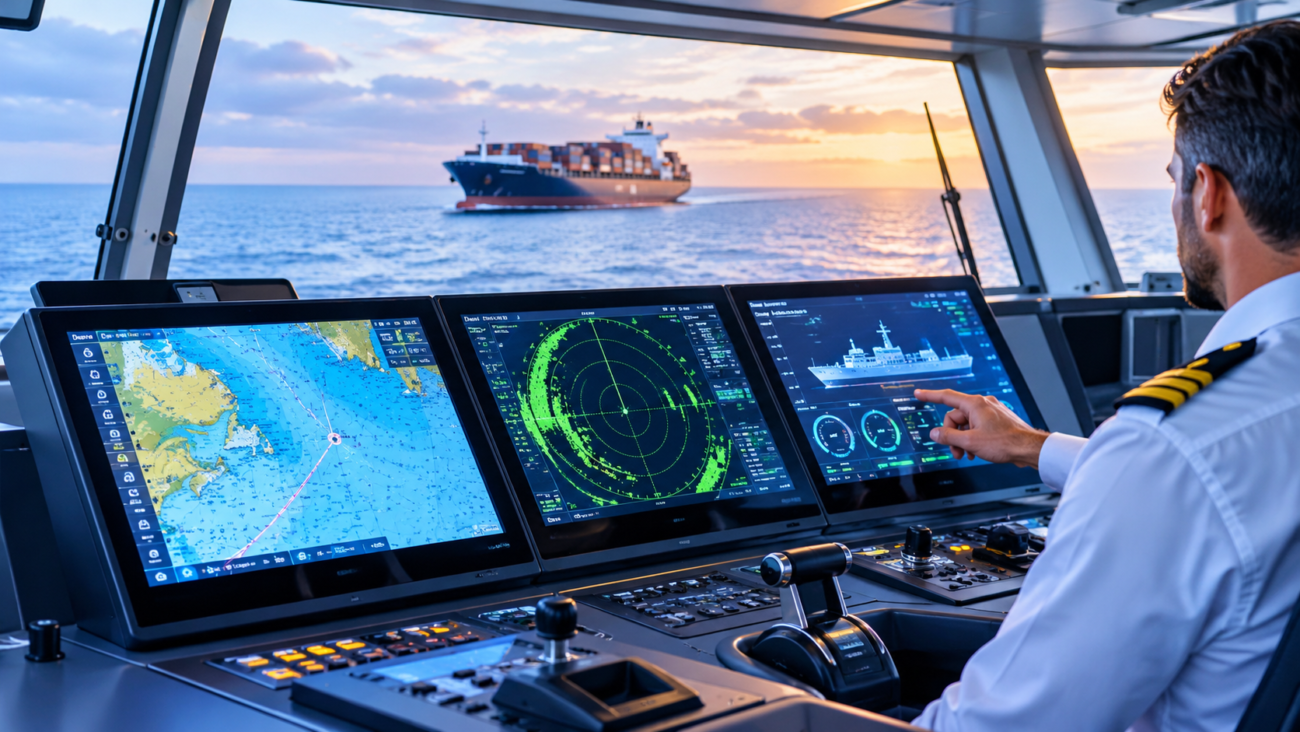
The maritime industry has experienced significant technological changes over the past decade. Modern vessels increasingly rely on digital systems to support navigation, communication, monitoring and day-to-day operations. As ships become more technologically advanced, the equipment used to display and manage information has also evolved. Industrial display technology is now an important part of modern maritime infrastructure, helping crews access essential information across different areas of a vessel.
From navigation bridges and engine rooms to offshore facilities and control stations, displays are becoming more capable, durable and adaptable. Unlike ordinary computer monitors, industrial displays used in maritime environments must operate reliably under challenging conditions, including humidity, vibration, temperature fluctuations and exposure to salt air.
The Growing Importance of Digital Displays at Sea
Traditional maritime operations relied heavily on analogue instruments, mechanical indicators and individual monitoring systems. Although these technologies served the industry for many years, modern vessels require more integrated ways of accessing information.
Digital displays allow operators to view information from multiple systems through a single interface. Navigation data, engine performance, equipment status and communication information can all be presented through dedicated monitoring screens.
This development has improved the way crews interact with onboard technology. Instead of checking several separate instruments, operators can access relevant information through centralised display systems.
As maritime automation continues to develop, industrial displays are expected to play an increasingly important role in shipboard operations.
Improvements in Display Durability and Reliability
One of the biggest developments in industrial display technology has been the improvement of equipment durability.
Marine environments can be particularly demanding for electronic devices. Salt-containing air, moisture, temperature changes and continuous mechanical vibration can affect the performance and lifespan of standard electronic equipment.
Manufacturers have responded by developing displays with more robust construction and improved environmental protection. Depending on their intended application, modern industrial displays may include sealed front panels, corrosion-resistant materials, reinforced housings and components designed for extended operating periods.
These improvements are particularly important for equipment installed in engine rooms, offshore facilities and exposed control stations.
Reliability is not simply about preventing physical damage. It also involves maintaining consistent display performance over long periods, reducing unexpected interruptions and making maintenance more manageable.
Better Screen Visibility in Different Lighting Conditions
Visibility is another area where industrial display technology has made considerable progress.
Marine operators often work in environments with changing lighting conditions. A display installed on a navigation bridge may experience strong daylight through windows, while the same equipment may need to remain comfortable to view during night operations.
Modern display technology addresses these challenges through improvements in screen brightness, contrast, viewing angles and surface treatments.
High-brightness panels help maintain readability in brightly lit environments. Anti-glare and anti-reflective treatments can reduce unwanted reflections, while wider viewing angles allow information to remain visible from different positions.
Adjustable brightness is equally important. Operators may need to reduce screen illumination during night-time operations to maintain a comfortable working environment.
These developments demonstrate how display design is increasingly focused on the practical needs of maritime personnel rather than simply improving technical specifications.
The Development of Marine-Grade LCD Technology
Liquid crystal display technology continues to be an important part of industrial monitoring equipment. However, the requirements of maritime applications have encouraged manufacturers to develop specialised LCD solutions.
A standard commercial display may not be suitable for installation in an environment where moisture, vibration and temperature fluctuations are common. Marine-oriented display systems therefore require careful consideration of their components, construction and environmental specifications.
Modern marine grade lcd solutions are designed for applications where dependable screen performance and environmental suitability are important considerations. Depending on the equipment design, features may include improved sealing, sunlight-readable screens, wider operating temperature ranges and protective surface treatments.
Optical bonding is another development worth considering. This process reduces the air gap between the display panel and its protective glass, helping minimise internal reflections and improve visibility. It can also help reduce problems associated with condensation in appropriately designed assemblies.
These improvements make specialised LCD technology suitable for a wider range of maritime monitoring and control applications.
Touchscreen Technology and Modern Human-Machine Interfaces
Another major development is the growing use of touchscreen technology.
Modern maritime equipment increasingly uses human-machine interfaces (HMIs) to help operators interact with digital systems. Touchscreen displays can simplify access to different controls, monitoring functions and operational information.
For example, an operator may use a touchscreen interface to review equipment status, navigate between monitoring screens or adjust certain system settings.
However, marine touchscreen technology must account for practical operating conditions. Wet hands, protective gloves and surface moisture can affect touch performance. Manufacturers must therefore consider the type of touch technology, screen protection and software configuration when developing equipment for marine use.
Physical buttons and controls also remain relevant, particularly for functions where tactile feedback is preferred.
The most effective solutions often combine touchscreen interfaces with traditional controls, providing flexibility without making operation unnecessarily complicated.
Integration with Navigation and Monitoring Systems
Modern industrial displays are increasingly designed to integrate with other onboard technologies.
Navigation systems, radar equipment, engine monitoring platforms and communication systems generate considerable amounts of information. Display interfaces help organise this information so that operators can access it efficiently.
Integration also allows equipment manufacturers to develop more flexible monitoring environments. Different display sizes, resolutions and mounting arrangements can be selected according to the intended application.
For example, a large screen may be appropriate for a central monitoring station, while a smaller display may be more practical for an individual equipment panel.
Rackmount displays are another useful option where equipment needs to be installed within standardised control cabinets or monitoring racks. They help organisations create organised equipment layouts while making access for maintenance and upgrades more straightforward.
The Role of Energy Efficiency and Long-Term Maintenance
Energy efficiency is becoming another important consideration in industrial display development.
Modern vessels contain numerous electronic systems, and managing overall power consumption is an important part of equipment planning. Improvements in LED backlighting and display electronics can help reduce energy requirements compared with older technologies.
Manufacturers are also paying greater attention to product longevity and maintenance requirements.
In commercial maritime environments, replacing equipment can involve considerable time and expense. Displays designed for extended operating periods, accessible connections and practical mounting arrangements can make maintenance easier.
Long-term product availability is also important. Organisations managing fleets may need replacement displays several years after their original equipment was installed. Consistent product specifications and compatible replacement options can simplify this process.
What the Future Holds for Maritime Display Technology
The future of industrial display technology in the maritime industry will likely involve greater integration, improved connectivity and more advanced monitoring interfaces.
As automation develops, displays will increasingly serve as central points for accessing information from interconnected onboard systems. Higher-resolution screens, improved touch interfaces and more efficient display components will continue to influence product development.
There is also growing interest in combining monitoring interfaces with data analysis tools. These systems can help operators identify equipment performance patterns and make better-informed maintenance decisions.
Nevertheless, technological improvements must remain balanced with reliability. A sophisticated interface has limited value if it cannot perform consistently in the environment where it is installed.
Manufacturers will therefore continue to focus on durability, visibility, environmental protection and compatibility with existing maritime infrastructure.
Conclusion
Industrial display technology has become an essential part of the maritime industry’s digital transformation. Improvements in durability, screen visibility, touchscreen interfaces and system integration have expanded the role of displays across modern vessels and offshore facilities.
As maritime operations become more dependent on connected digital equipment, the demand for reliable industrial display solutions will continue to grow. From specialised LCD panels to rackmount monitoring systems, these technologies will remain important for supporting efficient and organised shipboard operations.
The continued development of marine display technology reflects a broader shift towards smarter, more connected and more reliable maritime infrastructure.
