

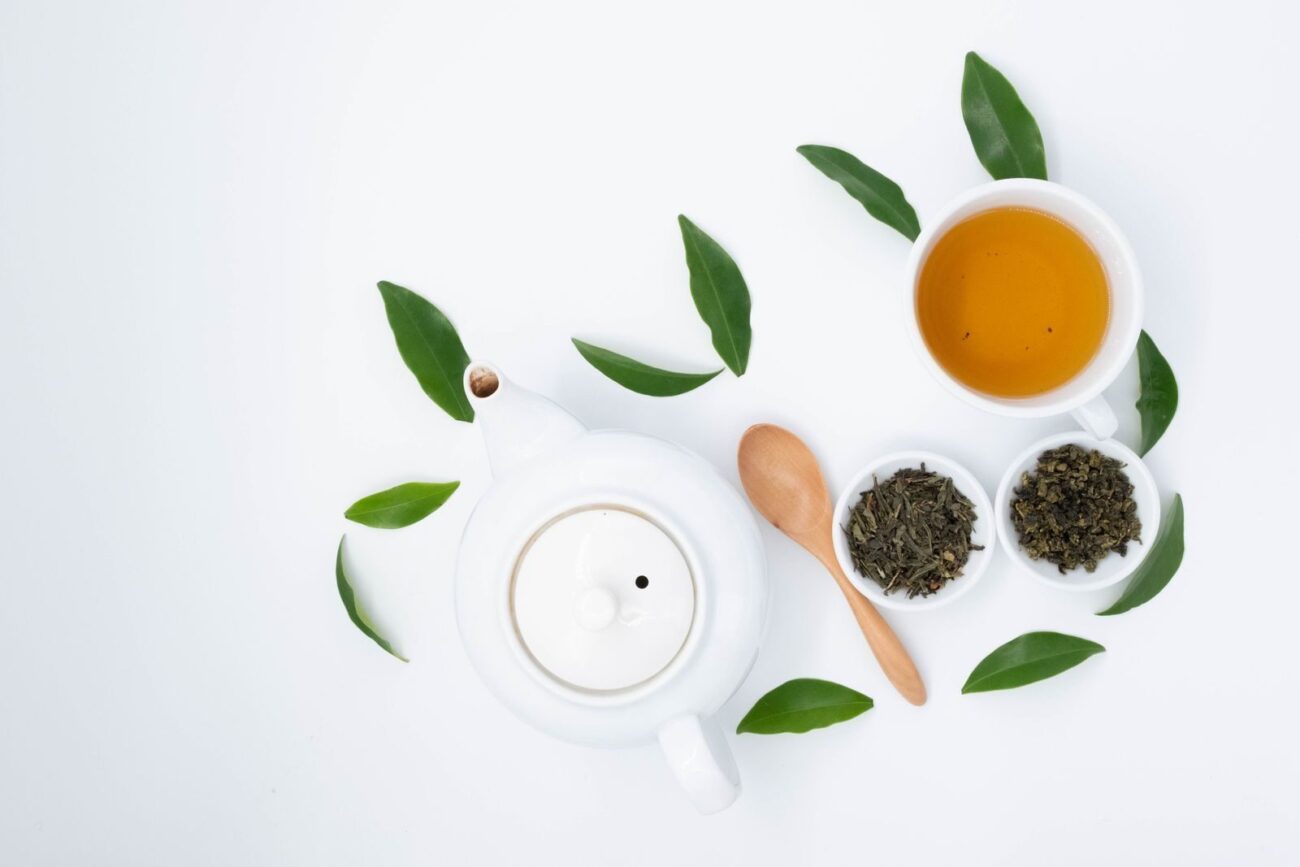
Green tea has been drunk for centuries, and in recent years it has picked up a long list of health claims. Some of those claims hold up well, some are overstated, and a few come mostly from laboratory studies that do not translate neatly into a cup of tea. This guide separates what the evidence actually supports from what is still uncertain, so you can decide whether green tea deserves a place in your daily routine.
The short answer is that green tea is a healthy drink with real but modest benefits. It contains plant compounds called catechins, a small amount of caffeine, and an amino acid called L-theanine. Together, they explain most of what green tea does in the body. It is not a medicine, and it will not undo an unhealthy diet, but as a daily habit it is one of the better choices you can make in a cup.
What Green Tea Actually Contains
Green tea comes from the leaves of the same plant as black tea, Camellia sinensis. The difference is in the processing. Green tea leaves are heated soon after picking, which stops oxidation and preserves the compounds that give the tea its character.
A typical brewed cup contains about 240 to 320 milligrams of catechins and roughly 45 milligrams of caffeine, according to the National Institutes of Health Office of Dietary Supplements. Catechins are a type of antioxidant, and the best studied of them is epigallocatechin gallate, usually shortened to EGCG. Green tea also contains L-theanine, an amino acid that is almost unique to tea and is often linked to its calm, focused feeling.
That combination matters. Coffee gives you more caffeine and no L-theanine. Herbal teas give you neither. Green tea sits in the middle: enough caffeine to feel alert, with L-theanine smoothing the edge.
May Support Heart Health
The strongest and most consistent evidence for green tea relates to the heart. Large observational studies, mostly from Asia where green tea drinking is common, have linked regular green tea consumption with a lower risk of coronary heart disease. The National Center for Complementary and Integrative Health notes this link in Asian populations, while the picture in Western populations is less clear.
Part of the effect may come through cholesterol. In trials where people were randomly assigned to a green tea product or a placebo, green tea reduced total cholesterol and LDL cholesterol, the type often called bad cholesterol, to a small extent. It did not change HDL cholesterol or triglycerides in most of those studies. The effect was modest, and most trials tested green tea extracts rather than brewed tea, so the results may not match exactly what happens with a daily cup.
None of this makes green tea a treatment for heart disease. It means that, as part of an overall heart-friendly pattern of eating and living, green tea is a reasonable choice. If you have heart disease or take heart medication, your doctor’s advice comes first, and green tea is not a substitute for prescribed treatment.
Gentle Energy Without The Jitters
A cup of green tea has about 45 milligrams of caffeine, roughly half the caffeine of a typical cup of coffee. For many people, that is enough to feel more alert without the racing heart or crash that a strong coffee can bring.
L-theanine adds to the effect. Research suggests it promotes a calm, attentive state, and it is one reason people describe green tea as giving steady focus rather than a sharp buzz. The combination of caffeine and L-theanine has been studied for attention and mental alertness, and the evidence points to a small but real improvement in focus for many people.
This is also why green tea works well as an afternoon drink. It provides a lift without the large dose of caffeine that can interfere with sleep later in the evening. If you are sensitive to caffeine, though, even 45 milligrams can be noticeable, so pay attention to how your own body responds.
May Help With Weight Management, Modestly
Green tea is one of the most marketed drinks for weight loss, and this is where the claims run furthest ahead of the evidence. The honest summary is that green tea may help a little, but the effect is small.
A Cochrane review of 14 randomized trials with 1,562 overweight and obese participants found that green tea preparations produced, on average, about 0.95 kilograms more weight loss than a placebo over about 12 weeks. That difference was not statistically significant when the trials outside Japan were looked at separately. The National Institutes of Health concludes that any weight-loss effect is small and unlikely to be clinically meaningful on its own.
The likely mechanism is the combination of catechins and caffeine, which may slightly increase energy expenditure and fat oxidation. But the effect is small enough that it disappears without the basics: eating sensibly and moving regularly. Green tea can support a weight-management plan, but it cannot carry one.
Be careful with concentrated green tea extracts sold for weight loss. The safety record of brewed tea is very different from that of high-dose extract supplements, which have been linked in rare cases to liver injury. A cup of tea and a concentrated pill are not the same thing.
Rich In Antioxidants
Green tea is rich in antioxidants, and EGCG is the one researchers study most. Antioxidants neutralize free radicals, unstable molecules that can damage cells. In laboratory tests, green tea catechins do this effectively, which is why you will see green tea described as protective against cell damage.
What is less certain is how much of that laboratory effect carries over into the human body. Catechins are not absorbed very efficiently, and the concentrations used in many laboratory studies are far higher than what reaches your tissues from drinking tea. Choosing a drink rich in plant compounds over a sugary drink is still a genuine improvement to your diet.
May Support Brain Health And Focus
Beyond the short-term alertness from caffeine, researchers have looked at whether green tea supports the brain over the longer term. Observational studies have associated regular tea drinking with better cognitive performance in older adults, but these studies cannot prove cause and effect, since tea drinkers also tend to have other healthy habits.
What is better established is the short-term picture. The caffeine and L-theanine combination supports attention and working memory in the hours after drinking. For students, office workers, and anyone who needs steady concentration, a cup of green tea in the morning or early afternoon is a practical, low-risk choice. Claims that green tea prevents dementia go beyond the evidence.
How Much Green Tea Should You Drink
For most healthy adults, three to five cups a day is a commonly cited moderate amount, and it is the range used in many of the observational studies that found benefits. There is no official recommended intake, and more is not necessarily better.
Three practical points will help you get the most from it. First, drink it plain or with a squeeze of lemon; adding sugar or honey turns a healthy drink into a sweet one. Second, brew with water that is hot but not boiling, around 80 degrees Celsius, and steep for two to three minutes. Water that is too hot or a steep that is too long makes the tea bitter. Third, pay attention to timing. A cup late in the evening can disturb sleep if you are sensitive to caffeine.
Who Should Be Careful With Green Tea
Brewed green tea is safe for most adults in moderate amounts, and no safety concerns have been reported for green tea consumed as a beverage. There are, however, groups who should be more careful.
If you take blood-thinning medication, note that green tea contains small amounts of vitamin K, which can interact with anticoagulant drugs. Green tea at high doses has also been shown to reduce the blood levels and effectiveness of nadolol, a beta-blocker used for high blood pressure and heart problems. Green tea extract can interact with other medicines too, including some statins. Tell your doctor or pharmacist that you drink green tea regularly if you take prescription medication.
During pregnancy, caffeine intake should stay moderate, and green tea contributes to that total. Concentrated green tea extract supplements deserve extra caution in pregnancy and should be discussed with a clinician.
Finally, avoid taking green tea extract supplements on an empty stomach, and be skeptical of any product that promises dramatic weight loss or disease prevention. The evidence supports a pleasant daily drink, not a miracle supplement.
The Bottom Line On Green Tea
Green tea earns its reputation, with qualifications. It is a low-calorie drink rich in catechins and L-theanine, with enough caffeine to sharpen focus without the intensity of coffee. The evidence best supports modest benefits for heart health, gentle energy, and alertness, with smaller and less certain effects on weight and blood sugar. Its safety record as a brewed drink is strong.
The most honest way to think about green tea is as a good habit, not a cure. Brew it fresh, drink it plain, enjoy it daily if you like it, and let it be one part of a pattern that includes real food, movement, and sleep. That is what the science actually supports, and it is more than enough reason to keep the kettle on.
Disclaimer: This article is for general information only and is not medical advice. Green tea can interact with some medications, and individual needs vary. Talk with a qualified health professional before making significant changes to your diet or using green tea extract supplements, especially if you take medication or have a health condition.
Frequently Asked Questions
Is It Safe To Drink Green Tea Every Day?
Yes, for most healthy adults, drinking green tea daily in moderate amounts is considered safe. The National Center for Complementary and Integrative Health reports no safety concerns for green tea consumed as a beverage by adults. If you take prescription medication, are pregnant, or are sensitive to caffeine, check with your clinician about the amount that suits you.
How Much Caffeine Is In Green Tea?
A typical brewed cup contains about 45 milligrams of caffeine, according to the National Institutes of Health Office of Dietary Supplements. That is roughly half the caffeine in a cup of coffee.
Does Green Tea Help You Lose Weight?
Only slightly. A Cochrane review of 14 trials found green tea preparations produced about 0.95 kilograms more weight loss than a placebo, a difference that was not significant in trials outside Japan. The National Institutes of Health concludes the effect is small and unlikely to matter clinically on its own. Green tea can support a weight-management plan, but diet and activity do the real work.
Can I Drink Green Tea At Night?
It depends on your caffeine sensitivity. A cup of green tea has about 45 milligrams of caffeine, which can disturb sleep in sensitive people. If you want tea in the evening, choose a decaffeinated green tea or an herbal tea instead, and keep regular green tea to the morning and afternoon.
