


Learning how to reduce stress and anxiety starts with small, steady habits rather than one dramatic change. Slow breathing, regular movement, enough sleep, and support from people you trust can each lower the pressure a little, and together they can make a difficult day feel more manageable. There is no single technique that works for everyone, so the best approach is to try a few of the steps below, notice what actually helps you, and keep the ones that fit your life.
Stress and anxiety are common, and feeling them does not mean you are failing at coping. Stress is usually your body’s response to a demand or pressure, such as a deadline, a money worry, or a change at home. Anxiety is closely related: it is your body’s reaction to stress, and it can linger even when there is no immediate threat. Both can bring worry, tension, headaches or body pain, poor sleep, and a sense of unease. When they ease once a difficult situation passes, they are often part of ordinary life. When they stay or start to interfere with work, relationships, or rest, take them seriously and, if needed, ask a professional for help.
This guide focuses on everyday steps you can use at home, at work, and on the move. It draws on guidance from the National Institute of Mental Health (NIMH) and the Centers for Disease Control and Prevention (CDC), and it ends with clear guidance on when self-help is not enough.
What Stress And Anxiety Actually Feel Like
It helps to name what is happening before you try to change it. Stress often traces back to something specific: too much to do, an argument, an illness in the family, or an uncertain future. It may sharpen your focus for a short time, for example before a presentation, but it can also leave you tired, irritable, or unable to sleep. Anxiety is often more internal. It can feel like a persistent sense of dread or apprehension that does not switch off, even when nothing urgent is happening right now.
Both can show up in the body as well as the mind. NIMH notes shared symptoms such as excessive worry, uneasiness, tension, headaches or body pain, raised blood pressure, and loss of sleep. Paying attention to your own pattern matters: what tends to trigger the feeling, what time of day it is worst, and what has helped before. A short note in your phone or a notebook can reveal patterns you would otherwise miss, such as stress rising after poor sleep or too much caffeine.
One honest point is worth making early. Calming techniques are tools for everyday stress, not a replacement for treatment. If symptoms interfere with your everyday life, cause you to avoid things you need to do, or seem to be always present, NIMH advises that you may be at risk of an anxiety disorder and should talk to a professional. Keeping that boundary in mind makes the rest of this guide safer.
Start With Your Breath When Tension Rises
When stress spikes, breathing is the fastest tool most people have, because it needs no equipment and can be done anywhere. The CDC’s simple advice is to take five minutes: take a deep breath and relax, even briefly, before you return to the task at hand. That short pause is not wasted time. It gives your body a chance to settle before you react, send a message, or make a decision you might regret.
A simple pattern many people find steadying is slow, even breathing. Sit comfortably, relax your shoulders, breathe in gently through your nose, and breathe out slowly through your mouth. Keep the breaths unforced; the aim is steadiness, not a perfect count. If you feel dizzy, breathe normally and stop. Two or three minutes of this, repeated a few times a day, is more useful than one long session you never repeat.
Breathing also pairs well with a brief pause from stimulation. Step away from the news feed, close extra browser tabs, or put your phone face down for a few minutes. The CDC also advises taking breaks from news when it adds to stress. You are simply giving your mind a short break from a constant stream of demands.
Move Your Body In Ways You Enjoy
Movement is one of the most reliable ways to release built-up tension. NIMH lists exercise among the activities to try when you feel overwhelmed, and the CDC advises being active in a way that works for you, such as taking a walk or stretching. You do not need an intense workout for movement to help. A walk around the block, gentle stretching, dancing, or gardening can all count, and the best form is usually the one you will repeat tomorrow.
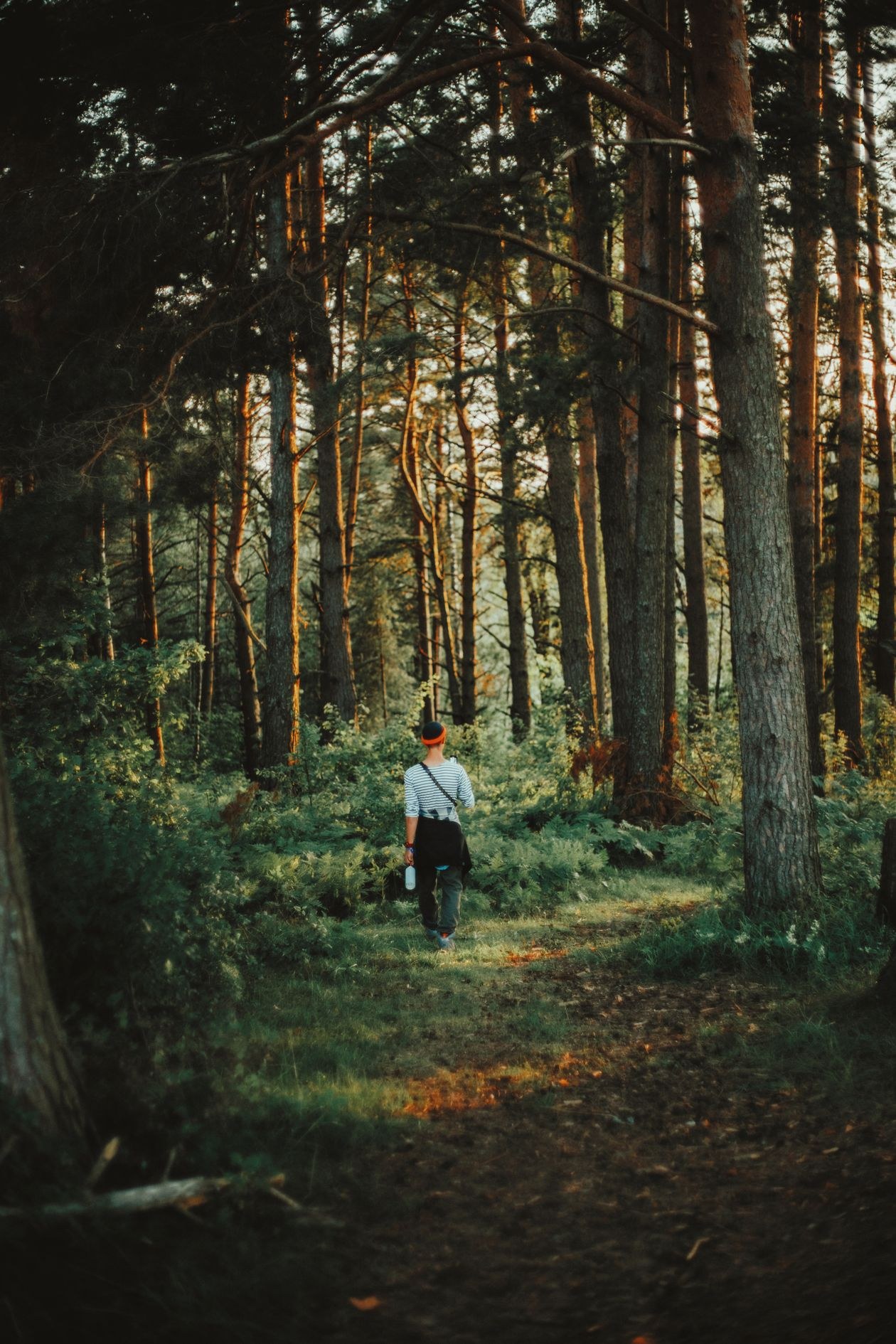
Walking deserves special mention because it is easy to fit into an ordinary day. A short walk after a meal, for example, can become a calming routine rather than another chore, and you can read more about that habit in the benefits of walking after eating. If you want variety, walking backwards is another gentle option some people use for balance and focus, though you should only try it somewhere safe and flat. For a broader sense of what counts as an active day, see how many steps a day is considered active. The point of these links is not a step target to chase, but a reminder that ordinary walking already counts as movement.
It helps to attach movement to something you already do. Walk while you listen to a podcast, stretch while the kettle boils, or take the stairs once a day. On a hard day, lower the bar: a five-minute walk still breaks the pattern of sitting with worried thoughts.
Build Calm Into Your Daily Routine
Stress often feels worse when daily basics slip. NIMH’s coping list includes eating healthy, regular meals, sticking to a sleep routine, and avoiding excess caffeine, and the CDC likewise advises a daily routine that includes rest, exercise, and healthy eating. These are not glamorous steps, but they protect the foundation that calmer days are built on.
Sleep comes first for many people. Go to bed and wake up at roughly the same times each day, and wind down before bed by dimming lights and putting screens aside. If your mind races at night, write the worry and one next step for tomorrow on a notepad, then leave it there. Avoiding excess caffeine later in the day also helps sleep.
Regular meals matter for a similar reason. Skipping meals can leave you low on energy and quicker to feel overwhelmed, while balanced meals at regular times help keep energy steadier. This needs no special diet: simple, familiar foods, enough water, and a pause to eat without rushing are enough. If eating patterns are a struggle in themselves, talk to a healthcare professional.
Routine also means deciding what can wait. NIMH’s wider guidance encourages setting priorities, deciding what must get done now and what can wait, and learning to say no when you are already carrying too much. At the end of the day, notice what you finished rather than only what remains.
Use Writing And Mindfulness To Untangle Worried Thoughts
Two quiet tools complement movement and routine: writing and mindfulness. NIMH lists keeping a journal among its coping activities, and describes mindfulness as actively paying attention to the present moment. Neither requires special skill, and neither asks you to force positive thoughts.
Journaling works best when it is short and honest. Write for five to ten minutes about what is worrying you, what triggered it, and one small step you could take. Another useful prompt is to challenge an unhelpful thought gently: is there another way to see this, what supports a calmer view, and what would you say to a friend in the same position? Putting the thought on paper makes it easier to examine.
Mindfulness can be equally simple. Choose one ordinary activity, such as drinking tea or walking, and give it your full attention for a few minutes: the warmth of the cup, the sound of the water, the feeling of your feet on the ground. When your mind wanders, gently return your attention without scolding yourself. Apps offering relaxation exercises can support this, as NIMH notes, but an app is optional.
A related skill is noticing what you can and cannot control. You cannot control every deadline or other people’s behavior, but you can control your next small action: a reply, a boundary, a break, or a request for help. Listing what you can influence, and what you cannot, often makes a large worry feel smaller.
Connect With People Who Help You Cope
Stress grows heavier in isolation. Both NIMH and the CDC advise reaching out to friends or family members who help you cope in a positive way, and the CDC adds that talking about your feelings with others, including trusted community or faith contacts, can help. Connection does not have to mean a long, serious conversation. A short walk with a friend, a phone call, a shared meal, or a message that says you are having a hard day can be enough.
Choose your connections with care. The people who help most usually listen without rushing to fix everything and do not add new pressure. If a relationship regularly leaves you drained, limit that contact while you recover. Helping others in small doses, such as a favor for a neighbor, can also shift attention away from your own worries, as long as it does not become another overload.
If you find it hard to ask for help, start small and specific. Say you have had a stressful week and would value a walk or a chat. A clear, modest request is easier for others to answer, and asking once makes asking again easier.
Know When To Ask For Professional Help
Self-help steps have limits, and recognizing those limits is part of coping well. NIMH advises talking to a professional if you are struggling to cope or if the symptoms of your stress or anxiety will not go away. The CDC gives the same advice in simpler terms: talk to a healthcare provider about how you are feeling, and consider making an appointment with a counselor.
Consider seeking help sooner rather than later if stress or anxiety interferes with your everyday life, causes you to avoid things you need to do, seems to be always present, or lasts for two weeks or more in a severe or distressing form. Psychotherapy (talk therapy) and medication are the two main treatments for anxiety, according to NIMH, and many people benefit from a combination. A healthcare provider can help you find the right starting point.
If you or someone you know is struggling or in crisis, do not wait. In the United States, call or text 988 to reach the Suicide and Crisis Lifeline, as listed in CDC guidance. Seeking help in that moment is a strong and sensible step, not a failure of coping.
A Calmer Day Is Built, Not Found
Reducing stress and anxiety is rarely about finding one perfect technique. It is about a small set of habits you can return to: slow breathing, movement you enjoy, regular sleep and meals, a few minutes of writing or mindfulness, and honest connection with supporters. Some days these will work well, and some days they will only take the edge off; both are normal.
Start with one change this week rather than all of them at once. Pick the easiest step, such as a short daily walk or a regular bedtime, and practice it for a week before adding another. Notice what helps and keep what fits. If stress or anxiety keeps interfering with your life, treat professional help as the next practical step, not a last resort.
This article is general information only. It is not medical advice, and it does not replace professional care. If stress or anxiety is persistent, severe, or interferes with your daily life, talk to a healthcare professional. If you are in crisis or think you may act on harmful urges, seek urgent help right away — in the United States, you can call or text 988 to reach the Suicide and Crisis Lifeline.
Frequently Asked Questions
What Is The Fastest Way To Calm Down When Stressed?
Slow, steady breathing and a brief pause are often the fastest tools, because they can be done anywhere. The CDC advises taking five minutes to breathe and relax before returning to a task. If the feeling does not ease, a short walk or a change of scene can also help.
What Is The Difference Between Stress And Anxiety?
Stress is generally a response to an external cause, such as a deadline or an argument, and it often eases once the situation is resolved. Anxiety is your body’s reaction to stress, and it can persist as a feeling of apprehension or dread even when there is no immediate threat, according to NIMH.
Can Walking Really Help With Stress And Anxiety?
Walking can help as part of a wider routine, because movement, fresh air, and a break from screens give both body and mind a change of pace. NIMH lists exercise among its coping activities, and the CDC advises being active in a way that works for you. Walking is not a treatment on its own, but it is a practical, repeatable habit.
How Long Should I Try Self-Help Before Seeking Professional Help?
There is no fixed waiting period. NIMH advises talking to a professional if you are struggling to cope or if symptoms will not go away, and sooner if they interfere with daily life, cause avoidance, or seem always present. If symptoms are severe, distressing, or have lasted two weeks or more, seek professional advice promptly.
Does Caffeine Make Anxiety Worse?
For many people, excess caffeine can worsen restlessness and disturb sleep, which in turn makes stress harder to manage. NIMH lists avoiding excess caffeine among its coping activities. You do not necessarily need to give it up entirely, but noticing how much you drink, and when, is a useful first step.
Sources Consulted
- National Institute of Mental Health (NIMH), “I’m So Stressed Out!” Fact Sheet — stress vs. anxiety, shared symptoms, coping activities (journaling, mindfulness and relaxation exercises, exercise, regular meals, sleep routine, avoiding excess caffeine, challenging unhelpful thoughts, reaching out for support), and when to talk to a professional: https://www.nimh.nih.gov/health/publications/so-stressed-out-fact-sheet
- Centers for Disease Control and Prevention (CDC), “How Right Now: Stress” — stress as the body’s response to pressure, taking five minutes to breathe and relax, being active, connecting with others, keeping a routine with rest, exercise and healthy eating, seeking professional help, and the 988 Suicide and Crisis Lifeline: https://www.cdc.gov/howrightnow/emotion/stress/index.html
- Pexels photo pages consulted for image selection and credits: https://www.pexels.com/photo/woman-meditating-in-bedroom-3772612/ and https://www.pexels.com/photo/person-walking-in-a-forest-10375769/
Note on claims: This article makes no claims about specific studies, statistics, or treatment outcomes beyond what the NIMH and CDC sources above state. Where a source gives general guidance rather than a number, the article reports it as general guidance.
