


A morning and night skincare routine does not need ten products or a complicated set of rules. It needs two short routines that do different jobs: one that prepares and protects your skin for the day, and one that cleans off the day and helps your skin recover overnight.
Cleveland Clinic dermatologist Shilpi Khetarpal, MD, describes the morning routine as the part of the day for protection, in contrast to the nighttime routine, which focuses on repair. This guide follows that idea, step by step. It is general information only, not personal medical advice. If you have a skin condition or a rash that does not settle, a dermatologist can advise you in person.
Key Takeaways
- A morning and night skincare routine has two jobs: protect by day, clean and repair by night.
- Morning: cleanser, moisturizer, and sunscreen, with an optional antioxidant serum.
- Night: a thorough cleanse, one treatment if you use one, and moisturizer.
- Apply products from lightest to heaviest, with sunscreen last in the morning.
- Choose a broad-spectrum sunscreen with SPF 30 or higher, and use it every day.
- Introduce new products one at a time, so you can tell what helps and what irritates.
How Morning And Night Routines Differ
Your skin faces different demands by day and by night, so the two routines should not be copies of each other. By day, skin is exposed to sunlight, air pollution, and the weather. At night, the focus shifts to removing what the day left behind.
That is why sunscreen belongs only in the morning. It is the last step before makeup and going outside, and it has no job overnight. Strong treatments usually belong at night instead, since many can make skin more sensitive to sunlight, and the evening gives them hours to work without sun or makeup on top.
The cleanser appears in both routines: in the morning it removes oil and sweat from overnight, and at night it removes sunscreen, makeup, and the day’s dirt and oil. The American Academy of Dermatology (AAD) recommends washing your face when you wake up, before bed, and after sweating, with a mild cleanser, lukewarm water, and your fingertips rather than a rough cloth or scrub.
Your Morning Skincare Routine Step By Step
The morning routine has three aims: clean gently, add moisture, and protect from ultraviolet (UV) rays. Everything beyond that core is optional. For the morning steps on their own, see our guide to the morning skincare routine.
Step 1: Cleanse Gently
Wash your face with lukewarm water and a gentle cleanser, using your fingertips, then rinse and pat dry with a clean towel instead of rubbing. Hot water can strip the skin’s natural oils. Dry skin often does better with a creamy cleanser, oily skin with a light gel or foaming formula. If your skin feels tight after washing, the cleanser may be too harsh.

Step 2: Add An Antioxidant Serum If You Use One
After cleansing, you may apply an antioxidant serum or cream. This step is optional. Cleveland Clinic describes antioxidant products as those containing ingredients such as vitamin C, vitamin E, or ferulic acid, which are described as helping to protect the skin from molecules in the environment, known as free radicals, that can damage skin over time. Apply a few drops evenly, avoid the eye area unless the product is made for it, and let it absorb. Serums are lighter than creams, so they come first. Our guide to understanding skincare ingredients explains the common ones in plain language.
Step 3: Moisturize For Your Skin Type
Moisturizer helps the skin hold on to water and supports its natural barrier, the outer layer that keeps moisture in and irritants out. Apply it after cleansing and any serum, while the skin is still slightly damp, and include the neck. A light lotion often suits oily or combination skin, while a richer cream usually suits dry skin better.
Step 4: Finish With Sunscreen Every Morning
Sunscreen is the last step of a morning skincare routine, and the one dermatologists emphasize most. The AAD recommends a broad-spectrum, water-resistant sunscreen with SPF 30 or higher every day before going outside, including in fall and winter, because UV exposure continues year-round. Apply it after all other skincare products and before makeup, covering the face, ears, and neck, about 15 minutes before going outdoors, and reapply as directed, particularly after swimming or sweating. UV rays pass through clouds, so a daily habit removes the need to decide each morning whether the weather justifies it.
Your Night Skincare Routine Step By Step
The night routine is shorter than many people expect. Its jobs are to clean the skin thoroughly, add one treatment if you want one, and moisturize well. There is no sunscreen and no rush, so this is the part of the day to be gentle and unhurried.
Step 1: Remove Makeup And Sunscreen, Then Cleanse
Start by removing makeup and sunscreen. If you wear long-wear makeup or a water-resistant sunscreen, use a cleansing balm, oil, or micellar water first, then your usual gentle cleanser. On light days, one gentle cleanse is usually enough. Use lukewarm water, a mild cleanser, and your fingertips, then pat dry. Do not skip the evening cleanse, even on tired nights: sunscreen and makeup left on overnight can clog pores and irritate the skin.
Step 2: Use One Treatment At A Time
Night is the best time for a treatment product, because the skin has hours without sun or makeup. A treatment might be a hydrating serum, a product for breakouts, or a retinol product for texture and fine lines. Choose one, and use it as its label directs. Do not stack several strong products on the same night: they can irritate the skin, often looking like dryness, redness, or peeling. If you want to try retinol, start slowly, a few nights a week, and build up only if your skin stays comfortable. If a product stings or makes your skin sore, stop using it. Prescription treatments are a conversation for your dermatologist.
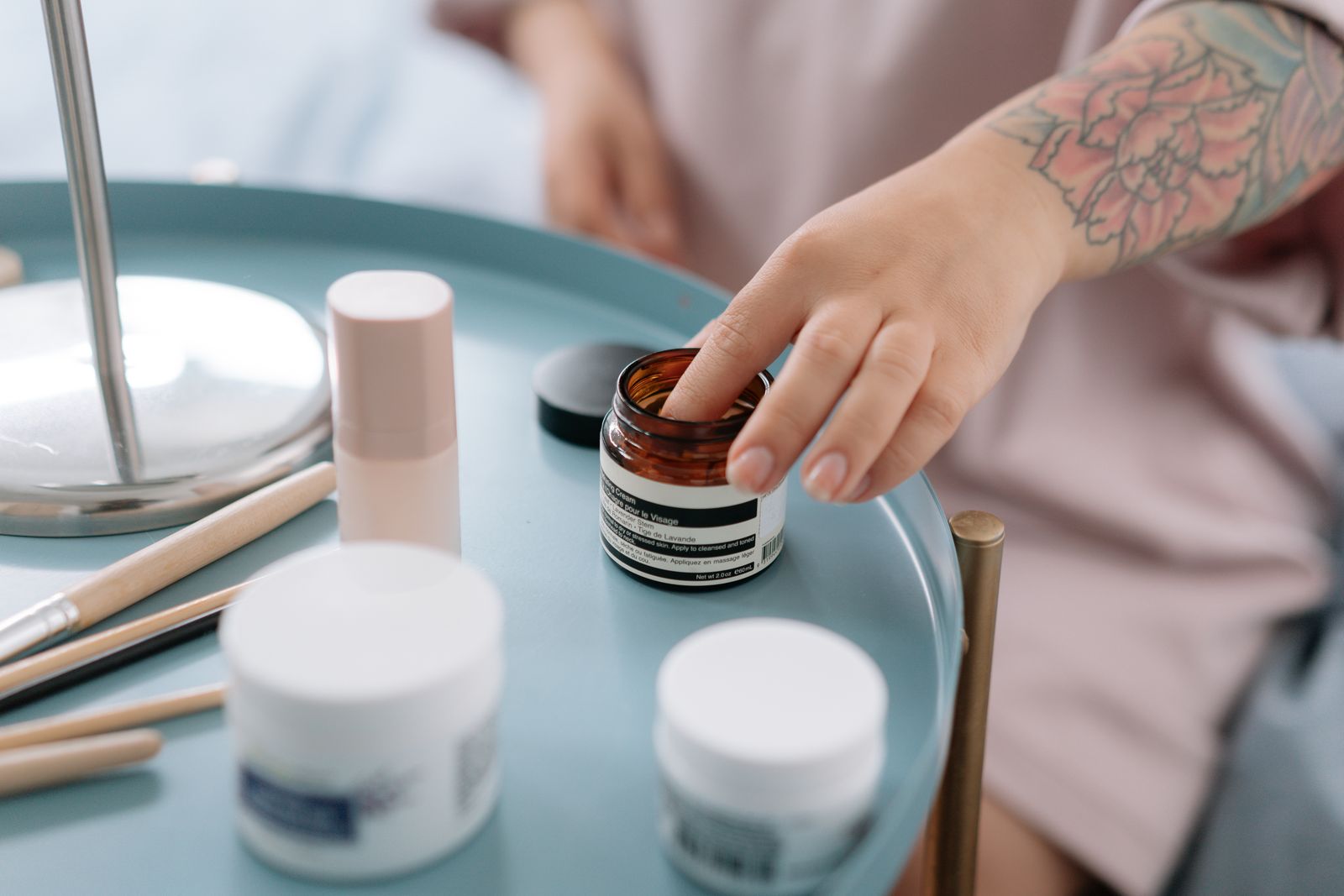
Step 3: Moisturize Well
Finish with moisturizer, and do not be shy with it at night. A slightly richer cream makes most sense here, because there is no sunscreen or makeup to go on top. Apply it to your face and neck while the skin is still slightly damp. If your skin is very dry, a richer cream can help it feel comfortable by morning. If your skin is oily, a light lotion is still better.
How To Adapt The Routine To Your Skin Type
No single routine suits everyone, and skin type is the main reason to adjust the steps above. The AAD describes the common skin types as oily, dry, combination, normal, and sensitive. If your skin is oily, a light gel cleanser and a lightweight, oil-free moisturizer often work well, and products labeled non-comedogenic are designed not to clog pores. If your skin is dry, a creamy cleanser and a richer moisturizer will usually feel more comfortable. Sensitive skin benefits most from fragrance-free products and a short routine.
Common Mistakes To Avoid
Several habits quietly undo an otherwise good routine. Water that is too hot can strip the skin’s natural oils. Scrubbing with a rough cloth is unnecessary when gentle fingertips and a soft towel are enough. Applying products in the wrong order also causes problems: a heavy cream before a light serum can block the serum, and moisturizer over sunscreen can disturb its protective layer. The rule is lightest to heaviest, with sunscreen last in the morning.
- Starting several new products on the same day, so you cannot tell which one caused irritation.
- Using a strong treatment every night from the start, instead of building up slowly.
- Skipping sunscreen on cloudy days.
- Exfoliating too often, or on the same night as a strong treatment.
- Judging a product after a single use, when it can take weeks to know whether it is working.
If your skin becomes red, flaky, or sore, simplify rather than adding more: cleanser, moisturizer, and sunscreen in the morning, and cleanser and moisturizer at night, until it feels calm again.
A Simple Routine At A Glance
Here is the core sequence for both parts of the day, in one place.
- Morning: cleanse gently, apply an antioxidant serum if you use one, moisturize, and finish with broad-spectrum sunscreen, SPF 30 or higher.
- Night: remove makeup and sunscreen, cleanse gently, apply one treatment if you use one, and moisturize well.
- On short mornings, the non-negotiable trio is cleanser, moisturizer, and sunscreen.
- On tired nights, the non-negotiable pair is a proper cleanse and moisturizer.
When To See A Dermatologist
Most skin responds well to a gentle, consistent routine, but some problems need in-person advice. See a dermatologist if a rash or sore does not heal, if breakouts are severe or leave scars, if a mole changes in size, shape, or colour, or if a reaction does not settle after you stop using a product. The guidance here is for healthy skin and everyday care, not a substitute for medical advice.
Conclusion
A morning and night skincare routine works best when it stays simple and consistent. In the morning, clean gently, moisturize, and protect with sunscreen. At night, clean thoroughly, use one treatment if you want one, and moisturize well. Choose products for your skin type, add new ones one at a time, and give them time to work.
Frequently Asked Questions
Can I Use The Same Moisturizer In The Morning And At Night?
Yes, in most cases you can. Some prefer a lighter lotion in the morning, so it sits well under sunscreen and makeup, and a richer cream at night. If your moisturizer works for you, there is no need to buy a separate night cream.
How Long Before I See Results From A New Skincare Routine?
Give a new routine several weeks before judging it. AAD guidance notes it can take at least 30 days to know whether a product is working, unless it clearly irritates your skin, in which case stop using it. Small changes may appear sooner, but changes in tone or texture take longer.
Should I Wear Sunscreen If I Stay Indoors All Day?
It is still worth wearing sunscreen on most days, because UV rays pass through windows and clouds, and many people go outside briefly without thinking about it. A daily habit is simpler than deciding each day whether you need it.
Can I Use Vitamin C In The Morning And Retinol At Night?
Many people do, because that keeps the two ingredients in separate routines: vitamin C in the morning as an antioxidant step, and retinol at night. Start each one slowly and separately, so you can tell how your skin reacts to each, and do not add both on the same day.
What If My Skin Gets Worse After Starting A New Routine?
Stop the newest product first and go back to the simple core: cleanser, moisturizer, and sunscreen in the morning, and cleanser and moisturizer at night. Give your skin a week or two to settle before adding anything back, one product at a time. If redness, swelling, or pain does not settle, or if a rash spreads, see a dermatologist rather than trying another new product.
