
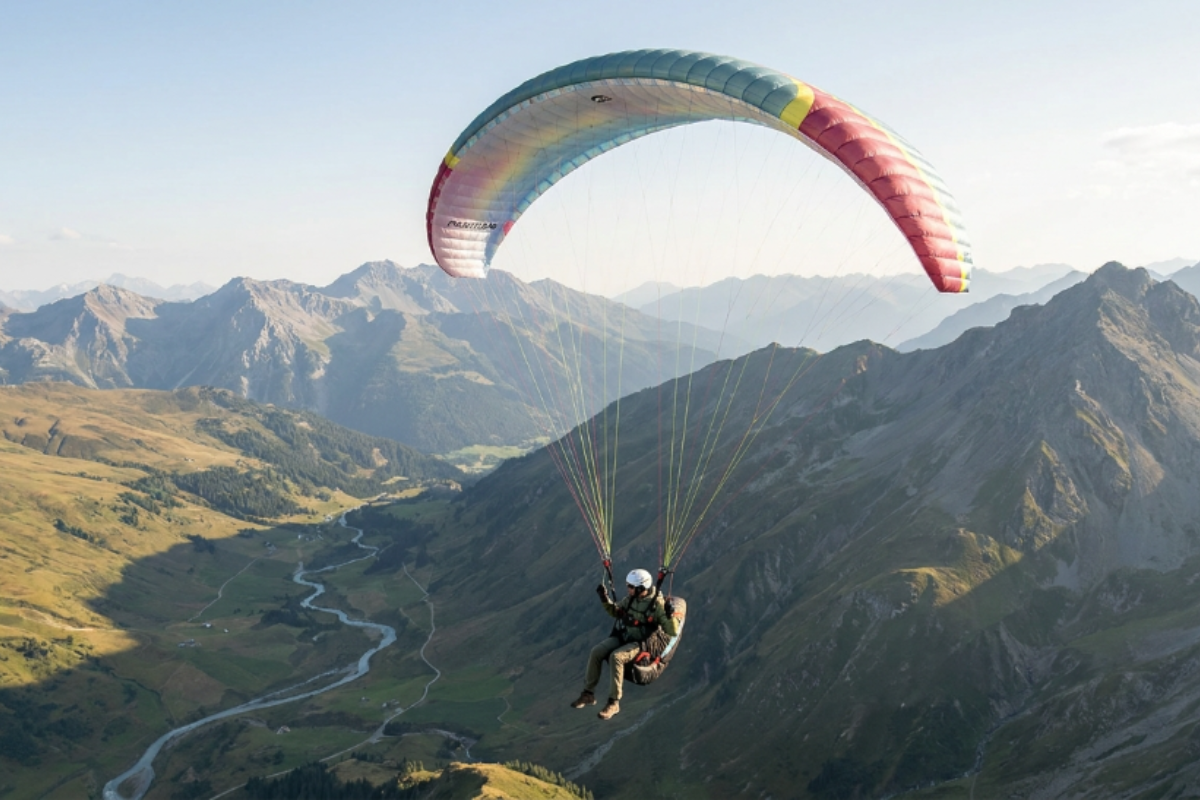
Paragliding is a form of recreational and competitive flying in which a person uses a lightweight wing to glide through the air. Unlike an aircraft, a paraglider does not have an engine. The pilot launches from the ground, uses air movement to stay airborne, and controls the direction and speed of the flight.
A paraglider usually consists of a flexible fabric wing connected by lines to a harness. The pilot sits in the harness beneath the wing and uses control lines and body movements to guide it. Although the equipment looks simple, safe paragliding requires proper training, suitable weather, and careful equipment checks.
This guide explains how paragliding works, the equipment involved, how pilots launch and land, how weather affects flight, and what beginners should know about training and safety.
How Paragliding Works?
The main part of a paraglider is its curved fabric wing. When air moves around the wing as it travels forward, the wing produces lift. This lift can support the pilot and equipment in the air while the paraglider gradually moves forward and downward through the air.
A paraglider normally does not stay at the same height simply by floating. It descends through the air, but pilots can use rising air to gain or maintain altitude. Thermals, which are areas of rising warm air, and air that rises along hills or mountains can provide useful lift.
Pilots control the paraglider mainly with brake controls and by shifting their body weight. These controls allow them to turn, adjust their flight path, and manage their speed. Gravity provides the downward force that helps the wing move through the air, while wind and rising air can influence the flight path and altitude.
The Main Parts of a Paraglider
The paraglider wing is the large fabric surface that provides lift. It is designed to inflate with air and maintain its shape during flight.
The harness supports the pilot and connects them to the wing. It is designed to provide comfort while also offering protection during flying and landing.
Lines and risers connect the harness to the wing. The lines transfer the pilot’s control inputs and help support the wing.
Brake controls are connected to the wing and allow the pilot to influence its direction and speed. Pilots learn how to use these controls during training.
A reserve parachute is an important emergency item. It is carried separately from the main wing and can be deployed if a serious problem makes the main paraglider unusable.
A helmet and protective equipment help reduce the risk of injury. Depending on the equipment and flying conditions, pilots may also use additional protective features.
Some pilots use flight instruments, such as GPS-based devices, variometers, or radios. These can provide useful information about altitude, location, rising air, and communication.
Launching, Flying, and Landing
Before takeoff, a pilot checks the wing, lines, harness, reserve system, and surrounding conditions. A proper pre-flight check helps identify equipment problems before leaving the ground.
During a basic launch, the pilot positions the wing correctly and allows it to fill with air. The pilot then moves forward to help the wing become fully inflated and generate enough lift for takeoff. The exact launch technique depends on the site, wind, equipment, and training.
Once airborne, the pilot uses the brake controls and body position to guide the paraglider. Gentle control inputs are important because sudden movements can affect the wing’s flight.
Turning allows the pilot to change direction and choose a suitable flight path. Pilots may also use rising air to extend their flight when conditions are appropriate.
Before landing, the pilot selects a suitable landing area and prepares for a controlled approach. The final part of the flight requires careful control of the wing and awareness of the wind and surrounding area. Beginners should learn launch and landing techniques directly from qualified instructors rather than attempting them independently.
Lift, Thermals, and Soaring
Lift is one of the most important ideas in paragliding. It is the upward movement of air that can help a paraglider maintain or increase altitude.
Thermal lift forms when warmer air rises from the ground. When pilots locate suitable rising air, they can circle within it and gain altitude. Thermal conditions can vary during the day and are affected by sunlight, terrain, and weather.
Ridge lift occurs when wind is pushed upward by a hill, ridge, or mountain. A pilot can use this rising air to remain airborne near suitable terrain.
Soaring is the practice of using rising air to extend a flight rather than simply descending toward the ground. However, rising air is not always smooth or predictable. Terrain, wind, temperature, and other weather factors can change flight conditions quickly.
Learning to Paraglide
Learning paragliding should begin with qualified instruction. Flying without proper training can expose a beginner to risks they may not know how to recognize or manage.
Training commonly includes ground handling, basic control skills, takeoff and landing techniques, weather awareness, and progressively more advanced flights. Students normally build their skills step by step rather than attempting complex flying immediately.
Takeoff and landing are particularly important skills because they occur close to the ground. Students also learn how to recognize changing conditions and decide when flying is appropriate.
Certification or licensing requirements depend on the country and local flying organization. Anyone planning to learn should check the rules that apply to the location where they intend to fly.
Paragliding Weather and Flying Conditions
Weather has a major effect on paragliding. Wind direction and strength influence takeoff, flight, and landing conditions. Suitable conditions depend on the location, terrain, pilot experience, and type of flying.
Thermals can provide useful lift, but strong or changing thermal activity can also create challenging conditions. Turbulence and unstable air can make a flight more difficult, particularly for inexperienced pilots.
Pilots should check reliable weather information before flying and consider conditions at the actual flying site. A forecast alone is not enough to guarantee safe conditions.
Strong winds, storms, severe turbulence, poor visibility, or rapidly changing weather can make flying unsuitable. Pilots should follow local guidance and avoid flying when conditions exceed their training and experience.
Paragliding Safety and Risks
Paragliding is an air sport and carries real risks. Safety depends on many factors, including pilot training, weather, equipment, flying location, and decision-making.
Proper instruction helps pilots understand how to handle the wing and recognize conditions that may be unsuitable for flight. Regular equipment checks are also important because damage or wear can affect performance.
Pilots should assess the launch and landing areas and understand the local environment before flying. Protective equipment, including a suitable helmet and reserve parachute, can provide additional protection in an emergency.
Perhaps the most important safety habit is knowing when not to fly. Experienced pilots also need to respect weather limits and personal skill limits. Good decision-making is a central part of responsible paragliding.
Tandem Paragliding for First-Time Flyers
Tandem paragliding allows a passenger to fly with a qualified tandem pilot under a larger wing designed to carry two people. The pilot handles the flight while the passenger normally enjoys the experience without needing to control the paraglider.
Before the flight, the pilot explains basic instructions, including how to prepare for takeoff and landing. The passenger should follow these instructions carefully.
Tandem flights can give people an introduction to paragliding without requiring them to complete pilot training first. However, the flight should be conducted by a properly qualified pilot using appropriate equipment and suitable conditions.
Different Types of Paragliding
Paragliding includes several forms of flying. Recreational paragliding focuses on enjoying flight and developing personal flying skills.
Tandem paragliding involves a trained pilot and passenger flying together. Cross-country paragliding involves traveling longer distances by using suitable lift and planning a route through the air.
Competitive paragliding involves organized events where pilots compete according to specific rules. Accuracy paragliding focuses on controlled approaches and landing as accurately as possible.
Acro paragliding involves advanced aerial maneuvers and is intended for highly experienced pilots with specialized training. Hike-and-fly combines hiking or climbing with paragliding and has become another recognized form of the sport.
Paragliding Equipment for Beginners and Experienced Pilots
Essential paragliding equipment generally includes a suitable wing, harness, lines and risers, helmet, reserve parachute, and appropriate protective equipment. Pilots may also carry communication and flight instruments.
Beginners normally use equipment selected for their level of training and experience. Equipment should not be chosen only because it looks advanced or offers higher performance. The right equipment should be appropriate for the pilot’s ability and intended flying.
As pilots gain experience, their equipment may change according to their flying goals. Regardless of experience, equipment needs regular inspection and proper care. Wings, lines, harnesses, reserve systems, and other equipment should be checked according to manufacturer and qualified professional guidance.
How High, Far, and Long Can You Paraglide?
There is no single answer to how high, far, or long a person can paraglide. Flight conditions, terrain, weather, equipment, pilot experience, and local rules all affect the result.
A pilot may stay airborne longer when suitable rising air is available. Thermals and ridge lift can allow an experienced pilot to maintain or gain altitude instead of continuously descending.
Cross-country pilots can use suitable weather and lift to travel significant distances, while recreational flights may be much shorter. These different types of flying require different levels of skill and planning.
Paragliding Costs and Ongoing Expenses
The cost of paragliding varies widely depending on location and the type of experience. Beginners may spend money on lessons, while people trying tandem paragliding usually pay for an individual flight.
Pilots who continue with the sport may eventually need their own wing, harness, reserve parachute, helmet, and other equipment. Training and certification can also add to the overall cost.
There can also be ongoing expenses for equipment inspections, maintenance, replacement parts, travel to flying sites, and other needs. Prices differ between countries, schools, operators, and equipment brands, so local research is important.
Who Can Learn Paragliding?
Many people can learn paragliding with suitable instruction, but individual requirements vary. Beginners should meet the requirements of their local training organization or instructor.
Age requirements can differ by location. Physical fitness also matters because launching, landing, carrying equipment, and controlling the wing require some physical ability.
Weight is another consideration because wings and harness systems have specified operating ranges. A qualified instructor can help determine whether particular equipment is appropriate.
Patience, good judgment, and a willingness to follow instructions are valuable qualities for a beginner. Local regulations and instructor requirements should always be checked before starting training.
What to Wear for Paragliding?
Clothing should be comfortable and suitable for the weather. Temperatures can feel different in the air, so layers can be useful in cooler conditions.
Suitable footwear can provide support during walking, launching, and landing. A properly fitted helmet is also an important part of protective equipment.
What a pilot wears may depend on the season, altitude, location, and type of flight. The goal is to remain comfortable without allowing clothing or equipment to interfere with safe control of the paraglider.
Paragliding Compared With Other Air Sports
Paragliding vs. hang gliding: Both use wings and rising air, but their equipment and pilot position are different. A paraglider uses a flexible fabric wing and a suspended harness, while a hang glider generally uses a rigid frame and a different body position.
Paragliding vs. skydiving: Skydiving normally begins with a jump from an aircraft and uses a parachute for descent. Paragliding generally begins from a suitable launch area and is designed for controlled gliding through the air.
Paragliding vs. parasailing: Parasailing normally involves a person being towed behind a boat while attached to a parasail. Paragliding is a free-flying activity in which the pilot launches and controls the paraglider.
Paragliding vs. paramotoring: Paramotoring adds a motor and propeller system to provide powered flight. Standard paragliding relies on gravity, wind, and naturally rising air rather than an engine.
Conclusion: Understanding Paragliding Before Taking Flight
Paragliding combines a lightweight wing, careful control, and natural air movement to create a unique form of flight. Understanding how the wing works, how pilots launch and land, and how lift and weather affect a flight provides a useful foundation for anyone interested in the sport.
For beginners, proper instruction and appropriate equipment are essential. Weather awareness, regular equipment checks, and sensible decision-making are equally important. Whether someone is interested in a tandem experience or hopes to become a trained pilot, learning the fundamentals of paragliding is the first step toward approaching the sport responsibly.
FAQs
What is paragliding?
Paragliding is a form of flying that uses a lightweight flexible wing and harness to allow a pilot to glide through the air without an engine.
How does paragliding work?
A paraglider uses a fabric wing that generates lift as air moves around it. The pilot controls the wing using brake controls and body position.
Is paragliding safe?
Paragliding has risks, but proper training, suitable equipment, weather awareness, and responsible decision-making can help manage those risks.
Is paragliding dangerous?
It can be dangerous because it is an air sport and conditions can change. Training and appropriate flying decisions are important for reducing avoidable risks.
Can beginners learn to paraglide?
Yes. Beginners can learn through structured training with qualified instructors and should progress according to their skill level.
How long does it take to learn paragliding?
The time varies according to the student, training program, weather, and local requirements. Progress should be based on demonstrated skills rather than a fixed number of days.
How high can a paraglider fly?
Altitude depends on weather, terrain, local rules, equipment, and pilot ability. Rising air can allow a paraglider to gain significant altitude.
How long can a paraglider stay in the air?
Flight duration depends mainly on available lift, weather, terrain, equipment, and the pilot’s skills. Some flights are short, while suitable conditions can allow much longer flights.
What equipment is needed for paragliding?
A pilot generally needs a suitable paraglider wing, harness, lines and risers, control system, helmet, and reserve parachute, along with other equipment appropriate to the type of flying.
What weather is best for paragliding?
Suitable weather generally includes manageable wind and stable conditions appropriate for the pilot’s skill level. Local weather and site conditions should always be assessed before flying.
How much does paragliding cost?
Costs vary by location and activity. Training, tandem flights, equipment, certification, maintenance, and travel can all contribute to the total expense.
What is tandem paragliding?
Tandem paragliding is a flight in which a qualified pilot and passenger fly together under a paraglider designed to carry two people.
