

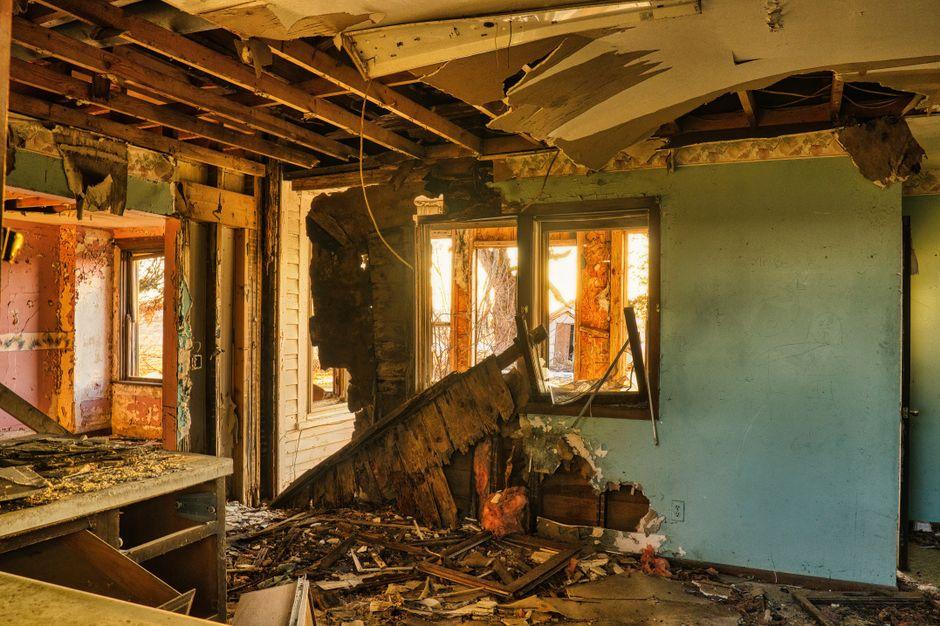
You probably think home damage is obvious: a burst pipe, a kitchen fire, a ceiling stain that keeps spreading. In reality, the hardest part is what happens right after the visible mess. Moisture hides behind drywall, smoke residue settles into HVAC systems, and mold can start growing within a day or two. If you want to protect your home, your budget, and your indoor air quality, you need to know what damage actually looks like once the emergency phase ends.
Damage usually spreads faster than you expect
A lot of homeowners focus on the event itself and underestimate the secondary damage. One overflowing washing machine can soak subflooring, insulation, trim, and adjacent rooms within hours. A small grease fire may leave soot particles in places you wouldn’t think to check, including closets and return vents.
The main issue is migration. Water follows gravity and porous materials. Smoke moves through air pathways and clings to synthetic surfaces. Mold spores settle wherever moisture and organic material meet. That means the first wet or burned area is rarely the only problem zone.
You’re not just dealing with a surface mess. You’re dealing with a chain reaction across building materials. Drywall, engineered wood, carpeting, and HVAC components all respond differently, and each one can affect how expensive and disruptive the cleanup becomes.
Not every cleanup company handles true restoration work
A common mistake is assuming general cleaning and restoration are basically the same thing. They’re not. A standard cleaning crew may remove debris and wipe surfaces, but restoration work usually involves water extraction, structural drying, deodorization, contamination control, and material salvage decisions.
If you’re comparing providers, pay attention to whether they handle category-based water loss, smoke and soot residue, and mold containment protocols. A reliable provider of restoration services should be able to explain the difference between drying a room and returning a structure to a stable, safe condition.
That distinction matters for documentation too. Adjusters often need itemized records, moisture readings, photos, and notes on affected assemblies. A vague cleanup summary won’t help much when you’re trying to justify repairs or replacement costs.
The first 48 hours can decide the final repair bill
If you wait too long, cleanup often turns into demolition. That sounds dramatic, but moisture intrusion has a strict timeline. Within 24 to 48 hours, damp drywall paper, wood framing, and carpet padding can support microbial growth. Once that happens, the scope changes from drying to remediation.
This early window matters after fire damage too. Acidic soot residues can etch metal finishes, discolor paint, and permanently stain plastics if they sit too long. Smoke odor also becomes harder to remove once particles settle deep into fabrics and ductwork.
A practical response starts with stopping the source, documenting damage, and checking hidden areas, not just visible ones. Moisture meters, infrared imaging, and containment planning aren’t overkill. They’re standard tools for figuring out whether the damage is isolated or already moving through the building envelope.
Hidden moisture is the part that keeps causing trouble
Visible water is only part of the story. What usually creates long-term issues is residual moisture trapped behind baseboards, under laminate flooring, inside wall cavities, or beneath tile backer board. You may think the room dried out because the surface feels normal, while the substructure is still wet.
This is where moisture mapping becomes useful. Professionals often track wet zones by material type and saturation level, then set drying goals based on acceptable equilibrium moisture content. That sounds technical, but the takeaway is simple: drying isn’t based on guesswork.
A real-world example is a bathroom supply-line leak that appears minor. Three weeks later, paint starts bubbling in the hall outside the bathroom, and the flooring feels slightly uneven. By then, the water has already moved laterally, and the repair scope is bigger than it looked on day one.
Fire damage is often more about residue than flames
When people picture fire damage, they usually imagine blackened framing and severe structural loss. In many homes, the bigger challenge is residue distribution. Even a contained stove fire can send ultrafine soot into nearby rooms. If the HVAC system was running, particles may spread much farther than expected.
Different residues need different treatment. Dry soot behaves differently from oily protein residue, and both respond differently to cleaning agents and agitation methods. Using the wrong product can smear contamination or drive it deeper into surfaces.
Odor removal also takes more than opening windows. Smoke particles lodge in insulation, textiles, and painted surfaces. Effective deodorization may require source removal, HEPA filtration, thermal fogging, or hydroxyl and ozone strategies, depending on occupancy needs and material sensitivity.
Mold is usually a moisture management failure, not a random event
Mold tends to get framed as a surprise, but it usually shows up after a leak, poor ventilation, high indoor humidity, or incomplete drying. In other words, it’s less about bad luck and more about building conditions. If you solve the stain and ignore the moisture source, the problem often returns.
Bathrooms, basements, laundry areas, and poorly ventilated attics are frequent trouble spots. You might notice a musty odor before you see visible growth. That smell often points to hidden colonization inside wall cavities or under flooring rather than a small patch on the surface.
Containment is a major factor here. Scrubbing visible mold without isolating the area can spread spores to clean parts of the house. In heavier cases, negative air pressure, HEPA vacuuming, and controlled material removal are part of standard remediation practice.
Can help, but documentation has to be precise
A lot of claim frustration comes from weak records, not just policy limits. If damage occurs, take clear photos before moving items, note the timeline, save receipts, and record what was affected room by room. If a contractor takes moisture readings or identifies contaminated materials, ask for that in writing.
It also helps to understand that policies often distinguish between sudden events and long-term neglect. A pipe burst may be covered, while ongoing seepage behind a wall may not be. Mold coverage can be especially limited, depending on the cause and your endorsements.
You don’t need to become an expert overnight. You do need organized evidence. The more clearly you can show cause, extent, and mitigation steps, the easier it is to support your claim and avoid disputes about what was pre-existing versus newly damaged.
Smart prevention is boring, but it saves you thousands
Most major home damage starts with small maintenance failures people put off because nothing seems urgent. Caulking cracks, slow plumbing drips, clogged gutters, aging supply lines, and weak bathroom ventilation don’t look dramatic until they combine into a much more expensive problem.
A strong prevention routine is simple. Check under sinks monthly, inspect appliance hoses, clean gutters, test sump pumps, and look for staining around windows and attic penetrations. Keep indoor humidity in a healthy range, especially in basements. If something smells off, investigate early rather than waiting for visible proof.
The bigger point is that restoration isn’t only about emergencies. It’s also about understanding how homes fail in real life. Once you see the pattern, you can catch problems earlier, make better repair decisions, and protect your home before hidden damage turns into a full-scale rebuild.
