

A good camping trip is decided before you leave home. The short answer to what belongs on a camping essentials list is this: shelter and a warm sleep system, a way to cook and store food safely, clothes for changing weather, clean drinking water, light, a first-aid kit, and a plan for leaving the campsite exactly as you found it. Get those right and the rest is comfort. The checklist below covers every category and explains why each item matters.
Key Takeaways
- Pack by category — shelter, sleep, cooking, clothing, safety, hygiene — so nothing important is forgotten.
- Choose a tent rated for one or two more people than will actually sleep in it, and practise pitching it at home first.
- Your sleeping bag and pad matter as much as the tent: the pad insulates you from the cold ground.
- Store food properly and never keep food or scented items in your tent, especially in bear country.
- Follow the seven Leave No Trace principles and check fire rules and weather before you go.
Before You Pack: Five Minutes That Save The Trip
Every camping essentials list starts with a little homework. Check the weather forecast for your exact campsite, not just the nearest town, because mountain and forest weather can change fast. Check whether campfires are allowed, whether you need a reservation or a permit, and whether the site has drinking water, toilets, or a place to buy firewood. A campsite with no water means you carry it all in, and a fire ban means you cook on a stove and skip the campfire entirely.
Shelter: Your Tent And Sleep System
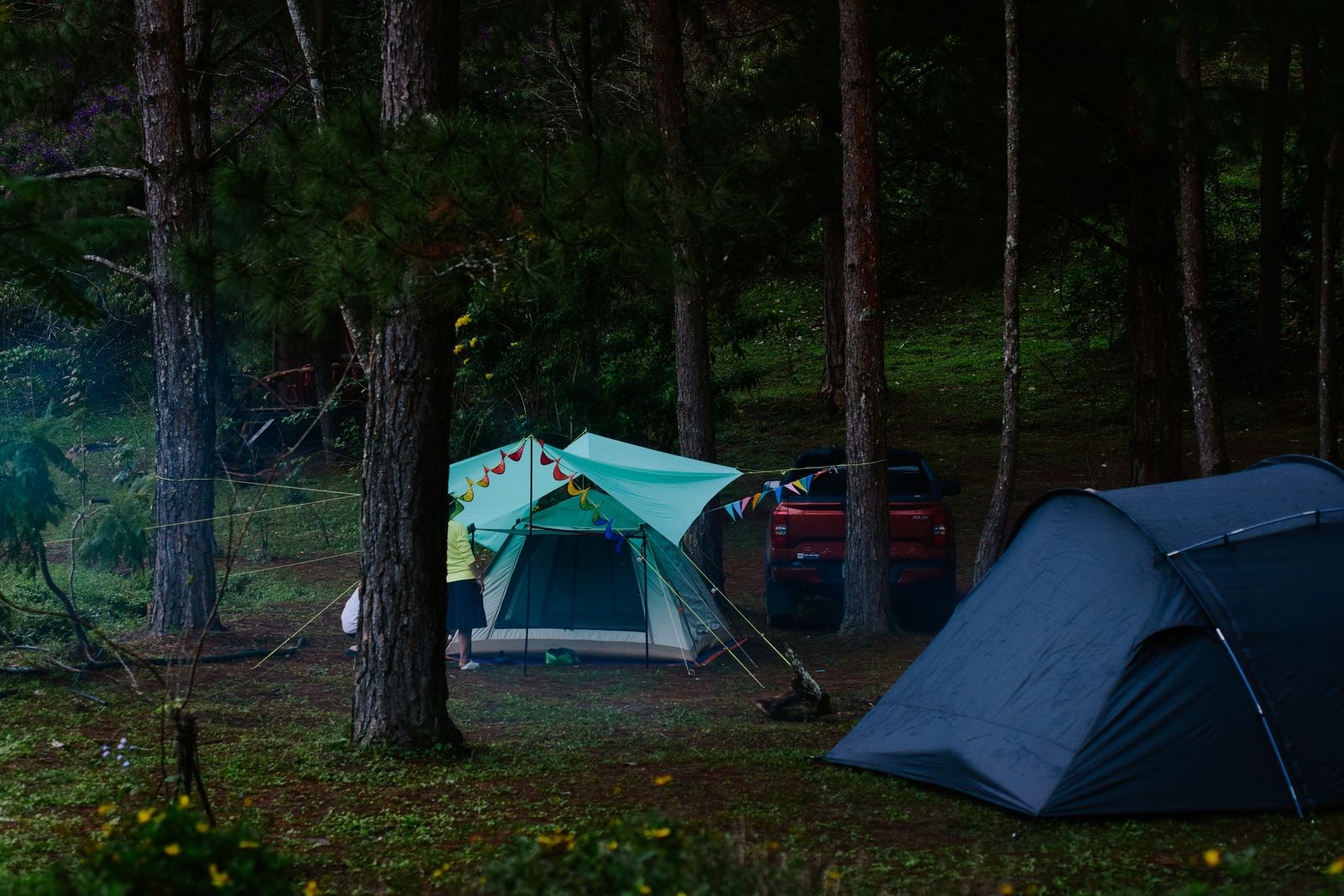
Photo by Dongdilac on Pexels
Your tent is the single most important item on a camping essentials list, because it is your roof, your windbreak, and your bug screen all in one. For car camping, choose a tent rated for one or two more people than will actually sleep in it — a “four-person” tent is comfortable for two adults and their gear. Check that the tent has a rainfly that reaches close to the ground and a sewn-in floor, and bring a groundsheet to protect the floor from sharp stones. Count the stakes and guy lines before you pack, because a tent without stakes is useless in wind.
Pitch the tent on flat, slightly raised ground so rainwater drains away from it, never in a dip or a dry riverbed. Keep the door facing away from the prevailing wind, and use all the guy lines when the forecast mentions wind.
Choosing A Sleeping Bag And Pad
A sleeping bag keeps you warm, but the sleeping pad is what keeps you comfortable and insulated from the ground. Bare ground pulls heat away from your body all night, so even the warmest bag feels cold without a pad underneath it. Pick a sleeping bag rated for temperatures a little lower than the coldest night you expect — ratings are usually given for survival rather than comfort, so a bag rated to 30°F (about −1°C) is a sensible choice for a summer night that might drop into the 40s. Our guide to how to choose a sleeping bag explains temperature ratings and shapes in more detail.
Inflatable pads pack small and are far more comfortable than a thin foam mat, while closed-cell foam pads are cheap, tough, and never puncture. Add a small camping pillow, or a stuff sack filled with soft clothes, because a good night’s sleep changes the whole next day. If you are camping with children, give them their own bag and pad sized for them — an adult bag is too big for a small child to warm up inside.
Cooking, Food, And Water
Camp cooking does not need to be fancy, but it does need a plan. A two-burner camp stove with enough fuel for every meal is the heart of the camp kitchen, plus a lighter and a spare — matches get damp and lighters run out. Pack a cooler with ice for anything that needs to stay cold, and keep it closed as much as you can so the ice lasts. A simple kit covers most trips: a pot, a pan, a knife and board, plates and cutlery for each person, and a washing-up bowl with biodegradable soap.
Plan meals that are simple to cook and easy to clean up. One-pot pasta, foil-packet vegetables, pre-marinated meat in a sealed container, and breakfasts like porridge or pancakes all work well. Pack more drinking water than you think you need, or a water filter or purification tablets if the campsite has a stream or a tap you are unsure about. A good rule is to carry at least a gallon of water per person per day for drinking and cooking, and more in hot weather.
Food storage is a safety issue, not just a tidiness issue. Never keep food, rubbish, or scented items like toothpaste and sunscreen in your tent. In campgrounds, store food in your car or in the bear-proof lockers many parks provide, and never leave food or coolers unattended, even for a few minutes. In the backcountry, the National Park Service advises hanging food or using a bear-resistant container, keeping cooking areas well away from where you sleep, and never sleeping in clothes you cooked in, because food smells linger. Rules vary by park, so always check the food storage rules for the exact area you are visiting.
Clothing And Footwear For Changing Weather
Outdoor weather changes faster than any forecast, so pack in layers. A moisture-wicking base layer keeps sweat off your skin, a warm mid-layer such as a fleece or a light insulated jacket holds in heat, and a waterproof outer layer keeps rain and wind out. Even on a hot summer trip, pack a warm layer and a rain jacket — nights in the mountains can be cold, and a surprise shower is no fun in a T-shirt. Bring a warm hat and gloves if the forecast hints at cold nights, and a sun hat and sunglasses for the day.
Footwear matters more than most first-time campers expect. Sturdy, broken-in walking shoes or hiking boots are the right choice for trails and uneven ground; brand-new boots will give you blisters, so break them in at home first. Pack a second pair of shoes, such as sandals or trainers, for wearing around camp so your walking boots can dry out. Add plenty of socks — wool or synthetic socks dry faster and prevent blisters better than cotton — and a spare set of dry clothes sealed in a bag for sleeping in.
Navigation, Light, And Safety Gear
Even on a short, well-marked trail, basic navigation gear belongs on every camping essentials list. A paper map of the area and a compass still work when a phone battery dies or there is no signal, and a charged phone with an offline map downloaded is a useful backup. Tell someone where you are going and when you expect to be back.
Light is one of the things new campers underestimate most. A headlamp for every person is far better than a single torch, because it leaves both hands free for cooking, pitching a tent, or finding the toilet in the dark. Pack spare batteries, and a lantern for the picnic table so the whole group can see to eat and play cards after dark. A whistle, a small repair kit with duct tape and a multi-tool, and some cord round out the safety kit: cord is useful for everything from a washing line to an emergency tent repair.
Your first-aid kit should be built for the outdoors, not just for the bathroom cabinet. Include adhesive bandages in several sizes, antiseptic wipes, blister plasters, tweezers for splinters and ticks, pain relief, any personal medication, insect bite cream, and sunburn relief. Add sunscreen and insect repellent — both are easy to forget and miserable to be without. If anyone in your group has allergies, carry their medication where everyone knows to find it.
Hygiene And Staying Clean At Camp
Camping is not an excuse to forget hygiene; it just takes a little more planning. Pack biodegradable soap, a small towel, a toothbrush and toothpaste, hand sanitiser, and toilet paper in a sealed bag. If your campsite has toilets, use them. If it does not, the Leave No Trace guidance is to bury human waste in a small hole 6 to 8 inches deep and at least 200 feet — about 70 adult steps — from water, trails, and camps, and to pack out toilet paper and hygiene products in a sealed bag. Wash dishes well away from streams and lakes — at least 200 feet — and pack out all rubbish, including food scraps and bottle tops.
Leave No Trace: Camping Without Harming The Place
The seven Leave No Trace principles are the standard for camping responsibly, published by the Leave No Trace Center for Outdoor Ethics and adopted by the National Park Service and other land agencies. They are simple habits: plan ahead and prepare; travel and camp on durable surfaces such as established campsites and trails; dispose of waste properly; leave what you find, including rocks, plants, and historic objects; minimise campfire impacts; respect wildlife by watching from a distance and never feeding animals; and be considerate of other visitors by keeping noise down. The National Park Service’s Leave No Trace page sets out the full framework, and it is worth reading before a first trip. Never feed wild animals, and give them plenty of space.
Common Mistakes First-Time Campers Make
Most camping problems come from a handful of avoidable mistakes. The first is overpacking: a car full of “just in case” gear is hard to manage, and most of it never leaves the bag. Pack from this list, not from worry. The second is arriving late. Setting up a tent in daylight is easy; doing it by headlamp, tired and hungry, is not. Aim to arrive at least two hours before sunset.
The third is ignoring the weather. A tent that is fine in sunshine can be miserable in a storm, so check the forecast again on the morning you leave and adjust the packing list — extra tarps, warmer layers, and dry bags for clothes and electronics. The fourth is forgetting the small things that matter most after dark: a headlamp, spare batteries, and a way to charge a phone. And the fifth is leaving rubbish behind. Pack a few extra bags, and do a final walk around the site before you drive away.
How To Pack It All: A Quick Method
Packing well is mostly about grouping things together. Use one bag or box per category — sleep, kitchen, clothes, safety — and label them if it helps. Heavy items go low and near the centre of the car, and the tent and sleeping gear go in last so they come out first. Keep a small day bag ready with the things you need on arrival: headlamps, a lighter, the first meal’s ingredients, and the tent poles. For a fuller packing system that works for any trip, see our travel packing list and adapt it for the outdoors, and compare it with the REI camping essentials checklist.
The Bottom Line On Your Camping Essentials List
A complete camping essentials list is not about buying the most gear; it is about bringing the right gear for the trip you are actually taking. Shelter and a warm sleep system come first, then food, water and a way to cook it, then clothes for changing weather, light, and a first-aid kit. Practise with the tent at home, arrive before dark, store food properly, and leave the campsite cleaner than you found it. Do those things, and the gear fades into the background — which is exactly where it belongs, leaving you free to enjoy the trees, the stars, and the quiet.
Frequently Asked Questions
What are the absolute essentials for a first camping trip?
A tent with stakes and a groundsheet, a sleeping bag and pad for each person, a stove and fuel, food and drinking water, a cooler, a headlamp, a first-aid kit, weather-appropriate clothing, and a way to store food safely. Everything else adds comfort.
How much water should I bring camping?
Plan on at least a gallon of water per person per day for drinking and cooking, and more in hot weather. If the campsite has no drinking water, carry it all in, or bring a filter or purification tablets for a known water source.
Can I keep food in my tent?
No. Never keep food, rubbish, or scented items such as toothpaste in your tent. Store food in your car, in a bear-proof locker, or in a bear-resistant container, and follow the food storage rules for the area you are visiting.
What size tent do I need for two people?
Choose a tent rated for three or four people. Tent ratings are based on sleeping shoulder to shoulder, so a tent rated for one or two more people than will sleep in it gives room for you and your gear.
Do I need a sleeping pad as well as a sleeping bag?
Yes. The pad insulates you from the cold ground, which pulls heat away from your body all night. Even the warmest sleeping bag feels cold without a pad underneath it.
Can I have a campfire anywhere?
No. Fires are only allowed where the campsite or park permits them, and many areas ban fires during dry conditions. Use the fire ring provided, keep fires small, never leave a fire unattended, and make sure it is cold to the touch before you leave or go to sleep.
What should I do with rubbish when camping?
Pack out everything you brought in, including food scraps and toilet paper. Use the bins provided where they exist, and never bury or burn rubbish.
