
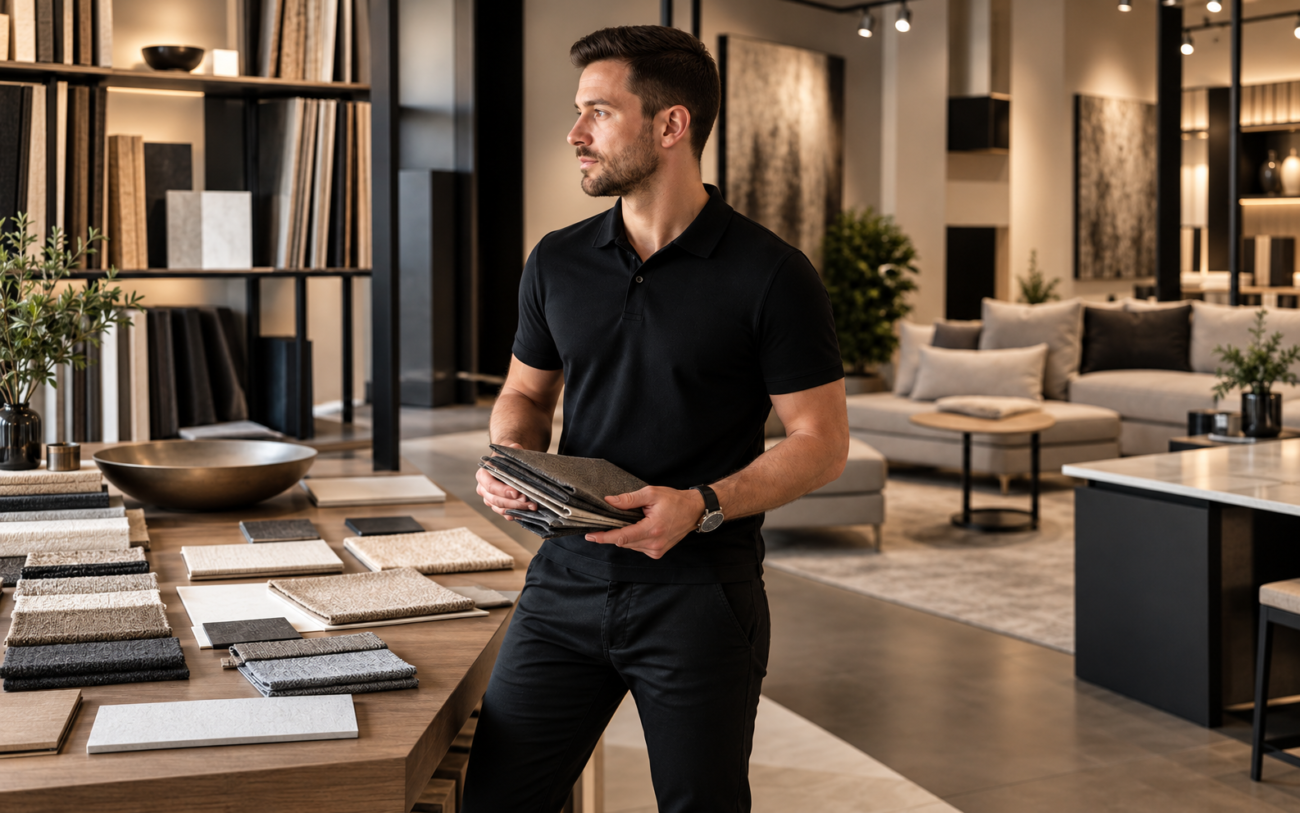
Interior designers, home staging professionals, and furniture retailers often overlook one of the most effective ways to build brand recognition: custom apparel. While you might spend considerable time selecting the perfect pieces for a client’s space, the clothing your team wears during consultations, deliveries, and installations serves as a walking advertisement for your business. Professional branded apparel creates immediate credibility, helps clients remember your company name, and distinguishes your team from general contractors or delivery services.
The right custom apparel strategy transforms every client interaction into a branding opportunity. When your installers arrive wearing shirts with your logo and company name, homeowners feel reassured they’ve hired a legitimate business. When your design consultants wear coordinated attire during showroom appointments, they project the same attention to detail that clients expect in their interior spaces. This visual consistency matters more than many business owners realize, particularly in competitive markets where reputation drives referrals.
Choosing the Right Apparel for Different Roles
Not every role in your interior design or furniture business requires the same type of custom clothing. Your front-facing design consultants need different apparel than your warehouse team or delivery drivers. Consultants who meet with clients in showrooms or homes benefit from polo shirts or button-downs that convey professionalism without appearing overly formal. These pieces should feature your logo embroidered on the chest, keeping branding subtle but visible.
Installation and delivery teams, on the other hand, need durable work shirts that can withstand physical labor. Cotton-blend T-shirts or moisture-wicking performance shirts work well for these roles. Screen-printed logos on the back create visibility when your team is loading trucks or carrying furniture into homes. Hoodies and long-sleeve options become necessary for teams working year-round, particularly during Phoenix’s cooler months or in climate-controlled warehouses.
Warehouse and staging staff who rarely interact with clients still benefit from branded apparel. Consistent uniforms create team cohesion and make it easy to identify who belongs on your property. Simple T-shirts in your brand colors work perfectly for these behind-the-scenes roles, keeping costs manageable while maintaining a professional environment.
Design Considerations That Reflect Your Brand Identity
The design choices you make for custom apparel should mirror the aesthetic sensibility you bring to interior spaces. If your business specializes in modern, minimalist interiors, your branded clothing should follow that same clean approach. A simple logo in one or two colors on neutral shirt tones communicates the same design philosophy you apply to client projects. Conversely, if you work primarily with bold, eclectic styles, you have more freedom to experiment with color combinations and graphic elements.
Color selection deserves careful thought. Your primary brand colors should appear on your apparel, but practicality matters too. Light-colored shirts show dirt quickly, which becomes problematic for installation teams. Darker tones like navy, charcoal, or black hide stains better and maintain a professional appearance throughout long workdays. Many businesses compromise by using different color schemes for different departments: lighter colors for showroom staff and darker options for field teams.
Logo placement affects both visibility and wearability. Chest placement works for most professional contexts, while full back designs create maximum visibility during installations. Avoid placing logos too low on the front, as they disappear when team members bend or crouch during furniture assembly. Similarly, sleeve prints can look dynamic but may fade faster due to friction and washing.
Practical Steps for Ordering Custom Team Apparel
Once you’ve determined what types of apparel your business needs, the ordering process becomes straightforward. Start by inventorying your team and their size requirements. Order a few extra shirts in common sizes to have on hand for new hires or replacements. Most businesses order annually or semi-annually to take advantage of bulk pricing, though smaller operations might prefer ordering as needed.
For Phoenix-based interior design businesses and furniture retailers, working with a local custom printing provider streamlines the process and allows for quick reorders when needed. Fast Shirt Factory offers same-day turnaround options and no minimum order requirements, which proves valuable when you need to outfit a new employee quickly or replace damaged shirts without waiting weeks for delivery. Their screen printing services handle both small personalized orders and larger team uniform projects.
Submit your logo in a vector format if possible, as this ensures the clearest reproduction regardless of print size. If you only have a low-resolution version of your logo, many printing companies can recreate it, though this may add to your timeline and cost. Specify exact Pantone colors if brand consistency matters for your business, or provide color samples from existing marketing materials.
Maintaining Professional Appearance Standards
Ordering custom apparel solves only half the challenge. Maintaining professional appearance standards requires clear policies and regular replacement schedules. Establish guidelines about when branded apparel must be worn. Most businesses require branded clothing during all client-facing activities and installations, while allowing casual attire for warehouse-only days.
Create a replacement policy that accounts for normal wear and tear. Shirts typically last 6-12 months with regular use and washing before colors fade or fabric shows wear. Provide each team member with at least three shirts so they can rotate through the week without excessive washing that accelerates deterioration. Some businesses provide an annual clothing allowance and let employees order their preferred styles within approved options.
Address appearance expectations beyond just the shirt itself. Branded apparel looks unprofessional when paired with torn jeans or dirty shoes. Much like selecting furniture that balances style and function, choosing complete work outfits requires thinking about the total impression your team creates. Simple guidelines about appropriate pants, closed-toe shoes, and general grooming standards ensure your branded shirts achieve their intended impact.
Beyond Basic Uniforms: Promotional Opportunities
Custom apparel serves purposes beyond team uniforms. Many interior design businesses use branded T-shirts as client gifts or promotional items at home shows and community events. A well-designed shirt that someone would actually wear extends your marketing reach far beyond your immediate team. Consider creating a retail-quality design that feels more like branded merchandise than a uniform. Soft, comfortable fabrics and stylish designs increase the likelihood that recipients will wear the shirt in public.
Event-specific apparel creates memorable experiences for workshops, grand openings, or design showcases. Printing a limited run of shirts for a showroom opening or charity event gives attendees a tangible reminder of your business. These don’t need to be expensive; simple one-color prints on quality blanks often make the strongest impression.
For businesses exploring apparel as a revenue stream, researching the fundamentals of starting a T-shirt business provides insight into production logistics, pricing strategies, and market considerations. While most interior design businesses won’t pursue apparel as a primary product line, understanding the basics helps when you’re evaluating printing options and pricing structures for your own team uniforms.
Budgeting for Ongoing Apparel Needs
Custom apparel represents a recurring business expense that deserves a dedicated budget line. Basic screen-printed T-shirts typically cost between $10 and $20 per shirt depending on quality, quantity, and design complexity. Polo shirts and performance fabrics run higher, usually $20 to $35 per piece. Embroidery adds cost but provides durability and a premium appearance appropriate for client-facing roles.
Calculate your annual apparel needs by multiplying the number of employees by three to five shirts per person, then adding 20 percent for replacements and new hires. A ten-person team might need 40-50 shirts annually, translating to $400-$1,000 depending on garment choices. This expense pays for itself through the professional credibility it creates and the brand visibility it generates during every client interaction.
Consider the cost-per-wear rather than just the upfront expense. A $30 polo shirt worn twice weekly for a year costs roughly 60 cents per wear. That same employee might interact with five to ten clients or potential customers during each shift, making the marketing value substantial compared to traditional advertising costs.
Building Brand Recognition Through Consistency
The true value of custom apparel emerges through consistent use over time. When every member of your team wears branded clothing during client interactions, your company name and logo become familiar to homeowners throughout your service area. This recognition builds trust and makes your business the first name clients think of when they need interior design services or furniture.
Professional apparel also simplifies client communications. When a homeowner calls to report a delivery issue, they can describe “the person in the blue shirt with your logo” rather than trying to remember a name. This small detail reduces confusion and helps you track which team members handled specific jobs.
Most importantly, branded apparel signals to your team that they represent something larger than themselves. Putting on a company shirt creates a psychological shift into professional mode and reminds employees that their actions reflect on your brand. This subtle effect influences behavior and customer service quality in ways that written policies alone cannot achieve. For interior design businesses and furniture retailers, where reputation drives referrals and repeat business, this consistency in presentation reinforces the quality and attention to detail that clients expect from every aspect of your service.
