


Walking is one of the most popular forms of exercise in the world, and it is easy to see why. It costs nothing, needs no gym membership, and fits into almost any day. But if your goal is stronger, more defined muscles, a fair question comes up: does walking build muscle, or does it only help your heart and burn calories? The short answer is yes, walking can build and strengthen muscle, but only up to a point. A slow stroll around the block will not give you the legs of a weightlifter. A brisk walk up hills, done regularly, can genuinely make your leg muscles stronger, especially if you are new to exercise, older, or returning after a long break. Here is what the evidence says, and how to make walking work harder for your muscles.
How Muscle Growth Actually Works
Muscles get bigger and stronger when challenged by a demand they are not used to, a principle exercise scientists call progressive overload. When a muscle works harder than usual, tiny damage occurs in its fibres. As the body repairs it, the fibres become slightly thicker and stronger, and repeated over weeks and months, the change becomes measurable.
The key factor is how hard the muscle has to work, not how many times it moves. Lifting a heavy weight forces a muscle to produce a lot of force in a short time, a strong growth signal. Walking asks your leg muscles for a small amount of force, repeated thousands of times: excellent for endurance, but a much weaker signal for growth.
What Walking Does For Your Muscles
Every step uses a team of muscles: the calves push your foot off the ground, the quadriceps straighten the knee, the hamstrings help bend it and control each step, and the glutes power you forward and keep your hips stable. Smaller muscles around the ankles, hips and core keep you balanced. The Mayo Clinic lists stronger bones and muscles among the benefits of regular brisk walking, along with better heart health, mood, sleep and balance.
Walking also helps with weight management — see our guide on can you lose weight by walking.
For people who are inactive, the effect can be surprisingly large. Underused muscles respond to almost any new challenge, so if you have spent months or years sitting most of the day, a daily brisk walk is a real training stimulus for your legs. Research has shown that when people sharply cut their daily step count, muscle protein synthesis slows and leg lean mass can fall. The reverse is also true: moving regularly helps you hold on to the muscle you have, and for a beginner it can add a modest amount of new strength.
Walking also builds muscular endurance, which is different from size but still valuable: your legs learn to work longer before they tire, making stairs, hills and long days on your feet noticeably easier. It also trains the small stabilising muscles around the ankles and hips, improving balance and coordination. For older adults, the Mayo Clinic notes, that helps physical function and lowers fall risk.
The Limits Of Flat Walking
Honesty matters here. Flat, comfortable walking at a gentle pace is not enough to build significant muscle in most healthy adults who are already reasonably active. After a few weeks of the same easy route at the same speed, your legs no longer find it challenging, and the growth signal fades. The same thing happens with any exercise that never gets harder.
Walking also works only the lower body in any meaningful way. Your arms swing and your core helps with stability, but neither gets enough resistance to grow stronger. Even for the legs, walking mostly trains slow-twitch fibres, built for endurance. These can get stronger and more efficient, but they do not grow as large as the fast-twitch fibres that respond best to heavy resistance training.
That is why official guidance treats them as two separate jobs. The Centers for Disease Control and Prevention (CDC) recommends at least 150 minutes a week of moderate-intensity aerobic activity, such as brisk walking, plus muscle-strengthening activities on two days a week. Walking covers the first half of that advice very well, but not the second.
How To Make Walking Build More Muscle
Walking is not a fixed, take-it-or-leave-it exercise. Small changes can turn a gentle stroll into a genuine muscle challenge. The principle is always the same: make the muscles work harder than they are used to, then give them time to recover.
Walk Faster And Add Intervals
Speed is the simplest upgrade: brisk walking, at a pace where you can talk but not sing, raises the effort in your calves, thighs and glutes well above a casual stroll. An even more effective option is interval walking: alternate three minutes of fast walking with three minutes at a comfortable pace, and repeat that pattern for about 30 minutes. This approach, sometimes called Japanese interval walking, was tested by researchers at Shinshu University. In a 2007 study published in Mayo Clinic Proceedings, middle-aged and older adults who followed the interval pattern for five months improved thigh muscle strength by about 13 to 17 percent, while a steady-pace group saw much smaller changes. A larger follow-up analysis in 2019 found similar benefits, driven mainly by the fast minutes rather than total walking time.
Add Hills And Incline
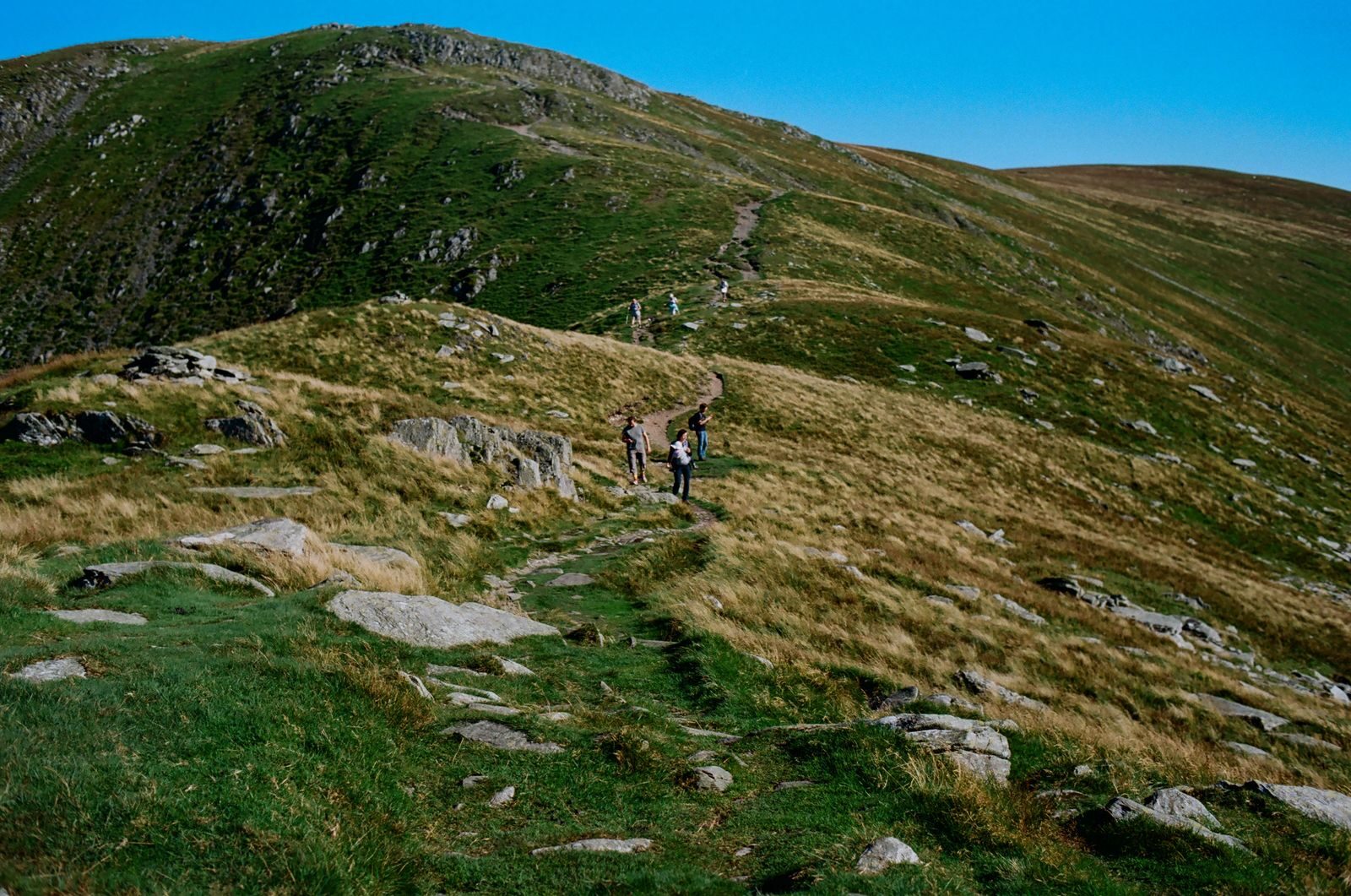
Hills are the most natural way to add resistance to a walk. Walking uphill forces your glutes, hamstrings and calves to push harder with every step, lifting your body weight against gravity. If you walk outdoors, choose routes with hills deliberately rather than avoiding them. On a treadmill, start at a 5 percent incline and raise it gradually. Stairs work in a similar way and are an excellent option if you live in a flat area. Take descents slowly, because going downhill can be hard on the knees.
For a different challenge, walking backwards also builds balance and burns more calories — see our guide on the benefits of walking backwards.
Turn Walks Into Mini Strength Sessions
Another practical option is to pause during your walk for short bursts of bodyweight exercise. Two or three sets of squats, lunges, calf raises or step-ups on a park bench, done two or three times a week, give your leg muscles the resistance walking alone cannot provide. A 2018 study of inactive older adults found that walking combined with resistance training improved strength more than walking alone over ten weeks. No equipment is needed, and ten minutes of bodyweight moves added to a regular walk can make a real difference.
A Note On Weighted Vests
A weighted vest can add resistance, but the evidence is mixed. A 2025 trial found that a 10 kilogram vest raised the energy cost of walking by only about 12 percent, while a 5 percent incline added roughly three times as much. If you try one, start at around 5 to 10 percent of your body weight, and talk to a doctor first if you have knee, hip or back problems.
Walking Vs Strength Training
For building muscle size and maximum strength, dedicated resistance training is far more effective than walking. Lifting weights, using resistance bands, or doing challenging bodyweight exercises lets you load each muscle heavily and progress in small steps over time. Walking, even at its hardest, cannot match that. What walking offers instead is accessibility, sustainability and a low risk of injury, at almost any age. The smartest approach is to combine them. Walk most days, and add two strength sessions a week for the muscle growth walking cannot fully provide.
Who Benefits Most From Walking For Muscle
Walking gives the biggest muscle benefits to people whose muscles are currently underused. Beginners starting from a sedentary lifestyle often notice stronger, more toned legs within a few weeks of regular brisk walking. Older adults benefit too, because leg strength keeps daily life independent: climbing stairs, getting up from a chair, carrying groceries and staying steady on uneven ground. People recovering from illness or injury also benefit, since walking is gentle enough to start early in rehabilitation. If you are already fit and lift weights regularly, walking will do far less for your muscles, though it remains valuable for heart health and recovery between harder workouts.
A Simple Weekly Plan To Build Muscle By Walking
A realistic week for a healthy adult might look like this:
- Five days of brisk walking: Aim for 30 minutes a day at a pace where talking is possible but singing is not, covering the 150 minutes of moderate activity recommended by the CDC.
- Two interval sessions: On two walking days, alternate three minutes fast with three minutes easy for 30 minutes.
- One or two hill walks: Include hills or a treadmill incline on at least one or two walks each week.
- Two short strength sessions: Two 15 to 20 minute sessions of squats, lunges, calf raises and step-ups, during a walk or separately.
- One rest day: Take at least one easier day each week, because muscles adapt during recovery, not during the workout.
A short walk after meals also helps digestion — see our guide on the benefits of walking after eating.
Start gently if you are new to exercise. Sharp joint pain means stop and rest; mild soreness after a harder walk is normal. If you have a medical condition, such as heart disease, high blood pressure, diabetes or a joint problem, check with your doctor before starting, especially before adding intervals.
Common Mistakes That Waste The Effort
A few habits quietly undo the muscle benefit of walking. The most common is walking too slowly: a gentle amble is pleasant, but it will not challenge your muscles enough to make them stronger. Another mistake is never changing the route or the pace: a walk that felt hard in your first week will feel easy by week four unless you make it harder. Relying on a weighted vest while walking slowly on flat ground is another trap. The vest adds far less effort than walking faster or uphill, and it stresses your knees without giving your muscles a strong growth signal. Finally, many people forget recovery and protein. Muscles need rest days and enough protein to rebuild, and walking every day at full effort without either will limit your results.
The Bottom Line
Does walking build muscle? Yes, within clear limits. It strengthens the legs, hips and core, improves endurance and balance, and helps you hold on to the muscle you already have. For beginners, older adults and people returning to exercise, it can produce real, measurable strength gains, especially when the walking is brisk, hilly or in intervals. But flat, easy walking will not build large muscles, and walking alone will not strengthen your upper body. Walking is an excellent foundation for muscle health, not a complete muscle-building programme on its own, so walk briskly, add hills and intervals, and pair your walks with two days of strength training a week.
Disclaimer: This article is for general information only and is not medical advice. It is not a substitute for professional medical advice, diagnosis or treatment. Always talk to your doctor or another qualified health professional before starting a new exercise programme, especially if you have a medical condition, are recovering from an injury, or take medication that affects your heart rate or blood pressure.
