

A good road trip is decided long before you turn the key. The difference between a relaxed drive and a stressful one is rarely the destination. It is the cooler you forgot, the phone charger left on the counter, or the flat tire with no jack in the trunk. A road trip packing list turns “I think we have everything” into a clear plan.
This guide covers documents, the emergency kit, navigation, food, comfort, clothing, and loading the car — built for drivers in the United States, though the same principles work anywhere.
Before You Pack: Give The Car A Quick Check
Packing starts with the car, not the suitcase. A dead battery is the most common reason drivers call for roadside help, and tire failure is the second, according to AAA, so spend twenty minutes on a basic check the day before you leave.
Check the six fluids AAA lists for a pre-trip inspection: engine oil, coolant, brake fluid, transmission fluid, power steering fluid, and windshield washer fluid. Check tire pressure, including the spare, and the tread for wear. AAA notes a typical car battery lasts three to five years, closer to three in a hot climate, and suggests testing it yearly after its third year.
Test the lights, wipers, horn, and air conditioning, confirm the spare tire, jack, and lug wrench are in the car, and fill the fuel tank the night before.
Documents, Money, And Identification
Keep your documents in one folder in the car, not buried under luggage: driver’s license, vehicle registration, and proof of insurance. If you are renting, carry the rental agreement and the company’s contact number, plus a paper insurance card, since a dead phone should never leave you without proof of coverage.
Bring your roadside assistance membership card or number, whether through AAA, your insurer, or your car manufacturer, and save it in your phone. Write down emergency contacts on paper too, in case your phone is lost or broken.
Carry cash in small bills plus at least one card, since rural gas stations, toll booths, and parking meters often prefer cash or have card readers that go offline. If you are crossing into Canada or Mexico, check your insurance covers you there and carry your passport.
The Car Emergency Kit: What To Keep In The Trunk
Every road trip packing list needs an emergency kit that lives in the trunk permanently, not just on trip days. AAA recommends a kit built around safety, warmth, food, and communication: a phone and car charger, a first aid kit, water and snacks for everyone including pets, a flashlight with extra batteries, a basic tool set with duct tape, flares or reflectors, and jumper cables or a jump starter.
Ready.gov, the preparedness site run by FEMA, sets the water benchmark at one gallon per person per day for several days, for drinking and sanitation. A few sealed bottles per person are a sensible minimum, more in hot weather or desert driving, and its car kit covers at least 24 hours, with flares or reflective triangles and cat litter or sand for traction.
A practical trunk kit looks like this:
- Jumper cables or a compact jump starter, plus a tire pressure gauge
- Spare tire, jack, and lug wrench, checked before departure
- Flashlight with fresh spare batteries
- First aid kit with bandages, antiseptic, pain relievers, gloves, and any daily medication
- Reflective warning triangles or flares, and a reflective safety vest
- Basic tool set, duct tape, a multi-tool, and work gloves
- Water and non-perishable snacks for everyone, pets included
- Warm blanket, rain poncho, paper towels, and a small Class B or C fire extinguisher
- An empty gas can
Check the kit every few months and before any long trip: replace expired food and medicine, test the flashlight, and charge the jump starter.
Navigation And Tech For The Road
Your phone is your map, music, hotel booking, and emergency call, so keeping it charged is not optional. Bring a car charger, a cable for every device, and a portable power bank. A dashboard mount keeps navigation visible without taking your eyes far from the road.
Download your route maps for offline use before you leave. Cell service disappears in mountains, deserts, and long rural stretches, and an offline map keeps working when the signal does not.
Download playlists, podcasts, and audiobooks in advance, and keep charging cables in the glove box or center console, not in the trunk.
Food, Snacks, And Water
Road trip food should be simple, filling, and easy to eat with one hand. A cooler with ice packs handles sandwiches, fruit, and drinks for the first day. For the rest of the trip, stock a snack bag with trail mix, granola bars, crackers, dried fruit, and nuts, choosing snacks that do not melt in a hot car.
Pack a reusable water bottle for each person and refill it at every stop. Dehydration creeps up quietly on long drives and makes drivers tired and less alert.
Bring napkins, wet wipes, a small trash bag, and paper towels, so a closed restaurant or a long stretch without services never becomes a problem.
Comfort Items That Make Long Drives Easier
Comfort is not a luxury on a long drive. It is what keeps the driver alert and the passengers happy. A travel pillow and a light blanket make naps possible, and a lumbar cushion or rolled towel behind the driver’s lower back helps on drives over three hours.
Pack sunscreen, lip balm, and hand lotion, since hours of sun through the windows add up even on a cloudy day. Keep a small toiletry bag within reach with wet wipes, hand sanitizer, tissues, pain relievers, motion sickness tablets if anyone needs them, and any daily medication.
Bring a light jacket or fleece even in summer, since air conditioning, mountain passes, and evening stops can all turn cool fast. Earplugs or a sleep mask help passengers rest in daylight.
Clothing: Pack By Season, Not By Guesswork
Road trip clothing should be comfortable first: soft fabrics, stretch waistbands, and layers you can add or remove. Bring one outfit per day plus one spare and one set of sleepwear.
In summer, pack light, breathable clothes, a hat, and extra water. In winter, bring a warm coat, gloves, hat, scarf, and waterproof boots, and keep a blanket and a warm layer in the cabin in case you are stuck in cold weather. In spring and autumn, pack a light jacket, a fleece, and a rain jacket, since mornings can be cold and afternoons warm. In rainy regions, a waterproof jacket and spare socks matter most.
Pack one bag per person, plus a small overnight bag with sleepwear, toiletries, a charger, and a change of clothes for hotel stops.
How To Pack The Car Efficiently
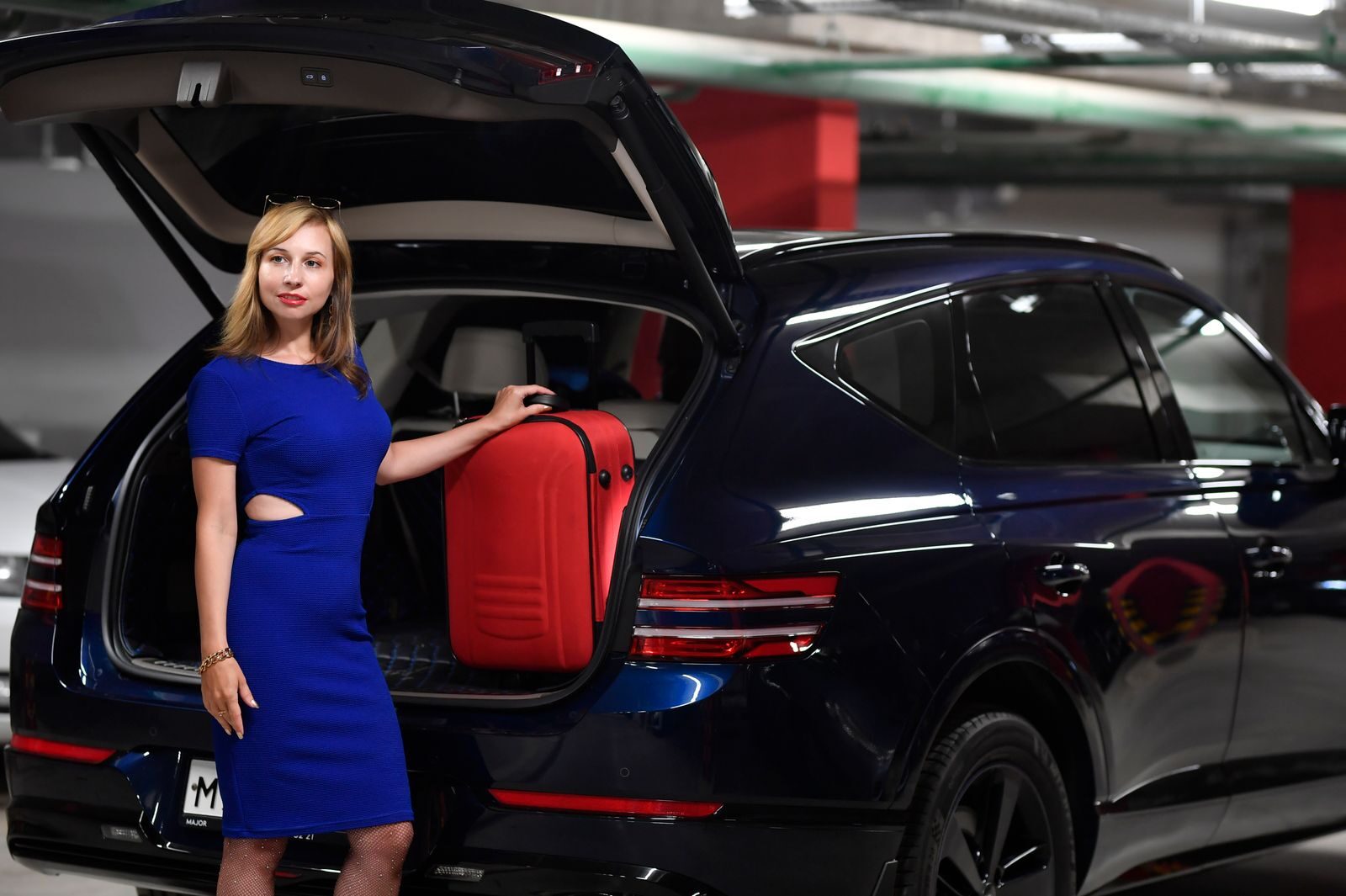
How you load the car matters as much as what you load. Put the heaviest items low and near the center, close to the rear axle, so the car handles normally. Keep the emergency kit, cooler, and snack bag accessible, not buried under suitcases, and keep chargers, water, wipes, and the map in the cabin.
Use soft bags or packing cubes instead of rigid suitcases when the trunk is small. Soft bags fill gaps and stack better, and packing cubes keep each person’s clothes separate. A roof box is worth considering for a family trip, within your vehicle’s rated weight limit.
Never block the rear window or the driver’s view, and leave room for souvenirs.
Road Trips With Kids And Pets
Children change the packing list more than anything else. Pack a separate bag for each child with snacks, water, a change of clothes, wet wipes, and a small trash bag, plus books, coloring supplies, a loaded tablet, and headphones. Plan a stop every two hours or so, and bring a familiar comfort item to help younger children sleep.
If you are traveling with kids, our guide on how to travel with kids covers family trip planning in more detail, including how to keep children comfortable and entertained on long journeys.
Pets need their own kit: food and water for the trip plus a day extra, bowls, a leash, waste bags, and any medication. Never leave a pet alone in a parked car, even for a few minutes, because the temperature inside rises fast. Check that your hotels allow pets, and keep vaccination records and your vet’s number in your document folder.
Common Packing Mistakes To Avoid
The most common mistake is overpacking. Most road trippers bring twice the clothes they need and half the water. Pack for the trip you are taking, not every situation you can imagine. If you are unsure about an item, leave it out; you can almost always buy it on the road.
The second mistake is packing the important things last, so they end up at the bottom. Chargers, documents, snacks, water, and medication should be packed first and kept within reach. The third mistake is skipping the car check: do the fluid, tire, and battery checks the day before, not the morning of departure.
Forgetting a car charger, packing food that melts, bringing no cash for tolls, and failing to download offline maps are all easy to avoid with a quick run through this list the night before.
Frequently Asked Questions About Road Trip Packing
How Much Water Should I Bring On A Road Trip?
Bring a reusable bottle per person plus a reserve jug. Ready.gov recommends one gallon per person per day for drinking and sanitation, so carry more than you think you need in hot weather or desert areas.
What Is The Most Important Item In A Car Emergency Kit?
Jumper cables or a portable jump starter. A dead battery is the most common reason drivers call for roadside help, according to AAA. A flashlight, a first aid kit, and warning triangles come next.
Should I Pack Food Or Buy It On The Road?
Do both. Pack snacks and water for the drive, and buy proper meals along the way. A cooler covers the first day, and a snack bag of non-perishable food covers the gaps between stops.
How Early Should I Start Packing For A Road Trip?
Start the car check and kit review a week before departure, pack bags the day before, and run through the full list the night before.
Can I Use This Packing List For A Cross-Country Trip?
Yes, with two additions: plan laundry stops every few days instead of packing a week’s worth of clothes, and check your route for long stretches without fuel or services, especially in the western United States — fill the tank before those stretches.
A Smooth Drive Starts Before You Leave
A road trip packing list is not about bringing everything you own, but the right things in the right order: check the car, pack documents and the emergency kit first, and keep food, water, and chargers within reach.
For route planning, see our road trip itinerary guide, and for safety habits on any journey, our travel safety tips.
