

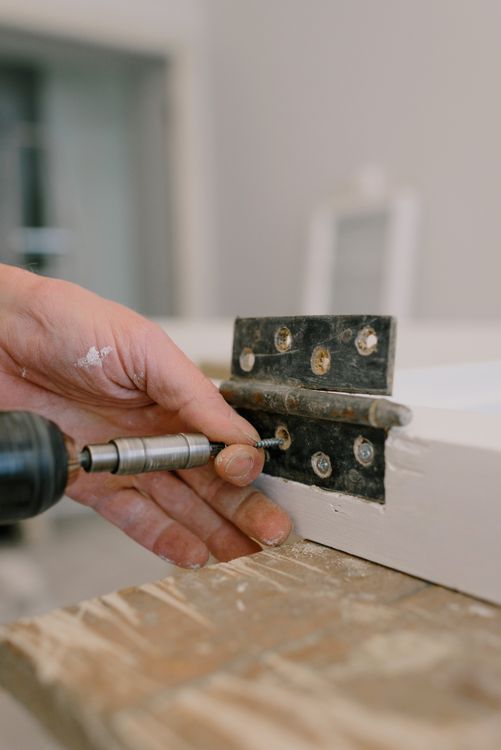
A squeaky door is a small annoyance that feels much bigger at night, when every trip down the hall announces itself. The good news is that most squeaky doors can be fixed in under an hour with basic tools you may already own. In most cases, the noise comes from dry or loose hinges, and a little lubrication or a few tightened screws is all it takes. This guide shows you how to find the cause, fix it step by step, and recognize when the job is better left to a professional.
What Causes A Door To Squeak
A door squeaks when two surfaces rub together as it moves. Most of the time, that friction happens inside the hinges. The lubricant applied when the door was installed dries out over time, and dust and grime build up around the hinge pin, so the metal parts grind instead of moving smoothly. Changes in temperature and humidity can make it worse, because wood expands and contracts with the seasons and slightly shifts how the door sits in its frame.
Loose hinges are another common cause. When the screws holding a hinge work loose, the hinge shifts a little every time the door opens and closes. That movement creates noise and can make the door sag, adding even more friction. On older doors, the hinge pin itself may be bent or worn, or rust may have built up, especially on exterior doors and doors in damp rooms like bathrooms and laundry rooms.
Less often, the squeak does not come from the hinges at all. A door rubbing against its frame or a strike plate slightly out of line can make a similar sound, so find the exact source before you start. Spraying lubricant everywhere may quiet the noise for a day, but it will not solve a door that is rubbing against the frame.
Tools And Supplies You May Need
You do not need a large toolbox for this job:
- A penetrating lubricant, white lithium grease, or petroleum jelly
- A hammer and a nail or nail set for tapping out hinge pins
- A Phillips screwdriver, and a flat-head screwdriver if your hinges use slotted screws
- A rag or old towel for catching drips and wiping excess lubricant
- Fine steel wool or sandpaper for cleaning rust off hinge pins
- Wooden golf tees or dowels and wood glue, only for stripped screw holes
- A helper to hold the door steady, especially for heavy or solid doors
If you rent, check your lease or ask your landlord before going beyond simple lubrication and tightening. Lubricating a hinge is routine maintenance, but replacing hardware or drilling new holes may need permission.
Step 1: Find Exactly Where The Noise Is Coming From
Open and close the door slowly several times and listen. A squeak that runs through the whole swing usually points to a dry hinge. A sound that appears only when the door is nearly closed often points to rubbing against the frame or the strike plate.
Next, test each hinge. With the door open, gently lift it by the handle and feel for movement at the hinges. Then, while someone else moves the door slowly, place a finger lightly on each hinge in turn. You will often feel a slight vibration at the noisy hinge. Also look for rust, screws sticking out slightly, cracked paint around a hinge plate, or scuff marks where the door meets the frame.
Once you know which hinge is noisy, focus your fix there. If more than one hinge squeaks, plan to treat them all, since fixing only the loudest one can leave a quieter squeak you will notice later.
Step 2: Try Lubricating The Hinges Without Removing Them
Start with the simplest fix. If the hinges are not loose or damaged, lubrication alone may solve the problem.
Spray a penetrating lubricant directly into the top of each hinge, where the pin enters the hinge barrel. Open and close the door several times to work the lubricant down into the joint, then wipe away excess so it does not drip onto the floor or stain the door. Repeat once or twice if the squeak is reduced but not gone. Bob Vila’s guide to fixing a squeaky door follows the same approach, starting with lubricant before removing hinge pins.
General-purpose spray lubricants are useful for freeing a stiff hinge and testing whether lubrication helps, but they are thin and wear off fairly quickly. For a longer-lasting result, white lithium grease or petroleum jelly usually works better on interior hinges. Apply a small amount around the top of the hinge, work the door back and forth so it spreads inside the joint, and wipe the outside clean, since excess only attracts dust.
If this silences the door, you are done. Check again over the next few days, because a squeak that returns quickly may mean the hinge pin needs a proper cleaning or the hinge itself is worn.
Step 3: Remove The Hinge Pins For A Thorough Fix
If simple lubrication does not last, removing the hinge pins lets you clean and lubricate the parts that actually rub together. Work on one hinge at a time and keep the door supported. Removing all the pins at once can leave a heavy door uncontrolled and makes realignment much harder.
Close the door most of the way, leaving it just open enough to reach the hinges. Place a nail or nail set underneath the hinge pin and tap it upward gently with a hammer until you can pull it out by hand. Wipe the pin clean, and rub off any rust or rough patches with fine steel wool or sandpaper until it feels smooth. Clean inside the hinge barrel with a rag wrapped around a thin tool, coat the pin lightly with white lithium grease or petroleum jelly, and tap it gently back into place until it sits flush.
Repeat for each hinge, then open and close the door several times to spread the lubricant evenly. Wipe the hinges clean and listen. In most cases, this thorough treatment keeps a door quiet for a long time.
Step 4: Tighten Loose Hinges And Fix Stripped Screws
If a hinge feels loose or the door has started to sag, tighten each hinge screw firmly, but do not force it. Over-tightening can strip the screw hole in the wood, which makes the problem worse.
If a screw simply spins without gripping, the hole is stripped. This is common in older doors and hollow-core doors, where the wood around the screw has worn away. Remove the loose screw, apply wood glue to a wooden golf tee or short piece of dowel, and tap it gently into the stripped hole. Let the glue dry, trim anything sticking out so it sits flush, and drive the screw back into the repaired hole. The wood gives the screw something solid to grip again.
If the door still sags, try replacing one short hinge screw on the frame side with a longer screw, typically around three inches, that reaches into the wall stud behind the frame. Do this one screw at a time and check the door’s movement after each change.
Step 5: Fix A Door That Rubs Against The Frame
When lubrication and tightening do not stop the noise, check whether the door is rubbing. Look for shiny spots, worn paint, or scuff marks along the door edge and inside the frame. A simple test is to slide a piece of paper between the door and the frame while the door is closed. If the paper catches or tears in one spot, that is where the door is binding.
Seasonal swelling is often temporary. A wooden door that sticks in humid summer weather may return to normal when the air dries out, so avoid trimming a door unless the problem is constant. If rubbing persists, check whether tightening the hinges or using a longer frame-side screw improves the fit.
If the door still rubs, the strike plate may need a small repositioning. Work slowly and test the latch after every adjustment. Sanding or planing a door edge should be a last resort, because removing too much wood cannot be undone and can affect how the door seals and locks.
Safety Notes To Keep In Mind
Always support a heavy door before removing hinge pins, and do not work alone on a solid wood or exterior door if you can avoid it. A door that slips off its hinges can pinch fingers or damage floors. Wear eye protection when tapping pins out or sanding metal, wipe up lubricant drips right away to avoid a slippery floor, and do not leave your home unattended with an exterior door off its hinges.
When To Call A Professional
Most squeaky doors are a do-it-yourself fix, but some situations belong to a carpenter or handyman. Call a professional if the door frame is cracked, warped, or damaged, if the door will not latch properly after hinge adjustments, or if it has sagged so far that it scrapes the floor. A professional is also the right choice for fire-rated doors, since altering them can affect their safety rating, and for exterior doors, where a poor fit could affect security or weather sealing.
If you have tried cleaning, lubricating, and tightening and the problem keeps coming back, the hinges may be worn or bent beyond a simple fix. Matching the size, finish, and screw pattern of new hinges matters, and a professional can make sure the hardware fits and the door hangs correctly. The same applies if the frame has shifted because of settling or water damage.
Conclusion
A squeaky door rarely needs a replacement door or an expensive repair. In most homes, the fix is a few minutes of careful listening, a little lubricant in the right place, and screws that are tight and gripping properly. Working through the steps in order, from the simplest fix to the more involved ones, saves time and avoids unnecessary work.
The reward is immediate: a door that opens and closes in silence. Keep a small tube of hinge lubricant with your household tools, and the next time a door starts to complain, you will know exactly what to do.
For other simple home fixes, see How to Fix a Leaky Faucet with Two Handles and How to Unclog a Toilet Without a Plunger.
Frequently Asked Questions
What Is The Best Lubricant For A Squeaky Door Hinge?
For a quick test, a penetrating spray lubricant will show whether lubrication helps. For a longer-lasting fix, white lithium grease or petroleum jelly applied to a cleaned hinge pin usually works better, because thicker lubricants stay in the joint longer. Cooking oil is not a good choice, since it can go rancid and attract dust.
Can I Fix A Squeaky Door Without Removing The Hinge Pins?
Yes, in many cases. Applying lubricant into the top of the hinge and working the door back and forth is often enough for a mildly squeaky door. If the noise returns within a few days, though, removing the pins for a proper clean and lubrication is worth the extra effort and gives a much longer-lasting result.
Why Does My Door Keep Squeaking After I Lubricated It?
The most common reasons are a hinge pin that is still dirty or rusty under the new lubricant, a loose or stripped screw that lets the hinge move, or a door rubbing against its frame rather than squeaking at the hinge. Work through each possibility in turn: clean the pins properly, tighten or repair the screws, and check for rubbing marks on the door edge.
Is A Squeaky Door A Sign Of A Bigger Problem?
Usually not. Most squeaks are simple wear and dry hinges, part of normal home maintenance. Look more closely if the door has suddenly started sticking, will not latch, sags visibly, or scrapes the floor, since those signs can point to a loose frame, damaged hinges, or movement in the structure around the door.
