

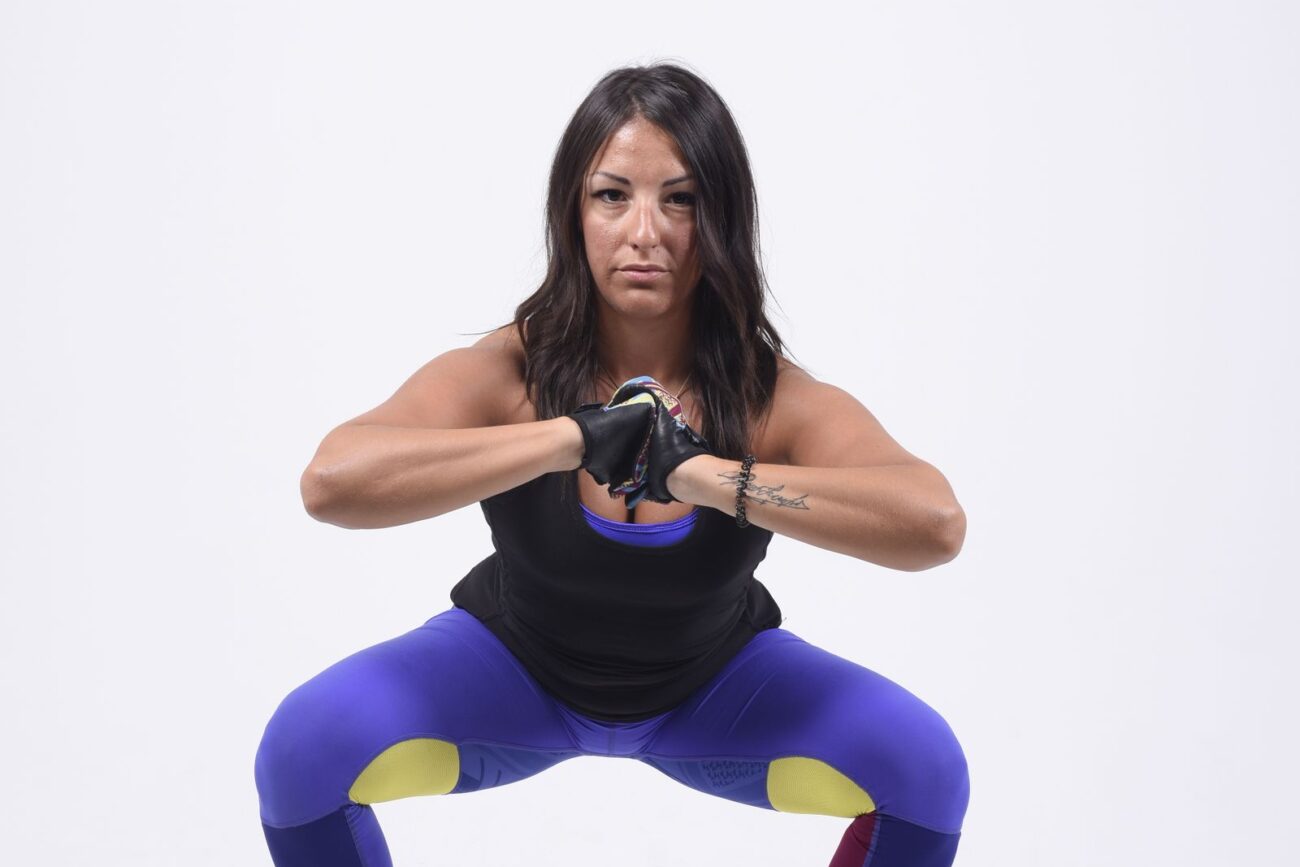
A lower body workout is a strength-training session that targets the muscles of your legs, hips, and glutes: the quadriceps at the front of your thighs, the hamstrings at the back, the glutes, and the calves. If you want stronger legs, steadier balance, and an easier time with everyday tasks like climbing stairs or carrying shopping bags, this is the workout to build into your week. You do not need a gym membership or heavy weights to start. The routine below uses mostly bodyweight moves, with dumbbells as an option, and takes about 30 to 40 minutes. It is written for beginners and intermediates, with a simpler starting point and a way to progress for every exercise.
Why A Lower Body Workout Is Worth Your Time
Your legs carry you everywhere, so training them pays off in daily life. Strong quadriceps and glutes make stairs, hills, and getting up from a low seat easier. Strong hips and calves support your balance, and strength work helps maintain bone density and muscle mass as you age.
The lower body also holds some of the largest muscles in the body, so one session works a lot of muscle in little time — an efficient choice if you can only fit in two or three strength sessions a week. And because squats, lunges, and hinges mirror everyday movements, the strength you build transfers straight into real life.
Which Muscles Does A Lower Body Workout Work?
A balanced lower body workout should cover four main muscle groups. The quadriceps, at the front of the thigh, straighten the knee and power you up stairs and out of chairs. The hamstrings, at the back of the thigh, bend the knee and extend the hip with the glutes when you walk, run, or stand up. The glutes are the strongest hip extensors you have and the main drivers of squats, lunges, and bridges. Finally, the calves push you off the ground with every step.
The routine below hits all four: squats and lunges work the quadriceps and glutes, the Romanian deadlift and glute bridge target the hamstrings and glutes, and calf raises finish the lower leg. Training all of them matters — working only the front of the thigh can leave the knees and hips less supported over time.
How Often Should You Train Your Lower Body?
For most healthy adults, two lower body sessions a week is a solid target. The current Physical Activity Guidelines for Americans, summarised by the CDC, recommend at least 150 minutes of moderate-intensity aerobic activity a week — brisk walking counts — plus muscle-strengthening activities on at least two days a week, working all the major muscle groups. Two lower body sessions a week fit neatly into that recommendation alongside your walking or other cardio.
Rest matters as much as the work. Mayo Clinic Health System advises resting a muscle group for at least 48 hours before training it hard again. In practice, leave at least one full day between lower body sessions — Monday and Thursday, for example. Mild soreness the day after a first session is common and usually settles as your body adapts.
Warm Up Before You Start
A warm-up prepares your muscles and joints for the work ahead and helps you move better in the exercises themselves. Spend five minutes on it. Start with two to three minutes of easy movement — marching in place or a brisk walk around the room — until you feel slightly warm. Then do ten slow bodyweight squats to a comfortable depth, ten leg swings per side, and ten glute bridges. Move gently — the goal is to feel warm and mobile, not tired.
The Lower Body Workout
Do this routine twice a week, with at least one rest day between sessions. Rest 60 to 90 seconds between sets. Start with the bodyweight version of each move and add weight only when you can finish all the sets with good form. Lower slowly — about two to three seconds — and breathe out as you push up.
1. Bodyweight Squat
Stand with feet shoulder-width apart, toes turned slightly out, chest up, core braced. Push your hips back as if sitting in a chair, then bend your knees and lower until your thighs are roughly parallel to the floor, or as far as feels comfortable. Keep your knees over your toes and your weight spread across the whole foot. Push through your heels to stand back up. Do 3 sets of 10 to 12 repetitions. If full squats feel hard, start with a sit-to-stand from a sturdy chair: stand up using your legs, then lower yourself back down slowly.
2. Glute Bridge
Lie on your back with your knees bent and your feet flat on the floor, hip-width apart and close enough that your fingertips can almost touch your heels. Press through your heels and lift your hips until your body forms a straight line from shoulders to knees. Squeeze your glutes at the top, hold a second, then lower slowly. Do 3 sets of 12 to 15 repetitions. When bodyweight bridges feel easy, hold a dumbbell or a filled water bottle across your hips.
3. Forward Lunge
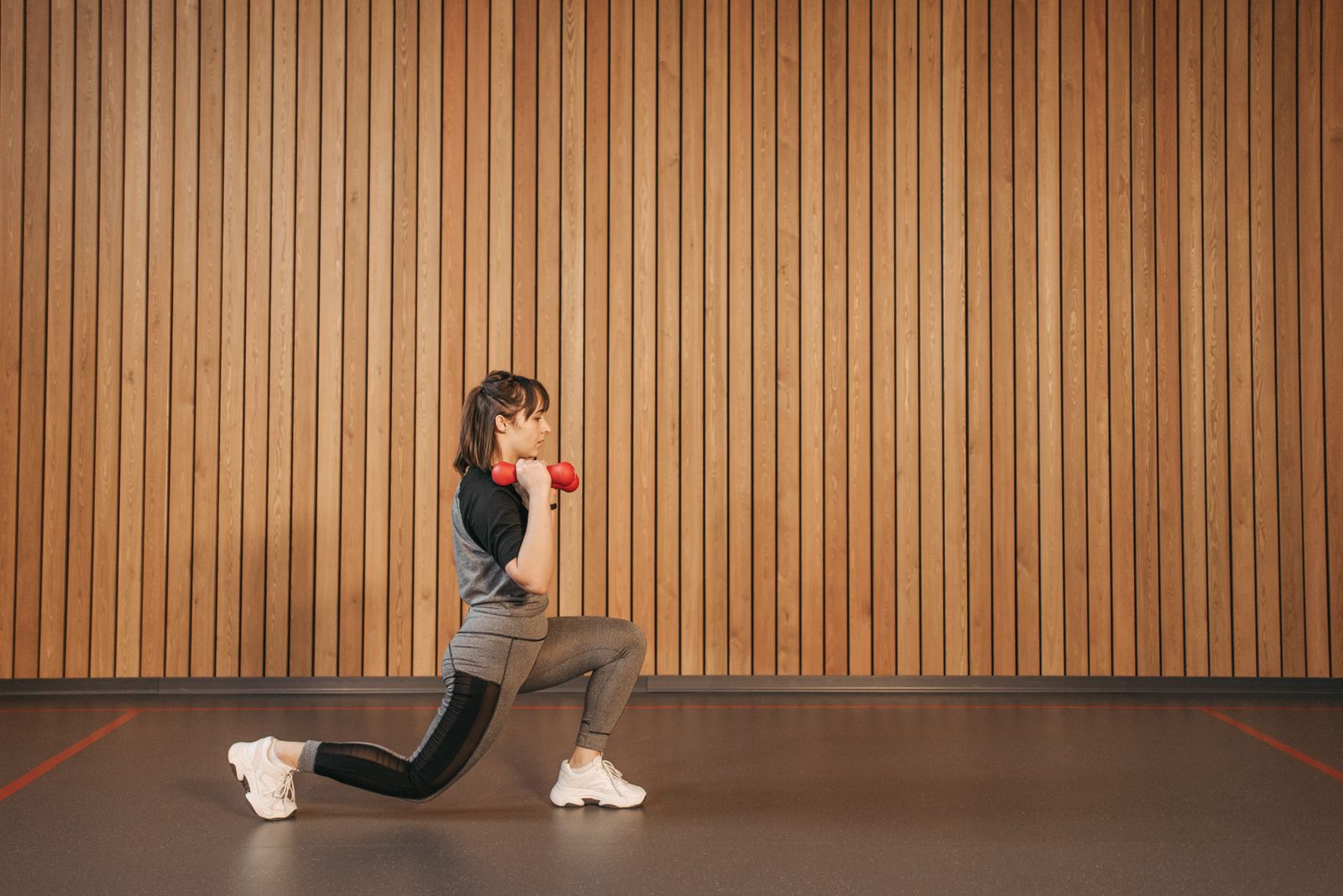
Stand tall with your feet hip-width apart. Step forward and lower until both knees are bent at roughly a right angle, your front knee over your ankle and your back knee just above the floor. Keep your chest up. Push through the front heel to return to standing, then repeat on the other side. Do 3 sets of 8 to 10 repetitions per leg. If balance is a problem, hold lightly onto a chair, or try a reverse lunge instead — stepping backward is often steadier for beginners.
4. Dumbbell Romanian Deadlift
Hold a dumbbell in each hand, feet hip-width apart, knees softly bent. This is a hip hinge, not a squat: push your hips back and lower the weights down the front of your legs, keeping your back flat and the dumbbells close. Stop at a hamstring stretch, usually around mid-shin, then drive your hips forward and squeeze your glutes to stand tall. Never round your lower back. The American Council on Exercise stresses the same points for the deadlift: keep the weight close, maintain a long spine, and learn the hip hinge before adding load. Do 3 sets of 10 to 12 repetitions, starting with light dumbbells or two water bottles.
5. Standing Calf Raise
Stand hip-width apart, holding a chair lightly if needed. Rise onto the balls of your feet as high as you can, pause a second, then lower slowly until your heels touch the floor. Do 3 sets of 12 to 15 repetitions. To make it harder, do it one leg at a time, or hold a dumbbell in one hand. Take two to three seconds on the way down — the calves respond well to a controlled descent.
6. Wall Sit
Stand with your back flat against a wall and walk your feet forward until your knees are bent at about 90 degrees, as if sitting in an invisible chair. Keep your knees over your ankles and your back pressed to the wall. Hold, breathing steadily, and stop before your form breaks down. Do 3 sets, holding for 20 to 30 seconds each time to start, and build toward 45 to 60 seconds over a few weeks. It trains the quadriceps without impact and suits knees that prefer not to bend and straighten repeatedly.
How To Progress Week By Week
Progress comes from small, steady increases. For the first two weeks, learn the moves with bodyweight or very light weights and focus on form. In week three, add a few repetitions to the exercises that feel comfortable. In week four or five, add a small amount of weight — a heavier dumbbell or a second water bottle — to one or two exercises, keeping the repetitions in the same range. The NHS advises aiming for 8 to 12 repetitions per activity and building up to three sets, with the last few repetitions feeling hard. If you can finish all your sets easily, it is time to make the exercise harder. If you cannot reach eight repetitions with good form, the resistance is too heavy — reduce it and build back up.
Common Mistakes To Avoid
The most common mistake is letting the knees collapse inward during squats and lunges. Keep them in line with your toes; if they drift in, reduce the depth or the weight until you can control them. A second mistake is rounding the lower back in the Romanian deadlift. If your back starts to round, you have gone too low or the weight is too heavy — shorten the range and keep the spine long. Third, avoid rushing. Fast, bouncy repetitions use momentum instead of muscle. Fourth, do not hold your breath through a whole set. Breathe out on the effort and in as you lower. Finally, do not skip the warm-up or train the same muscles hard two days in a row. Tired muscles move poorly.
Recovery: What To Do After Your Workout
Recovery is part of the workout. After your last set, walk around gently for a few minutes and let your breathing settle. Light stretching for the thighs and calves can help you feel looser, but there is no need for long stretches right after training. Drink water, eat a normal meal within a couple of hours, and aim for a full night’s sleep — sleep is when most muscle repair happens. Expect some muscle soreness for a day or two after your first few sessions, especially in the thighs and glutes. That is normal and usually fades as you repeat the routine. Sharp pain, pain in a joint, or soreness that does not ease after three or four days is different: ease off, and speak to a healthcare professional if it persists.
A Simple Weekly Plan
Here is how the routine fits into a week. On Monday, do the lower body workout, then take a brisk 20 to 30 minute walk later if you like. On Tuesday, rest or take a gentle walk. On Wednesday, do upper body or full-body movement, or a longer walk. On Thursday, repeat the lower body workout. On Friday, rest or walk. On Saturday, do a longer walk, a bike ride, or another activity you enjoy. On Sunday, rest. That gives you two lower body sessions with at least 48 hours between them, plus the aerobic activity the guidelines recommend. If two sessions a week feels like a lot at first, start with one and add the second after two or three weeks.
Conclusion: Strong Legs, Built One Session At A Time
A good lower body workout does not need fancy equipment or a gym membership. Six simple exercises — a squat, a glute bridge, a lunge, a Romanian deadlift, a calf raise, and a wall sit — cover the major muscles of the legs and hips, and two sessions a week is enough to make real progress. Start light, move with control, rest at least a day between sessions, and add a little weight or a few repetitions each week. Your legs will get stronger, stairs will feel easier, and your balance will improve.
Disclaimer: This article is for general information only and is not medical advice. Exercise carries some risk, and the right routine depends on your health, fitness level, and any existing conditions or injuries. If you have a medical condition, an injury, joint pain, or you have not exercised for a long time, please speak to a doctor or another qualified healthcare professional before starting a new workout routine. Stop exercising and seek medical advice if you feel chest pain, dizziness, or sharp pain during a workout.
Frequently Asked Questions About Lower Body Workouts
How Long Should A Lower Body Workout Take?
For most beginners and intermediates, 30 to 40 minutes is enough, including a five-minute warm-up. The routine in this article has six exercises, three sets each, which takes about that long once you include rest between sets. A longer session is not automatically better — what matters is doing the exercises with good form, twice a week, consistently.
Can I Do A Lower Body Workout At Home Without Equipment?
Yes. Every exercise in this routine can be done at home with no equipment at all, using a sturdy chair, a wall, and your own body weight. Household items work as weights when you are ready for more resistance: filled water bottles, a backpack with books, or a bag of rice can all stand in for dumbbells in the Romanian deadlift or the calf raise.
Should I Train Legs If My Knees Hurt?
Mild, general knee discomfort is common, but pain is a signal worth respecting. Low-impact moves like glute bridges and wall sits are often easier on the knees than deep squats or lunges, and shortening the range of a squat can help too. If knee pain is sharp, swelling, or keeps coming back, do not push through it — speak to a doctor or physiotherapist first, and ask which movements are safe for you.
How Soon Will I See Results From A Lower Body Workout?
Most people notice everyday tasks feeling easier — stairs, standing up, carrying things — within three to four weeks of training twice a week. Visible changes in muscle shape usually take longer, often eight to twelve weeks of consistent training. Progress depends on consistency, sleep, and eating enough to support recovery, so give the routine time before judging it.
Is It Better To Do Cardio Or A Lower Body Workout First?
It depends on your priority for the day. If strength is the goal, do the lower body workout first, when you are fresh, and save the walk or bike ride for after. If you are mainly training for a run or a long walk, do the cardio first. Either way, warm up before the strength work and avoid doing a hard leg session the day before a long run.
