

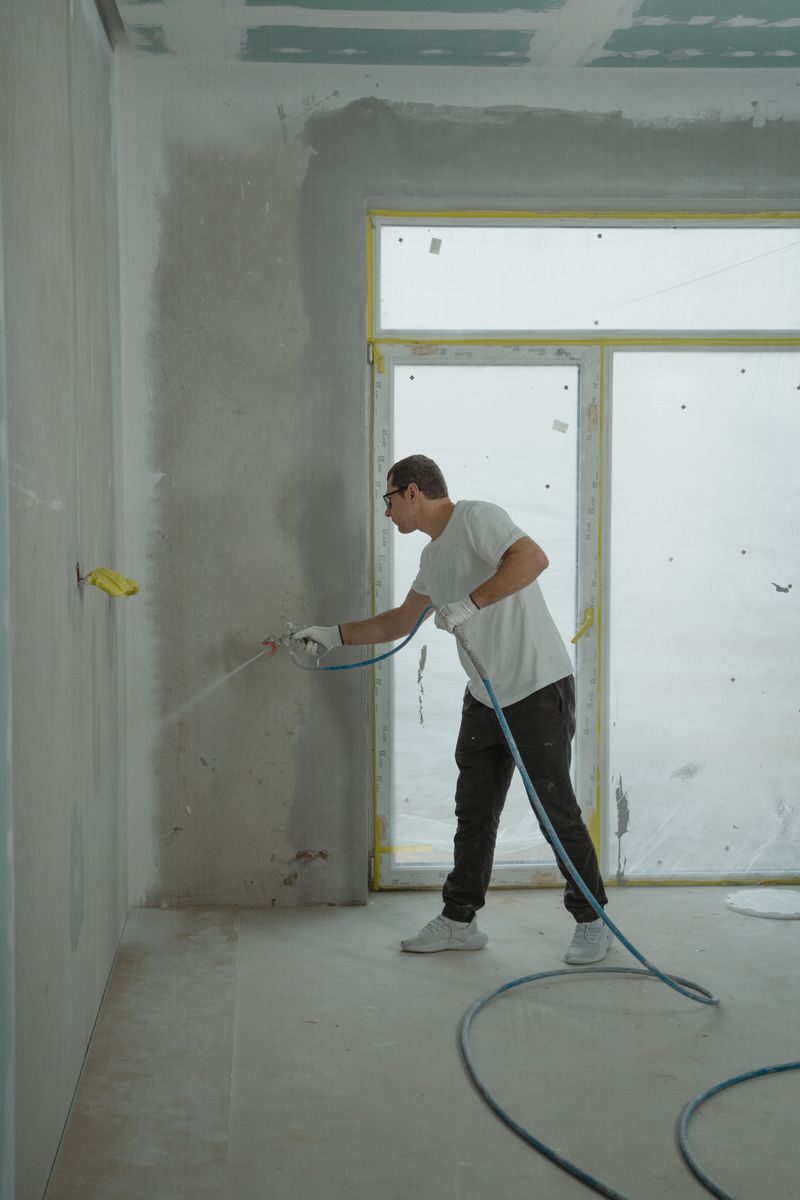
A paint sprayer can give a weekend painting job a smooth, even finish no brush or roller can match. It covers large areas fast, reaches into corners and textured surfaces, and leaves no brush marks when it is set up and used correctly. This guide covers choosing between HVLP and airless, setup, thinning, tip choice, technique, cleaning, and the mistakes that cause drips and clogs. Everything here applies to spray-gun equipment — HVLP and airless sprayers — not to aerosol spray cans.
Key Takeaways
- HVLP for fine finishes on furniture and trim; airless for large areas such as walls and fences.
- Thin latex paint for HVLP by 10 to 20 percent with water; spray airless with little or no thinning.
- Read the tip number: first digit sets fan width, last two digits set hole size.
- Keep a steady distance and speed, and overlap each pass by about 30 percent.
- Clean the sprayer right after every use — dried paint is the top cause of clogs.
What Is A Paint Sprayer And How Does It Work?
A paint sprayer breaks liquid paint into a fine mist and lays it onto a surface in a thin, even coat. A brush drags paint on and a roller presses it on, but a sprayer atomizes the paint into tiny droplets and carries them to the surface in a fan-shaped pattern. That is why sprayed finishes look so smooth: no brush strokes and no roller texture, only a fine layer that levels out as it dries.
HVLP Sprayers
HVLP stands for high volume, low pressure. These sprayers use a large volume of air at low pressure to break paint into a fine mist. They give the finest finish and the least overspray, which makes them a good choice for furniture, cabinets, doors, and trim. Their weakness is speed: they move paint slowly, and thick latex usually needs thinning before an HVLP gun can atomize it properly.
Airless Sprayers
An airless sprayer uses no air. A pump forces paint through a tiny hole in the spray tip at very high pressure — one Wagner model is built to deliver up to 2,750 psi — and that pressure alone breaks the paint into a mist. Airless sprayers therefore handle thick latex with little or no thinning; Wagner rates its airless units for interior latex at 0 to 10 percent dilution. They cover large areas far faster than an HVLP gun, but with more overspray and less fine control, so they suit walls, ceilings, fences, and exteriors better than delicate furniture work.
How To Set Up A Paint Sprayer
Good results start before the trigger is ever pulled: most spraying problems come from rushed setup. Renting is worth considering if you spray only once or twice a year.
- Read the manual for your exact model. Sprayers differ in how they prime, which filters they use, and how the pressure controls work.
- Prepare the surface first: clean off dust, sand rough or glossy areas lightly, and fill holes and cracks. A sprayer shows every flaw underneath the paint.
- Mask everything you do not want painted: drop cloths on floors, tape on trim, windows, outlets, and switches, and furniture removed or covered. Overspray travels further than most first-time users expect.
- Strain the paint through a fine mesh strainer — even new paint can contain dried bits that block the tip.
- Assemble the sprayer, connect the hose, and check the filters. A clogged filter is a common cause of a weak or spitting pattern.
- Prime the pump and test on cardboard. Adjust the pressure until the test pattern is even edge to edge, with no heavy tails and no spitting. Use the lowest pressure that gives a good pattern.
How To Thin Paint For A Sprayer
Thinning is where many home spray jobs go wrong, and the right amount depends on the sprayer type. Airless sprayers usually need little or no thinning, since high pressure pushes thick latex through the tip. HVLP sprayers almost always need the paint thinned, because their low air pressure cannot break up full-bodied latex on its own. Start with about 10 percent clean water for HVLP work, stir well, and test the pattern. If it still shows tails or spits, add a little more water in small steps. Wagner’s guidance allows dilution of up to 10 percent, and many HVLP users go to 10 to 20 percent for thick latex, but the paint label is the final authority — going past its maximum thinning ratio weakens the coating. Strain the thinned paint again before pouring it into the cup or hopper. A viscosity cup, included with many sprayers, times how long paint takes to drain — compare that time with the target in your manual. For oil-based paint, use mineral spirits rather than water, and only in the amount the label allows.
How To Choose The Right Spray Tip
The spray tip is a small part with a large effect on the finish: it controls the width of the spray fan and the amount of paint that comes out, so the wrong tip causes stripes, heavy edges, or a patchy coat. Graco’s airless tips use a three-digit code. The first digit, doubled, gives the fan width in inches, and the last two digits give the hole size, or orifice, in thousandths of an inch. A 515 tip therefore gives a 10-inch fan through a 0.015-inch opening, and a 517 tip gives the same 10-inch fan through a larger 0.017-inch opening. For standard latex on interior walls, a 515 is the usual choice; a 517 is the step up for thicker paint or primer. For cabinets and furniture, a smaller tip such as a 310 gives a narrower 6-inch fan and finer control. A worn tip is a quiet cause of bad finishes: as the hole wears larger, the fan narrows and the pattern gets heavy in the middle.
Spraying Technique That Gives A Smooth Finish
Technique is what separates a smooth finish from one full of drips and stripes. Keep the gun the same distance from the surface for the whole pass: for an airless sprayer, Wagner’s guide puts it at 25 to 30 centimeters, about 10 to 12 inches; for an HVLP sprayer, much closer, at 5 to 10 centimeters. Hold the gun at a right angle and move your whole arm across the pass, rather than flexing your wrist, which arcs the gun and lays a heavier coat at one end of the pattern. Start moving before you pull the trigger, and release it before you stop moving — triggering a still gun leaves a thick blob at each end of the pass. Move at a steady speed: too fast and the coat is thin and patchy, too slow and the paint runs. Overlap each pass by about 30 percent, and spray in thin coats: two thin coats dry better, hide better, and run less than one thick coat.
Common Paint Sprayer Mistakes To Avoid
Most sprayer problems come from a small list of avoidable errors. Skipping the test spray is the first: every paint, tip, and pressure setting behaves differently, so test on cardboard before aiming at the wall. Holding the gun too close or too far away is the second — too close and the paint runs, too far and it dries in the air into a rough coat that does not bond well. Spraying one thick coat instead of two thin ones runs and dries unevenly. Forgetting to strain the paint is another common error, since dried bits are the top cause of a blocked tip. Not masking widely enough is easy to regret, because overspray drifts, especially outdoors. Finally, never leave paint in the sprayer overnight — dried paint inside the gun, hose, and filters is far harder to remove than wet paint.
How To Clean A Paint Sprayer
Cleaning is part of the job, and it should start the moment you finish spraying — paint is easiest to remove while it is still wet. For water-based paint, flush the system with warm water; for oil-based paint, use the solvent the paint label recommends. With an HVLP sprayer, take the gun apart and wash the nozzle, cup, and fluid passages. With an airless sprayer, put the intake and return hoses into a bucket of cleaning fluid and let the pump run until the fluid from the gun runs clear, following your manual. Clean the tip and filters separately with a soft brush — never poke the tip with a pin or wire, since a damaged tip sprays unevenly. Dry the parts and store the sprayer with the gun safety lock on.
Safety Tips For Spray Painting
Spray painting puts fine paint mist into the air, so protect yourself first. Wear safety goggles and a face mask, as Wagner’s guide recommends, and choose a respirator rated for paint spray rather than a dust mask when spraying indoors or using solvent-based paint. Work with good ventilation, and never spray near an open flame or pilot light, since solvent vapours can ignite. Keep children and pets out until the paint is dry and the air is clear.
Conclusion
A paint sprayer rewards preparation and steady technique more than speed. Match the sprayer to the job, thin the paint to suit it, pick the right tip, and keep the gun moving at an even distance. Test on cardboard first, spray thin coats, and clean the machine right after. The same approach works on furniture — see our guide to painting furniture — and if you are planning a whole room, it helps to know how long it takes to paint a room before you set the day aside.
Frequently Asked Questions
Do I Need To Thin Paint For A Paint Sprayer?
It depends on the sprayer. Airless sprayers usually handle latex paint with little or no thinning, because their high pressure pushes thick paint through the tip. HVLP sprayers usually need the paint thinned, often by 10 to 20 percent with water.
What Size Spray Tip Should I Use For Walls?
For standard latex on interior walls and ceilings, a 515 tip is the common choice: a 10-inch fan through a 0.015-inch opening. For thicker paint or primer, step up to a 517, which has the same 10-inch fan but a larger 0.017-inch opening. For cabinets and furniture, a smaller tip such as a 310 gives finer control.
Why Is My Paint Sprayer Spitting Or Spraying Unevenly?
The most common causes are paint that is too thick, a clogged or worn tip, a dirty filter, or pressure that is set too low. Strain the paint, clean or replace the filters, check the tip for wear, and raise the pressure in small steps until the test pattern on cardboard is even.
How Do I Clean A Paint Sprayer After Use?
Flush the system right away, while the paint is still wet. For water-based paint use warm water; for oil-based paint use the solvent the paint label recommends. With an HVLP gun, take the nozzle and cup apart and wash them; with an airless unit, run cleaning fluid through the pump until it comes out clear. Clean the tip and filters separately with a soft brush.
Can I Use A Paint Sprayer Indoors?
Yes — indoor walls are one of the best uses for a sprayer. Mask everything you do not want painted, ventilate the room well, and wear goggles and a respirator rated for paint spray. Use an HVLP sprayer for smaller indoor work if overspray is a concern, since it produces less mist than an airless unit.
