

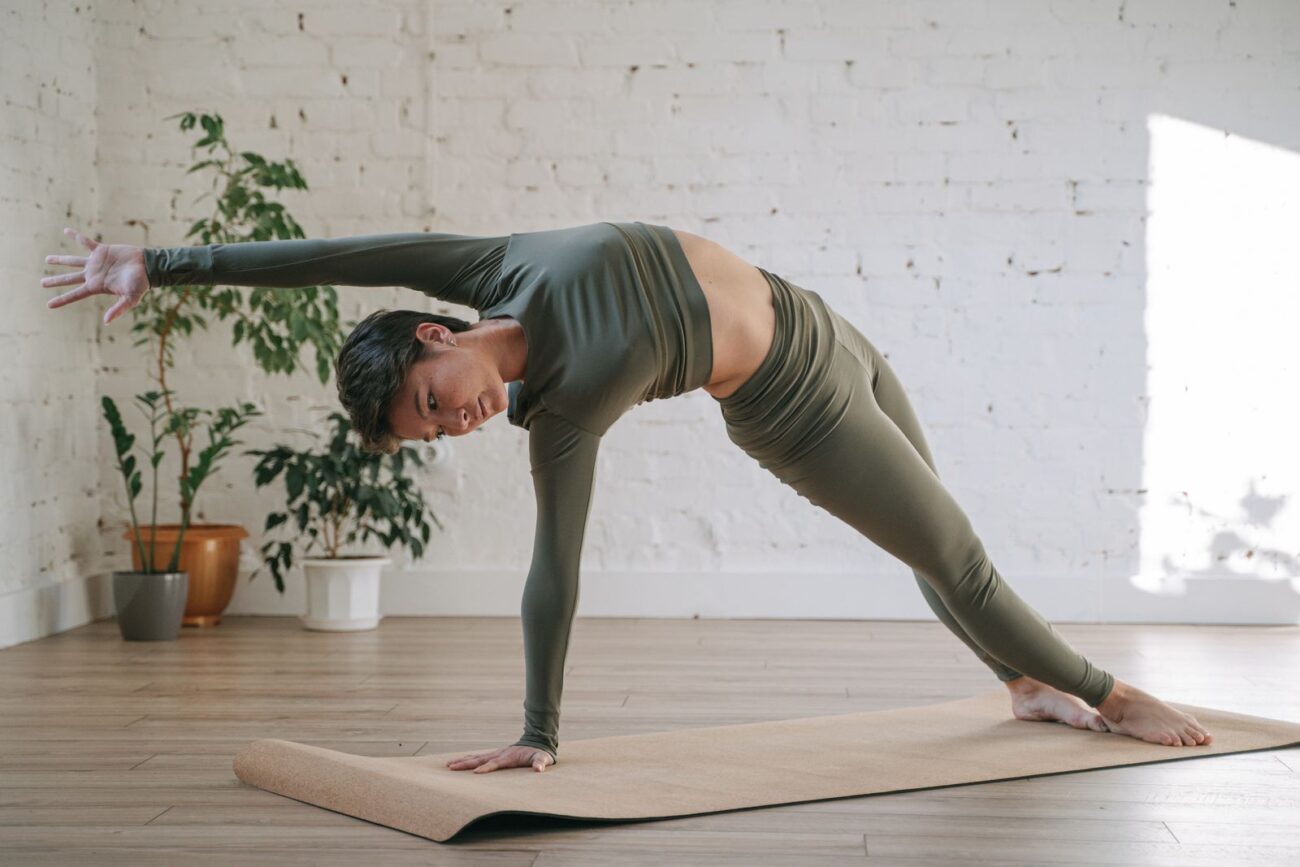
Flexibility is the ability of your joints to move through their full range of motion. When it is good, everyday movements feel easier: reaching a high shelf, tying your shoes, and getting up from the floor. When it is poor, the same movements feel stiff. The good news is that flexibility can be improved at almost any age, and a short routine done two or three times a week is enough to start.
Key Takeaways
- Flexibility is how far your joints can move, and it supports everyday movement and posture.
- Stretching can improve flexibility and range of motion; the evidence on injury prevention is mixed.
- Stretch at least two to three days a week, holding each stretch for 10 to 30 seconds.
- Stretch when muscles are warm, move slowly, breathe normally, and never bounce or push into pain.
- Flexibility improves gradually over weeks, so consistency matters most.
What Is Flexibility?
Flexibility describes how far a joint, or a group of joints, can move, and it depends on the muscles, tendons, and ligaments around that joint. It is not the same in every part of the body: you can have loose shoulders and tight hamstrings at the same time, so a good routine covers the major muscle groups.
Fitness professionals count flexibility as one of the five health-related components of physical fitness, alongside strength, endurance, cardiorespiratory endurance, and body composition. Stretching is the standard way to train it, just as walking trains endurance. Flexibility is often confused with mobility, but the two are not identical: flexibility is the passive range of a joint, while mobility is moving through that range under your own control, with strength and balance.
Why Flexibility Matters
The most direct benefit is that flexibility helps your joints move through their full range of motion, which makes ordinary tasks easier. Reaching, bending, and climbing stairs all draw on the range of motion in your hips, spine, shoulders, and knees. When that range is limited, your body compensates and everyday tasks can start to feel tiring. This matters more with age, as flexibility naturally declines over the years. Better flexibility may also support physical activity: when muscles and joints move freely, they work more effectively. The Mayo Clinic lists this among the possible benefits of stretching, along with a lower injury risk, increased blood flow to the muscles, and an improved ability to do daily activities.
The evidence, though, is mixed. Some research shows that stretching helps, while other studies find little or no benefit for some outcomes. Research has also found that stretching does not reliably reduce muscle soreness after exercise, and that static stretching held immediately before a sprint or jump may slightly worsen performance. Stretching is best seen as a way to maintain and gradually improve your range of motion, not as a guarantee against injury or soreness.
What Affects Your Flexibility?
Flexibility is not the same for everyone. With age, joints and soft tissues gradually become less elastic, which is why older adults often need longer holds. Genetics plays a part too, and the structure of your joints sets a ceiling on how far they can safely move: forcing a joint past it risks injury. Long sitting shortens the hip flexors, hamstrings, and chest muscles, while regular movement keeps them supple. Muscles also stretch more easily when warm, and past injuries can limit flexibility because the body guards an injured area. The encouraging part is that activity level and consistency can both be improved.
The Main Types Of Stretching
Not all stretching is the same, and each type has its place.
Static Stretching
Static stretching is the familiar kind: you move into a stretch and hold it still, such as a seated forward bend or a standing calf stretch. It is the best type for improving flexibility over time, and it works best when muscles are already warm, after exercise or a short warm-up walk. Hold each stretch for about 30 seconds and breathe normally.
Dynamic Stretching
Dynamic stretching uses slow, controlled movement to take a joint through its range of motion: arm circles, leg swings, and gentle practice swings before a sport. It is a good choice for warming up, as it raises your temperature and prepares the muscles without a long held stretch.
Proprioceptive Neuromuscular Facilitation (PNF)
PNF pairs a brief muscle contraction with a stretch: push gently against resistance for a few seconds, relax, then stretch a little further. The American College of Sports Medicine describes it as a contraction of three to six seconds followed by an assisted stretch of 10 to 30 seconds, usually easier with a partner or a trained professional.
Ballistic Stretching
Ballistic stretching uses bouncing or jerking movements to force a stretch further, and most experts advise against it: bouncing can cause small tears in muscle tissue and trigger a reflex that tightens the muscle. Move slowly, hold steadily, and never bounce.
How Often And How Long Should You Stretch?
The American College of Sports Medicine recommends flexibility exercise at least two to three days a week, with daily stretching the most effective for improving range of motion. Hold each stretch for 10 to 30 seconds (older adults may benefit from 30 to 60 seconds), and repeat each two to four times, adding up to about 60 seconds per muscle group. Target the major muscle-tendon groups: neck, shoulders, chest, upper back, lower back, hips, hamstrings, quadriceps, and calves. The Mayo Clinic gives similar advice: stretch after exercise, when muscles are warmed up, holding each stretch for about 30 seconds. A realistic start is a 10-minute session, two or three days a week.
Five Simple Stretches To Improve Flexibility
These stretches cover the neck, chest, back, hips, and legs. Do them slowly, breathe normally, and stop if you feel sharp pain. You need only a mat or a soft floor, plus a wall or a door frame for two of them.
1. Neck And Shoulder Release
Sit tall, shoulders relaxed. Slowly turn your head to one side as far as is comfortable, hold five seconds, return to centre, and repeat on the other side. Then tilt your head toward one shoulder, hold five seconds, and switch sides. Do three slow repetitions each side.
2. Doorway Chest Stretch
Stand in a doorway, forearms on the frame at shoulder height. Step forward and lean gently until you feel a mild pull across your chest. Hold 30 seconds and repeat twice. This counters the rounded-shoulder posture that builds up from desk work.
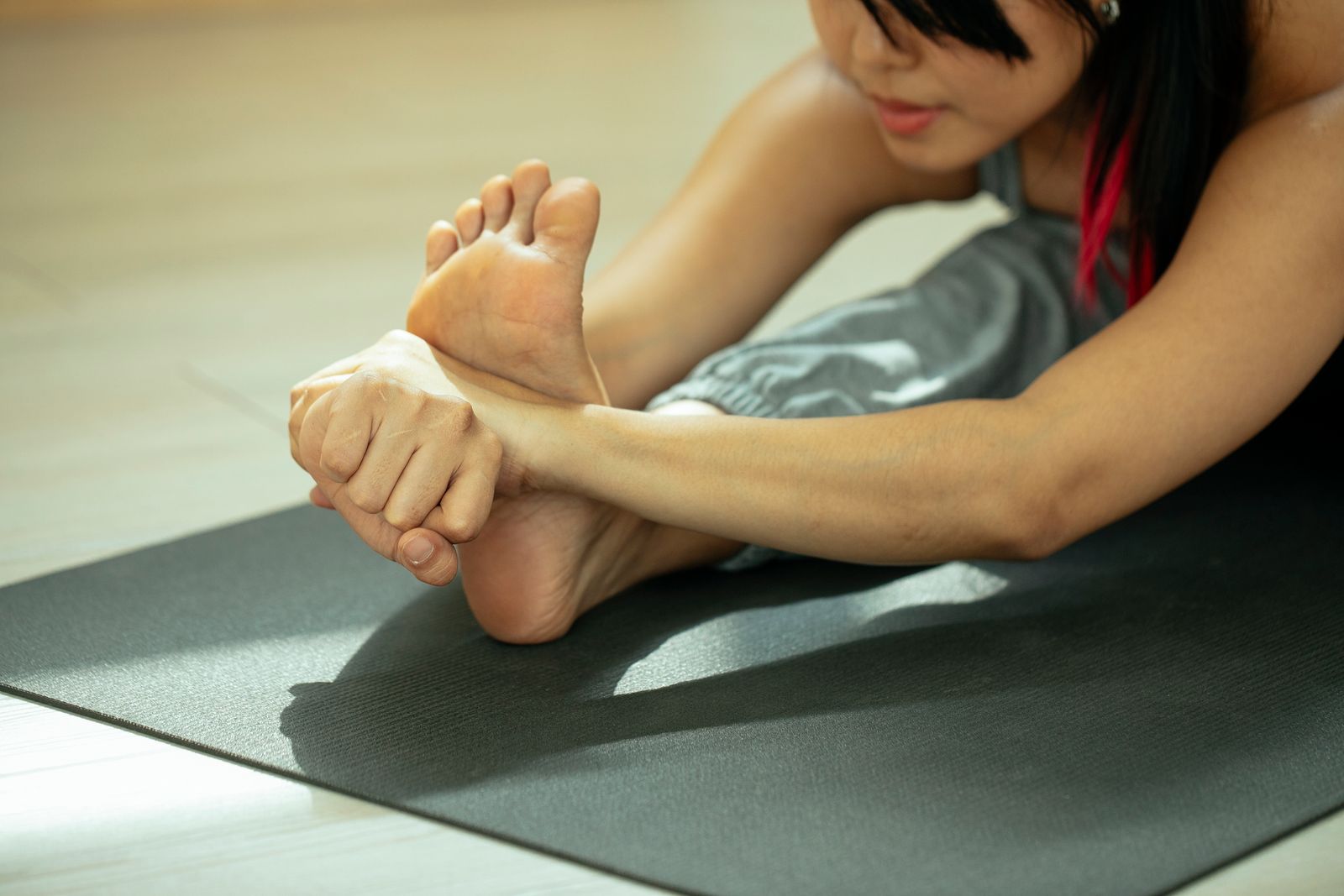
3. Seated Forward Bend For The Hamstrings
Sit on the floor, one leg extended and the other bent, sole against the inner thigh. Keeping your back long, hinge forward from your hips until you feel a stretch behind your thigh. Hold 30 seconds, switch legs, and repeat twice each side.
4. Wall Calf Stretch
Face a wall, hands on it for support. Step one foot back, keeping that leg straight and the heel on the floor. Bend the front knee until you feel a stretch in the back calf, hold 30 seconds, and repeat on the other side, three times each side.
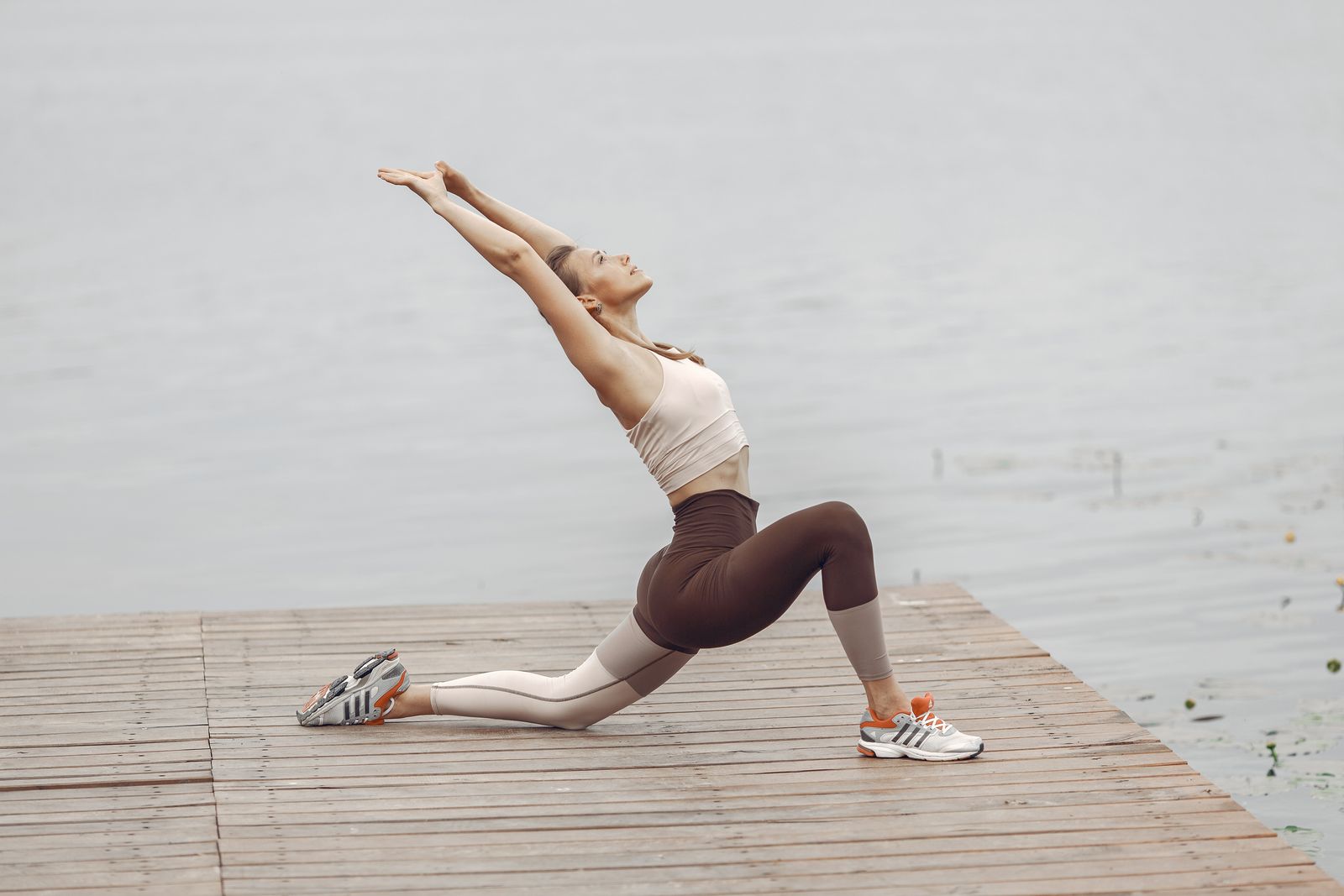
5. Hip Flexor Lunge Stretch
Step into a deep lunge, lowering your back knee to the floor if comfortable, hands on the front knee. Keep your chest tall and press your hips forward until you feel a stretch at the front of the back hip. Hold 30 seconds each side and repeat twice.
To round out the routine with strength work, our guide to bodyweight exercises for beginners explains seven simple movements you can do at home with no equipment. Walking is another good companion: our article on the benefits of walking backwards covers a simple variation that challenges balance and works the hamstrings and lower back.
Common Mistakes That Hold Flexibility Back
Most stretching mistakes come from impatience, and all are easy to fix once you notice them.
- Bouncing into a stretch. Bouncing tightens the muscle and can cause small tears, so move slowly and hold still.
- Stretching cold muscles. Stretching works best when muscles are warm, so walk a few minutes first or stretch after exercise.
- Holding your breath. Breathing normally helps the muscle relax, so ease off if you catch yourself holding it.
- Pushing into pain. A stretch should feel like gentle tightness, never sharp pain. Pain means stop.
- Only stretching one side. Stretch both sides, giving the tighter side the same attention rather than forcing it.
- Expecting fast results. Flexibility improves over weeks of regular practice; short regular sessions add up.
When To Be Careful Or Seek Advice
Stretching is safe for most healthy adults, but be careful if you have recently injured a muscle or joint, had surgery, or have been told to limit movement by a doctor: check which stretches are suitable first. Stop and seek advice for sharp pain, joint pain, numbness, or tingling, or pain that lasts after you stop. People with osteoporosis should also ask a clinician which stretches are safe.
How To Build A Simple Weekly Routine
Keep it small at first: pick three days a week, such as Monday, Wednesday, and Friday, and set aside ten minutes after a short walk or your usual workout. Work through the five stretches above, holding each for 30 seconds and repeating each twice, and add a third repetition or a fourth day over a few weeks. Stretching after a walk means your muscles are already warm, and good sleep supports recovery, so our guide to good sleep hygiene is a useful companion. The surest sign of progress is that a stretch which once felt tight now feels easy at the same range.
Conclusion
Flexibility is a practical, trainable part of fitness: your joints’ ability to move through their full range of motion. It makes everyday movement easier and helps you keep moving well as you age. The way to improve it is simple: stretch the major muscle groups two or three times a week, hold each stretch for about 30 seconds, breathe normally, and never bounce or push into pain. The evidence does not promise that stretching prevents every injury, but it does support stretching as a reliable way to maintain and gradually improve your range of motion. Start with ten minutes and stay consistent.
Important Disclaimer: This article is general information only and is not medical advice. It is not a substitute for professional medical guidance, diagnosis, or treatment. Please consult a healthcare professional before starting a new exercise or stretching routine, especially if you have a health condition, an injury, pain, or any concern about exercise safety.
Frequently Asked Questions
How Long Does It Take To Improve Flexibility?
Most people notice a difference after a few weeks of stretching two or three times a week. The gains come from consistency, not single intense sessions.
Can You Become More Flexible At Any Age?
Yes, although change is usually slower in older adults. The American College of Sports Medicine notes that older adults may benefit from holding stretches for 30 to 60 seconds. If you have a health condition or a joint problem, check with a clinician first.
Is It Better To Stretch Before Or After Exercise?
Static stretches are usually best after exercise or a warm-up. Before exercise, gentle dynamic movements such as arm circles or leg swings are better preparation. Long static stretches held just before a sprint or a jump may slightly reduce performance.
How Many Days A Week Should You Stretch?
At least two to three days a week, per the American College of Sports Medicine; daily is the most effective. If daily is too much, two or three short sessions a week are a good start.
Does Stretching Prevent Injuries?
The evidence is mixed. Better flexibility may lower injury risk, but studies have not consistently shown that stretching prevents injuries or reduces soreness. Treat stretching as one part of a balanced routine that also includes strength, aerobic activity, and rest.
