


Good sleep hygiene is the set of everyday habits and bedroom conditions that help you fall asleep more easily, stay asleep through the night, and wake up feeling rested. It is a routine: the same bedtime and wake time most days, a dark and cool bedroom, less caffeine late in the day, and screens put away before bed. The Centers for Disease Control and Prevention (CDC) (CDC — How to Improve Your Sleep) describes these habits as the foundation of healthy sleep, and the Sleep Foundation lists the same core practices. Most of them cost nothing and can be started tonight.
Key Takeaways
- Most adults aged 18 to 60 need 7 or more hours of sleep a night, according to the CDC.
- Good sleep hygiene means a regular sleep schedule, a dark, cool, quiet bedroom, and a calm wind-down routine.
- Stop caffeine at least 6 to 8 hours before bed, and avoid alcohol and heavy meals in the evening.
- Put screens away 30 to 60 minutes before bed, and get bright light in the morning.
- If poor sleep lasts for weeks despite good habits, talk to a doctor.
What Is Good Sleep Hygiene?
Sleep hygiene is a simple name for the behaviours that support healthy sleep. It covers what you do during the day, what you do in the hour before bed, and how your bedroom is set up. Think of it as the conditions you give your body so sleep can happen naturally: right conditions make falling asleep easier, wrong ones keep even a tired person awake.
It matters because so many of us fall short. More than 1 in 3 adults in the United States do not get the sleep they need, according to the CDC, and short sleep is linked to a higher risk of diabetes, heart disease, and stroke, as well as worse mood and memory the next day. Sleep hygiene is about habits, not willpower: you cannot force yourself to fall asleep, so build a routine that tells your body when it is time to wind down.
How Much Sleep Do Adults Actually Need?
The CDC recommends 7 or more hours a night for adults aged 18 to 60, 7 to 9 hours for ages 61 to 64, and 7 to 8 hours for ages 65 and older. (Sleep Foundation — How Much Sleep Do We Really Need?) These are population recommendations, not a personal prescription: some people feel fine on seven hours, while others need eight or nine. The American Academy of Sleep Medicine and the Sleep Research Society reached a similar conclusion in 2015, finding that regularly sleeping less than seven hours is linked to worse health outcomes.
Keep The Same Sleep Schedule Every Day
The most recommended sleep hygiene habit is a regular schedule: the CDC lists going to bed and getting up at the same time every day (How To Wake Yourself Up: Practical Ways To Get Out Of Bed And Feel Alert) as its first tip. Your body runs on an internal clock, the circadian rhythm, which expects sleep and wakefulness at roughly the same times each day. A steady schedule keeps that clock on track, so you feel sleepy at bedtime and alert in the morning.
Weekends are where most schedules fall apart: sleeping in for two or three extra hours shifts your body clock later, which makes Sunday night harder and Monday morning worse. The National Heart, Lung, and Blood Institute suggests keeping weekend variation to about an hour. If your schedule is far from regular now, move your bedtime earlier by 15 to 30 minutes every few days.
Build A Calm Wind-Down Routine
Your body needs a signal that the day is ending, and a relaxing routine in the 30 to 60 minutes before bed gives it that signal. The CDC recommends a bedtime ritual away from bright lights, because it separates sleep time from activities that cause excitement, stress, or anxiety (How to Reduce Stress and Anxiety: Practical Steps That Help). A good routine includes one or two quiet activities: reading a printed book, taking a warm shower or bath, gentle stretching, writing tomorrow’s to-do list on paper, or listening to calm music. A warm shower helps because body temperature drops afterwards, which makes you sleepy. Do the same things in the same order most nights, so after a week or two your brain links the routine with sleep.
Make Your Bedroom Dark, Cool, And Quiet
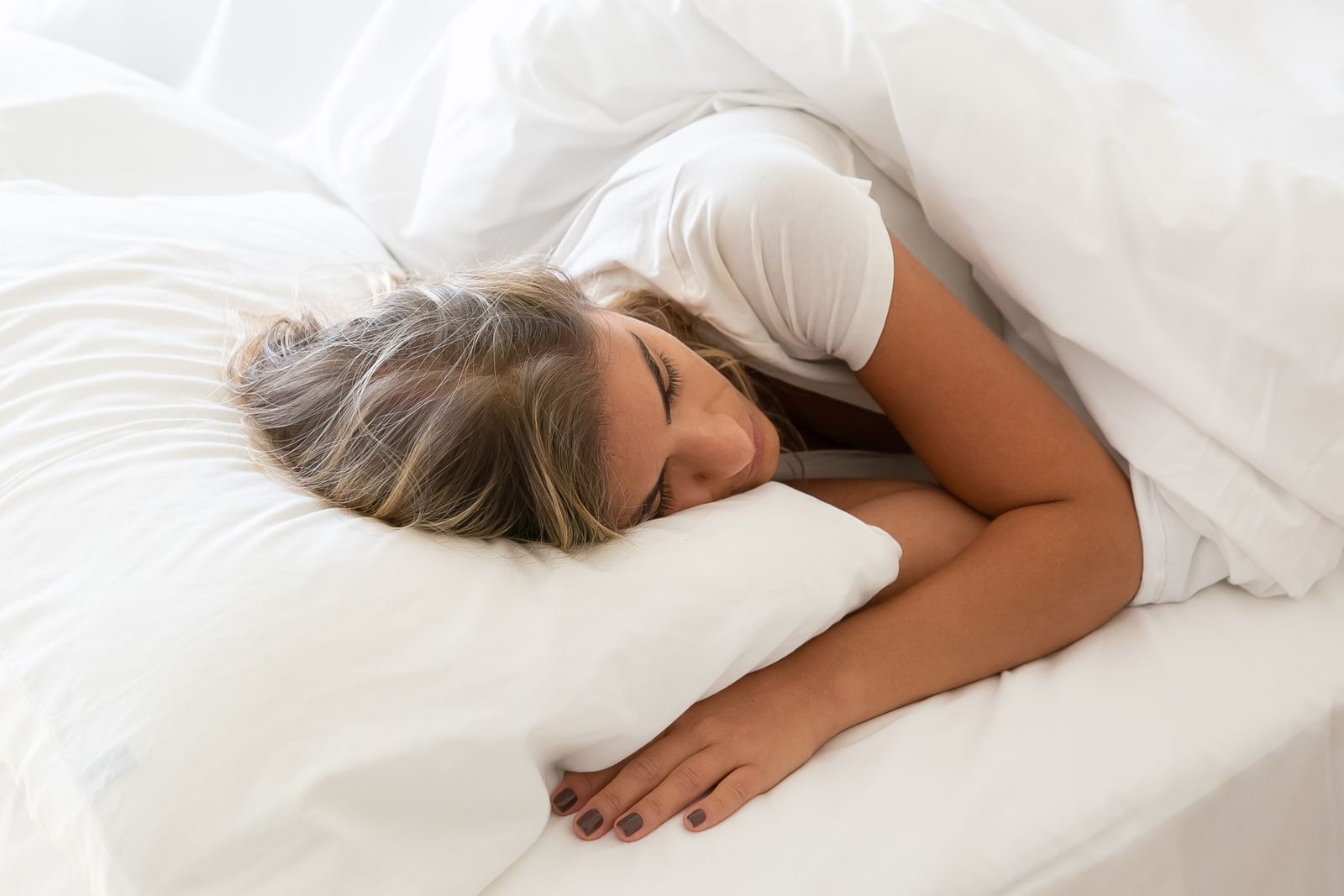
Your bedroom should be built for sleep and nothing else. The CDC recommends keeping it cool, quiet, and free from light. Darkness matters because light suppresses melatonin, the hormone that makes you feel sleepy, so blackout curtains or a sleep mask are the simplest fixes, and covering small glowing devices helps too.
Temperature matters because your body cools down as you fall asleep, and a warm room works against that. The CDC recommends 60 to 67 degrees Fahrenheit, while the Sleep Foundation gives a similar range of 65 to 68 degrees; somewhere in the middle suits most people. Light bedding you can add or remove beats one heavy blanket, and a fan helps with cooling and steady background noise. Quiet matters too, because sudden sounds wake you even when you do not remember them. If you live somewhere noisy, earplugs or a white noise machine can smooth out the sound.
Manage Light During The Day And At Night
Light is the strongest signal for your body clock, and timing is everything. Bright morning light (Morning Rituals That Actually Work) tells your body the day has started, which helps you feel alert and also helps you feel sleepy at the right time that night. A short walk outside in the morning, or breakfast near a window, is one of the easiest sleep hygiene habits there is. The Sleep Foundation also notes that aligning your schedule with natural daylight supports the circadian rhythm.
In the evening, the rule reverses. Bright light, especially the blue light from phones, tablets, laptops, and televisions, tells your brain it is still daytime and holds back melatonin. The CDC recommends turning off electronic devices at least 30 minutes before bed, and the Sleep Foundation suggests 30 to 60 minutes. If you must use a device late, dim the screen and switch on night mode, but remember the content itself can keep you awake. The best option is to put the phone in another room, or across the room where you cannot reach it without getting up.
Watch Caffeine, Alcohol, And Late Meals
Caffeine is the most common sleep thief, and its effects last far longer than the energy boost. It works by blocking adenosine, the chemical that builds up during the day and creates sleep pressure. The National Heart, Lung, and Blood Institute notes that caffeine’s effects can last up to 8 hours, and advises skipping caffeinated drinks in the late afternoon.
The research is clear. A controlled study published in the Journal of Clinical Sleep Medicine found that 400 milligrams of caffeine, roughly the amount in two to three cups of coffee, taken even 6 hours before bedtime reduced total sleep time by more than an hour. That is why experts advise a caffeine cutoff at least 6 to 8 hours before bed: for a 10 p.m. bedtime, no coffee, tea, cola, or energy drinks after about 2 p.m. Chocolate and some medicines contain caffeine too.
Alcohol is a different kind of problem. A drink in the evening can make you feel drowsy at first, which is why people call it a nightcap, but as the night goes on it disrupts your sleep cycles: it suppresses REM sleep, the stage linked to dreaming and memory, and fragments the second half of the night, so you wake up more often and feel less restored. The Sleep Foundation advises limiting alcohol, especially within 3 to 4 hours of bedtime. Food timing matters too. A heavy, spicy, or fatty meal close to bedtime can cause discomfort and heartburn, so finish a large dinner at least 2 to 3 hours before bed; if you are hungry later, a light snack is fine.
Move Your Body And Get Daylight
Regular physical activity is one of the most reliable ways to sleep better. People who exercise regularly tend to fall asleep faster and spend more time in deep sleep, and the effect does not require intense workouts: a brisk walk, a bike ride, swimming, or a dance class all count. Timing matters, though. Exercise raises body temperature and alertness, so finish vigorous exercise at least a few hours before bedtime, while gentle stretching or a slow evening walk is usually fine. Morning or afternoon exercise usually happens outdoors, giving you the bright light that keeps your body clock steady. If you are starting from zero, begin with a 20- to 30-minute walk a day.
Nap The Smart Way
Naps can help or hurt, depending on how you take them. The Mayo Clinic advises keeping naps short, with a 20- to 30-minute nap being ideal, and taking them in the early afternoon. Napping after 3 p.m. can make it harder to sleep soundly that night, and the longer you nap, the more likely you are to wake up groggy, a feeling known as sleep inertia, which usually fades within about 35 minutes. A short nap helps after a poor night or before a long evening: set an alarm and keep the room dim. If you already have trouble falling asleep at night, naps may make it worse, so skip the nap and get to bed at your usual time.
What To Do When You Cannot Fall Asleep
Almost everyone has a night when sleep will not come. The worst response is to lie in bed watching the clock and worrying about it, because worry raises alertness and makes sleep even less likely. Sleep experts recommend getting out of bed if you have been lying awake for a while and still feel wide awake: go to another room, keep the lights low, and do something quiet and boring, such as reading a dull book, then return to bed only when you feel sleepy again. This protects the link between your bed and sleep. On a bad night, keep the next day normal: get up at your usual time, get morning light, and avoid extra caffeine. One poor night does not ruin your health; the pattern to watch for is poor sleep that keeps happening night after night.
When To Talk To A Doctor
Good sleep hygiene helps most people sleep better, but it is not a treatment for a sleep disorder. The American Academy of Sleep Medicine notes that sleep hygiene education alone is not enough as a treatment for chronic insomnia, so if you have tried the habits in this guide for a few weeks without improvement, talk to a doctor. Some signs should prompt a visit sooner: loud snoring with pauses in breathing, gasping during the night, falling asleep during the day without meaning to, or a strong urge to move your legs at night can point to conditions such as sleep apnoea or restless legs syndrome. Persistent daytime sleepiness that affects your work or driving is another reason to seek help, because the CDC links short sleep with more motor vehicle crashes. A doctor can check for medical causes, review medicines that disturb sleep, and refer you to a sleep specialist.
The Bottom Line
Good sleep hygiene is not complicated, and it does not require special products or a perfect life. It is a handful of steady habits: the same bedtime and wake time, a dark, cool, quiet bedroom, a calm hour before bed, caffeine finished by the early afternoon, screens put away before lights out, daylight and movement during the day, and short naps only when they help. Most adults need 7 or more hours of sleep a night, and these habits are the most practical way to get there. Start with the two or three that fit your life best and give them a couple of weeks: sleep improves gradually, not overnight. And if good habits are not enough after a few weeks, talk to a doctor, because lasting sleep problems deserve proper help.
This article is for general information only and is not medical advice. If you have a sleep problem or a medical condition, or you take medication, talk to a healthcare professional before changing your routine or using any sleep aid.
Frequently Asked Questions
How Long Does It Take For Good Sleep Hygiene To Work?
Most people notice small improvements within a week or two of keeping a regular schedule, but the full effect usually takes a few weeks. Your body clock adjusts gradually, so give the habits time before deciding they do not work. If nothing has changed after several weeks of consistent habits, talk to a doctor.
Can I Catch Up On Sleep At The Weekend?
A weekend lie-in can ease a sleep debt, but it does not fully repay it, and a long lie-in shifts your body clock later, which makes Sunday night and Monday morning harder. Health guidance suggests keeping weekend variation to about an hour. A short extra sleep is fine, but a three-hour lie-in usually costs more than it helps.
Does Melatonin Help With Sleep?
Melatonin is a hormone your body makes naturally, and supplements are sold over the counter in the United States. Evidence for melatonin supplements is mixed, and they do not replace good sleep hygiene. If you are considering a supplement, especially if you are pregnant, take medication, or have a medical condition, talk to a healthcare professional first.
Is Six Hours Of Sleep Enough?
For most adults, no. The CDC recommends 7 or more hours a night for adults aged 18 to 60, and the American Academy of Sleep Medicine found that regularly sleeping less than seven hours is linked to worse health outcomes. Some people genuinely need less, but they are the exception. If you regularly sleep six hours and feel tired during the day, you are probably short on sleep.
What Is The 10-3-2-1-0 Rule For Sleep?
It is a popular memory aid, not an official medical guideline. It suggests no caffeine 10 hours before bed, no food or alcohol 3 hours before, no work 2 hours before, no screens 1 hour before, and no snoozing in the morning. The individual ideas line up with the guidance in this article, but the exact numbers are a rough guide, not a rule. Use it as a reminder, not a prescription.
