

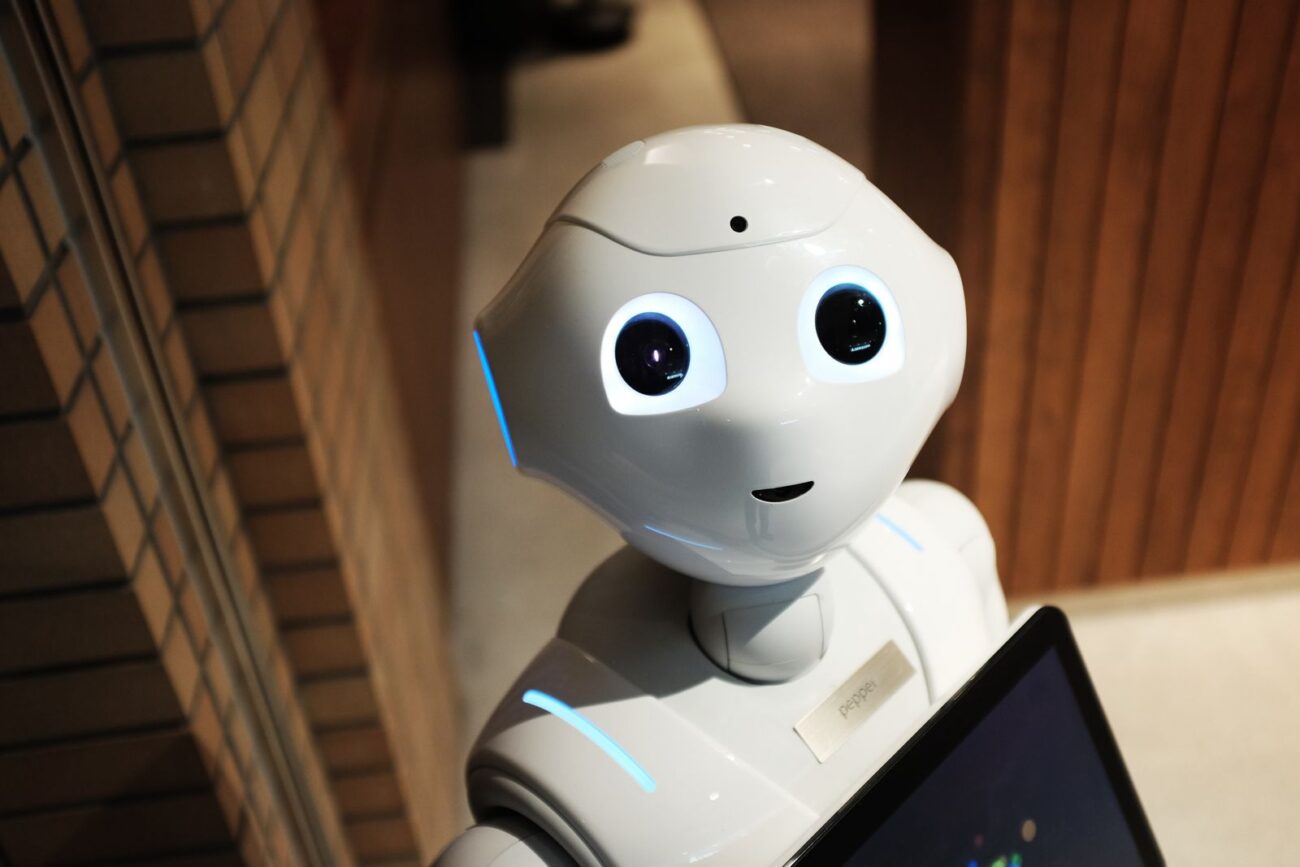
AI stands for Artificial Intelligence. It is computer technology that does jobs we normally associate with human thinking — understanding language, recognising pictures, and solving problems.
You have probably used AI today already. When your phone unlocks by looking at your face, when a streaming service suggests a film you enjoy, or when a chatbot answers a question at midnight — that is artificial intelligence at work.
Key Takeaways
- AI stands for Artificial Intelligence — technology that lets computers simulate human learning, problem solving, and decision making.
- The term was coined by John McCarthy in 1956 at the Dartmouth workshop.
- Almost all AI in use today is narrow AI, built for one kind of task. General AI does not exist yet.
- Machine learning is a subset of AI, deep learning is a subset of machine learning, and generative AI creates new content.
- AI works by finding patterns in data, not by thinking the way people do.
What Does AI Stand For?
The two letters are simple. A stands for Artificial, meaning made by humans rather than occurring naturally. I stands for Intelligence, meaning the ability to learn, reason, solve problems, and adapt to new situations. Put together, it means intelligence created by people and built into machines.
IBM defines AI as technology that enables computers and machines to simulate human learning, comprehension, problem solving, decision making, creativity, and autonomy. In other words, AI is a technology, not a single product or robot, and it copies the results of thinking rather than thinking in the human sense.
A Simple Definition Of Artificial Intelligence
At its most basic, an AI system takes in information, finds patterns in it, and uses those patterns to produce an answer. A spam filter, for example, has seen millions of emails labelled as spam or not spam, and learns which words and senders tend to appear in junk mail.
This is very different from traditional software. An ordinary program follows rules a programmer wrote out line by line: if this happens, do that. An AI system, by contrast, is trained rather than fully programmed. A developer gives it data and examples, and it adjusts itself until it performs the task well. That is why AI can handle messy, real-world information — handwriting, speech, photographs — that fixed rules could never describe. But the machine does not understand what it is doing: AI is powerful because it is very good at pattern matching, not because it has awareness or common sense.
A Short History Of AI
The idea is nearly seventy years old — a story of big hopes, long quiet periods, and sudden breakthroughs.
The Question That Started It All
In 1950, the British mathematician Alan Turing published a paper called “Computing Machinery and Intelligence” in the journal Mind. It opened with the question “Can machines think?” and proposed a practical test, now known as the Turing Test. A human judge chats by text with both a person and a machine, and if the judge cannot reliably tell which is which, the machine passes.
Dartmouth, 1956: A Field Gets Its Name
The term “artificial intelligence” was coined by the mathematician John McCarthy. In the summer of 1956, McCarthy, Marvin Minsky, Claude Shannon, and Nathaniel Rochester organised a workshop at Dartmouth College in Hanover, New Hampshire. About ten researchers spent around two months on the question. The workshop produced no major working system, but it gave the field a name and a shared goal: that learning could, in principle, be described precisely enough for a machine to simulate it.
Early Wins, AI Winters, And The Comeback
The first years were full of optimism. In 1956, Allen Newell, Herbert Simon, and Cliff Shaw built the Logic Theorist, which proved 38 of the 52 theorems in Principia Mathematica. But the promises were bigger than the technology could deliver. Computers were slow and data was scarce, so funding and enthusiasm cooled sharply, first in the 1970s and again in the late 1980s — periods researchers call the “AI winters.”
Interest returned in the 1990s. In 1997, IBM’s Deep Blue defeated world chess champion Garry Kasparov — the first time a computer had beaten a reigning world champion under standard tournament conditions. Around 2012, deep learning began winning image-recognition contests by large margins. The internet had produced huge amounts of data to train on, and computers had become powerful enough to process it. Then, in November 2022, OpenAI released ChatGPT, which reached an estimated 100 million users within about two months.
The Main Types Of AI
AI is usually divided into two broad categories, based on how wide its abilities are.
Narrow AI: The Only Kind That Exists Today
Narrow AI, also called weak AI, is a system built to do one specific task, or a narrow set of tasks, well. A spam filter, a voice assistant, and a chatbot are all narrow AI. Every AI system that exists and works today — including the most capable chatbots — is narrow AI. It can be extremely capable within its trained area, but it cannot transfer what it knows to a completely different job without being retrained.
General AI: A Goal, Not A Product
General AI, also called artificial general intelligence (AGI) or strong AI, would be a system that can understand, learn, and apply knowledge across any intellectual task at a human level — reasoning, planning, and adapting to new situations the way a person does. No such system exists today. It remains a research goal, and experts disagree on if and when it might arrive.
How AI Actually Works: Machine Learning And Deep Learning
AI, machine learning, deep learning, and generative AI are often used as if they were the same thing. They are not — each one sits inside the one before it, like nested boxes.
Machine Learning: Learning From Examples
Machine learning is a subset of AI, and today it is the main way AI systems are built. Instead of a programmer writing out every rule by hand, a machine learning system is shown large amounts of data and learns the patterns itself. It is given training data — for example, thousands of emails already marked as spam or not spam — adjusts its internal settings until it can predict the right answers, and is then tested on new data it has never seen.
Deep Learning: Learning In Layers
Deep learning is a specialised subset of machine learning. It uses artificial neural networks — many layers of simple processing units, loosely inspired by how neurons connect in the brain — to find patterns in large amounts of data. The word “deep” refers to the many layers. Each layer learns something slightly more abstract than the one before it: early layers might detect edges, later layers a face or a car.
Generative AI: Creating Something New
Generative AI is a type of AI built on deep learning that creates new content — text, images, audio, video, or code — by learning the patterns in huge amounts of existing data. Familiar examples include chatbots such as ChatGPT and image tools such as DALL-E. Most text chatbots run on large language models, which are trained on enormous collections of text and learn to predict the next word, or piece of a word, in a sequence. By repeating that prediction again and again, they produce paragraphs that read fluently.
A chatbot does not look up facts the way a search engine does, and it does not reason the way a person does. It generates text based on patterns in its training data, which is why it can write convincingly — and also why it sometimes produces confident-sounding answers that are wrong, a problem often called hallucination. Treat chatbot output as a helpful first draft, and check important claims against a reliable source.
Where You Already Meet AI Every Day
AI is not only in research labs and tech headlines; it is woven into ordinary routines, often invisibly. Search engines rank results and understand typos. Phones unlock by face and predict your next word as you type. Shopping and streaming services recommend products and films based on what you chose before. Chatbots answer common questions on websites at any hour.

These tools work best when they can see your data, which is why your privacy settings matter. If you want a refresher on staying private online, our guide to what incognito mode really does explains what private browsing can and cannot hide. The same thinking applies to AI tools: know what you share, and check the settings.
What AI Cannot Do
AI’s limits are as important as its abilities. First, AI does not understand meaning: a language model can produce a beautiful essay about a topic without knowing anything about it, because it is predicting likely words, not thinking through ideas. Second, AI can be confidently wrong. Chatbots sometimes invent facts that sound plausible but do not exist, so anything important should be verified. Third, AI learns from human data, so it can also learn human biases if its training data was skewed.
Finally, AI cannot replace human judgement, responsibility, or creativity in any full sense. It can draft, suggest, sort, and summarise at remarkable speed, but deciding what is true, fair, or worth doing still requires a person.
Common Misconceptions About AI
“AI is a robot.” Robots are machines that move in the physical world; AI is the software intelligence that can guide them, but most AI has no body at all. The chatbot on your phone and the spam filter in your email are both AI, and neither is a robot.
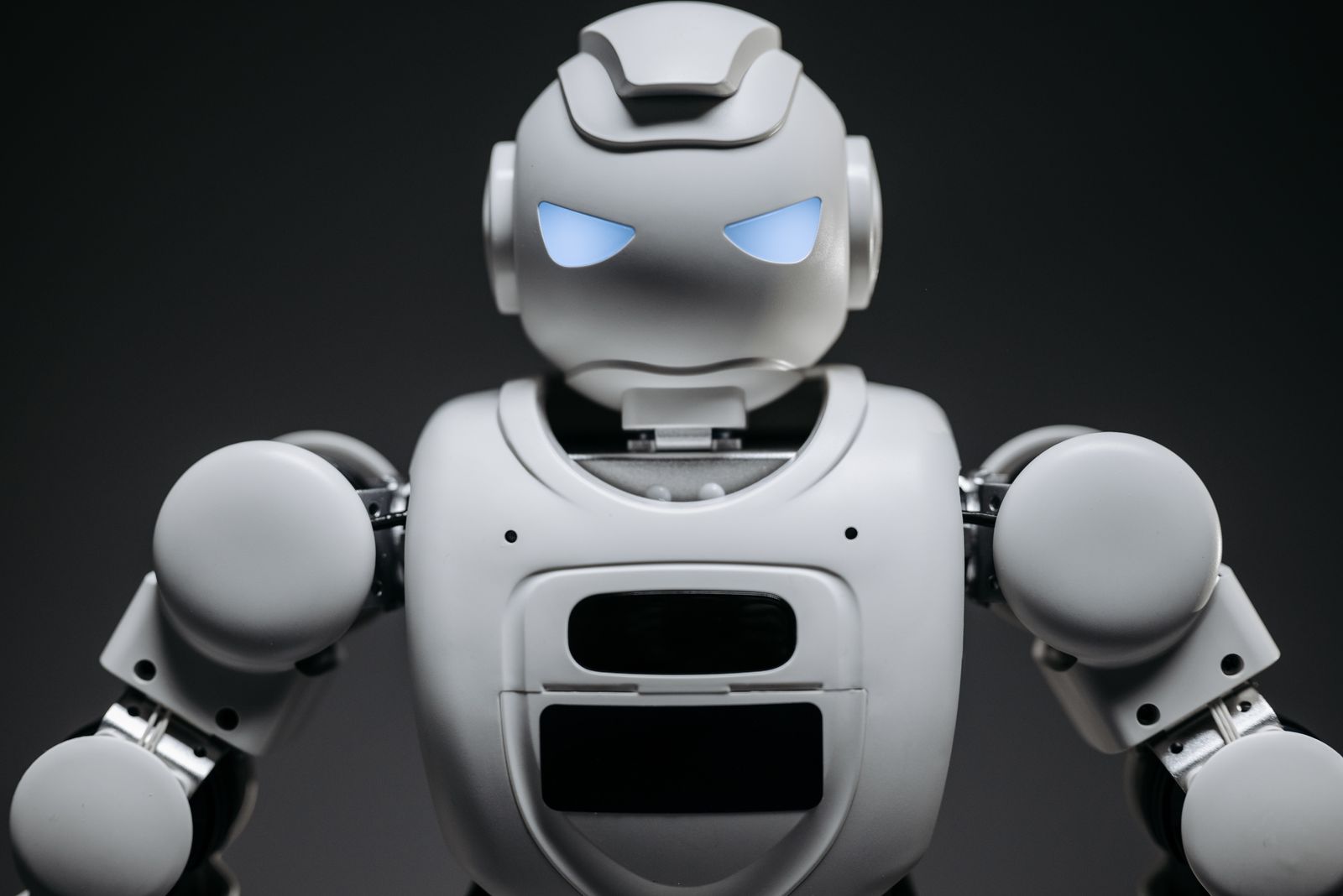
“AI thinks like a human.” It does not. Human thinking involves understanding, experience, emotion, and common sense. AI finds statistical patterns in data and uses them to make predictions.
“AI will soon be smarter than people at everything.” That describes general AI, which does not exist. Today’s systems are brilliant at specific tasks and helpless outside them, and experts disagree widely on when, or whether, general AI will arrive.
“Using AI means your data is always private.” Not necessarily — many AI tools send what you type to company servers, so check the privacy policy before pasting sensitive information. Our guide to the strongest WiFi password covers the basics of protecting your home network.
The Future Of AI In Plain Terms
What happens next is genuinely uncertain, and honest experts disagree about the pace and direction. AI tools are becoming cheaper and easier to use, so more small businesses, schools, and hospitals are adopting them. They are also becoming more capable at tasks combining text, images, and sound. At the same time, governments are writing rules about how AI should be built and used and debates about jobs, privacy, copyright, and misinformation are shaping how the technology develops.
For ordinary readers, the practical question is simpler: how do you use AI well? Use it to draft, brainstorm, summarise, and search faster. Check its answers before acting on them, especially for health, money, or legal questions. If you want to understand the wider technology around you, our explainer on the difference between a VPN and a proxy is a good next read.
Conclusion
AI stands for Artificial Intelligence: technology that lets computers simulate human abilities such as learning, understanding language, solving problems, and making decisions. The term dates back to 1956, when John McCarthy coined it at the Dartmouth workshop. Today, almost all AI is narrow AI — powerful at specific tasks, from filtering spam to writing drafts — while general AI remains a future goal, not a present reality.
Underneath the headlines, the technology is straightforward: machine learning finds patterns in data, deep learning finds them in layers, and generative AI uses them to create new content. Knowing what it is — and what it is not — is the best way to use it wisely: a fast, tireless assistant that still needs a human to check its work and make the final call.
Frequently Asked Questions
What Does AI Stand For?
AI stands for Artificial Intelligence. It is the field of computer science concerned with building systems that can perform tasks that normally require human intelligence, such as understanding language, recognising images, solving problems, and making decisions.
Who Coined The Term Artificial Intelligence?
The mathematician John McCarthy coined the term “artificial intelligence” in 1955–1956. He used it in the proposal for the Dartmouth Summer Research Project on Artificial Intelligence, the workshop held at Dartmouth College in the summer of 1956 that founded AI as a field of study.
What Is The Difference Between AI And Machine Learning?
Artificial intelligence is the broad field of making computers do tasks that require human-like intelligence. Machine learning is a subset of AI: instead of following hand-written rules, a machine learning system learns patterns from data. Deep learning is a further subset of machine learning that uses multi-layered neural networks.
Is ChatGPT An Example Of AI?
Yes. ChatGPT is a generative AI chatbot built on a large language model. It creates new text by predicting the next words in a sequence, based on patterns it learned from huge amounts of training data. It was released by OpenAI in November 2022 and quickly became one of the most widely used AI products in the world.
Does General AI Exist Yet?
No. All AI systems in use today are narrow AI, built for specific tasks. Artificial general intelligence — a system that could learn and reason across any task at a human level — does not exist and remains a research goal. Experts disagree widely on if and when it might be achieved.
Can AI Be Wrong?
Yes. AI systems, especially chatbots, can produce confident-sounding answers that are incorrect or invented, a problem often called hallucination. They can also repeat biases present in their training data. Important information from an AI tool should always be checked against a reliable source.
