

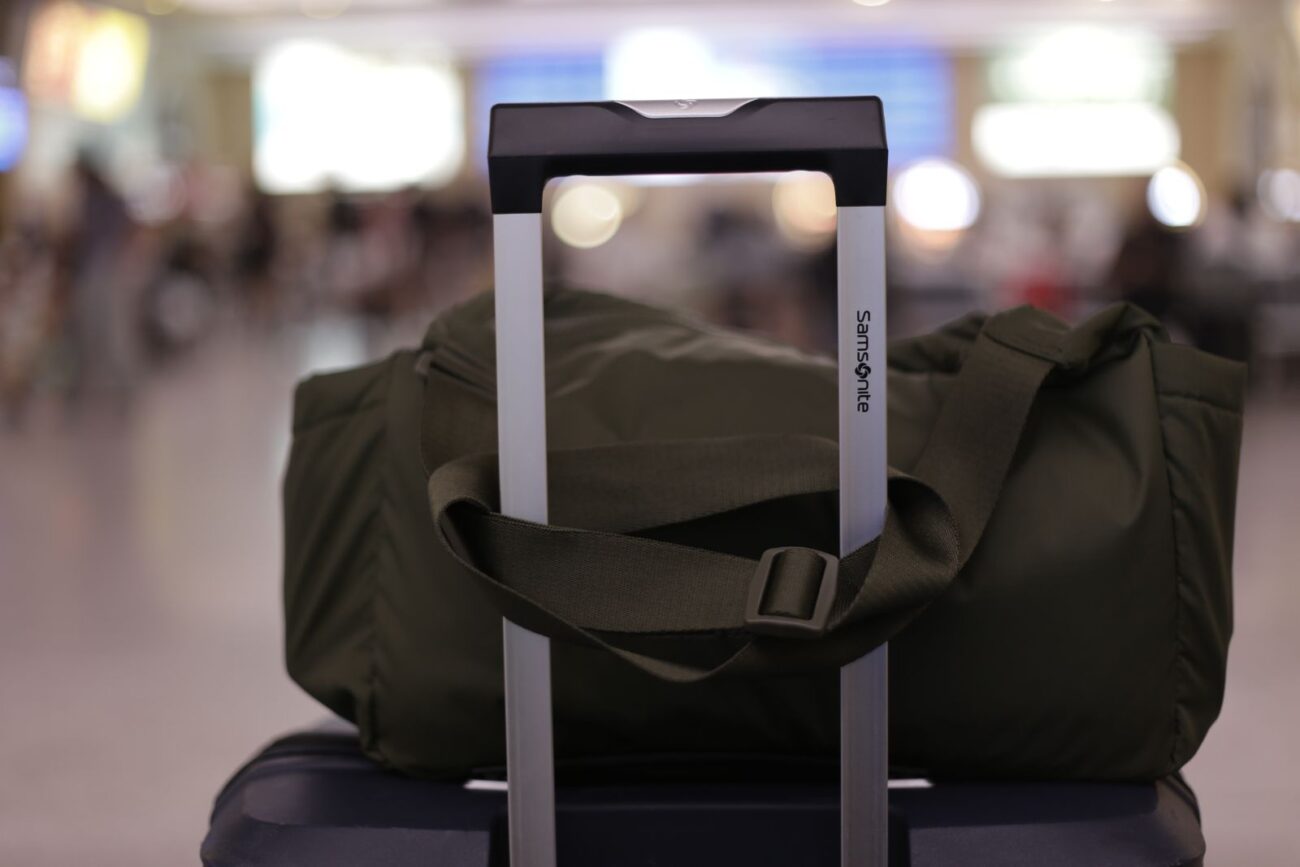
If you are packing for a flight in the United States, the question of TSA carry-on size comes up fast, and the answer surprises most travelers: the TSA does not set a carry-on size limit at all. The Transportation Security Administration screens your bag for safety, but the size of the bag you can bring into the cabin is decided by your airline. For most major US airlines, that limit is 22 x 14 x 9 inches (56 x 36 x 23 cm), including wheels and handles. One carry-on bag plus one smaller personal item is the standard allowance on most fares, though budget airlines and basic economy tickets play by different rules.
Key Takeaways
- The TSA does not set carry-on size limits. Airlines set their own limits, and the TSA only screens bags for prohibited items.
- The standard carry-on size on most major US airlines is 22 x 14 x 9 inches (56 x 36 x 23 cm), including wheels and handles.
- A personal item, such as a backpack or purse, must fit under the seat in front of you and is usually limited to about 18 x 14 x 8 inches.
- Always measure your bag fully packed, with wheels and handles extended, because airlines measure the whole bag.
- Southwest allows a larger carry-on at 24 x 16 x 10 inches, while budget carriers such as Frontier and Spirit only include a personal item for free.
What Is The TSA Carry-On Size?
There is no single TSA carry-on size because the TSA does not publish one. The agency’s job at the airport is security screening: officers check that your bag contains no prohibited items and that your liquids follow the 3-1-1 rule. Whether your bag fits in the overhead bin is your airline’s concern, not the TSA’s. That is why the same bag can be perfectly fine on one airline and too big on another.
Even so, there is a widely used standard. Most major US airlines allow a carry-on bag measuring up to 22 x 14 x 9 inches, or 56 x 36 x 23 cm. The three sides add up to 45 linear inches, and some airlines, including Delta, state that total explicitly. The measurement always includes the wheels and the extended handle, which is the detail that catches travelers out most often. A bag sold as “22-inch carry-on” may measure 22 inches for the case alone and 23 or 24 inches once the spinner wheels are counted, which puts it over the limit before you have packed a thing.
Carry-On Size Limits By Airline
The table below shows the published carry-on and personal item limits for the major US airlines. Limits can change and can vary by aircraft, route, and fare type, so confirm the current rules on your airline’s baggage page before you fly. American Airlines publishes its carry-on rules on its baggage page, and other airlines do the same.
| Airline | Carry-On (Overhead) | Personal Item (Under Seat) | Weight Limit |
|---|---|---|---|
| American Airlines | 22 x 14 x 9 in | 18 x 14 x 8 in | None published (domestic) |
| Delta Air Lines | 22 x 14 x 9 in (45 linear in total) | Must fit under the seat | None published (US routes) |
| United Airlines | 22 x 14 x 9 in | 17 x 10 x 9 in | None published |
| Southwest Airlines | 24 x 16 x 10 in | Must fit under the seat | None published |
| JetBlue | 22 x 14 x 9 in | Must fit under the seat | None published |
| Alaska Airlines | 22 x 14 x 9 in | Must fit under the seat | None published |
| Frontier / Spirit | Paid add-on on cheapest fares | 18 x 14 x 8 in (free) | Varies by fare |
A few details in the table deserve a closer look. American allows one carry-on and one personal item on every fare type, including basic economy, and publishes no weight limit for domestic carry-ons. Delta also allows both pieces on all fares, but on Delta Connection flights with 50 seats or fewer, only personal items are allowed in the cabin. United allows a full-size carry-on on most fares, but domestic Basic Economy passengers are limited to a personal item only. JetBlue’s Blue Basic fare is personal-item only as well. Southwest is the outlier in a good way: its carry-on allowance of 24 x 16 x 10 inches is larger than the standard.
Frontier and Spirit work differently. Their lowest fares include only a free personal item of 18 x 14 x 8 inches. A full-size carry-on that goes in the overhead bin is a paid add-on, and the price rises sharply if you wait until the gate to pay.
Carry-On Vs Personal Item: What Is The Difference?
A carry-on bag is the larger of the two pieces you can bring into the cabin. It goes in the overhead bin, it is limited to 22 x 14 x 9 inches on most US airlines, and it is usually a rolling suitcase or a large duffel. A personal item is the smaller second piece. It must fit under the seat in front of you, and it is usually a backpack, purse, laptop bag, or small tote. The most common personal item limit is 18 x 14 x 8 inches, though United’s is smaller at 17 x 10 x 9 inches, and Delta and Southwest simply require that the item fits under the seat.
The distinction matters more than it used to, because enforcement has tightened. Gate agents are checking sizes more strictly than they did a few years ago, and a bag that looks oversized is more likely to be measured now.
How To Measure Your Carry-On Bag Correctly
Measuring your bag at home takes five minutes and can save you a gate-check fee and a stressful start to your trip. Do it after you have packed, not before, because a stuffed bag bulges beyond its empty measurements.
- Pack the bag exactly as you plan to travel, then close it fully, including all exterior pockets.
- Extend the telescoping handle to its full height and stand the bag upright on its wheels.
- Measure height from the floor to the top of the extended handle, width across the widest point, and depth from front to back, including any bulging front pocket.
- Compare all three numbers with your airline’s limit, and add the three sides together to check the 45 linear inch total where it applies.
Photo by Erik Mclean on Pexels
Do not trust the size printed on a luggage tag or a shopping listing on its own. Manufacturers often quote the dimensions of the case body only, leaving out the wheels and handle, and some round their numbers down. A tape measure is the only reliable check.
International Flights: Different Rules, Smaller Limits
Once you leave the United States, carry-on rules change. Many international airlines use smaller limits than the US standard, often around 55 x 40 x 20 cm (about 21.5 x 15.5 x 8 inches), and many of them also enforce a weight limit, commonly 7 to 10 kg (about 15 to 22 pounds). A bag that is perfectly legal on a US domestic flight can be overweight or oversized on a European or Asian carrier, even when the flight is a connection on the same ticket.
On a trip with more than one airline, the strictest limit on your itinerary usually applies. If your journey starts on a US carrier and connects to a smaller regional or international airline, check the second airline’s rules too.
What Happens If Your Bag Is Too Big?
If your carry-on does not fit the sizer at the gate, the airline will gate-check it. The bag is tagged, taken from you at the aircraft door, and placed in the cargo hold. You will usually collect it at baggage claim on arrival, not at the aircraft door, and on a tight connection that can mean a long wait. On most major US airlines, a bag that is gate-checked because the overhead bins are full is usually free. A bag that is gate-checked because it is oversized is a different matter: on budget carriers, you can be charged a fee at the gate, and those fees can reach $60 to $100.
Photo by Magic K on Pexels
An oversized bag can also slow you down in other ways. Repacking at the gate while other passengers board is stressful, and anything you move into your personal item has to fit under the seat.
What You Can And Cannot Pack In A Carry-On
Size is only half of the carry-on story. The other half is what the TSA allows inside the bag. Liquids, gels, aerosols, creams, and pastes must follow the 3-1-1 rule: each container must hold 3.4 ounces (100 ml) or less, all containers must fit in one clear quart-sized bag, and each traveler gets one bag. Our guide to the TSA 3-1-1 rule explained covers exactly what counts as a liquid and which exceptions apply to medications and baby formula.
Some items are banned from the cabin entirely, including knives, scissors with blades over 4 inches, and tools longer than 7 inches. Spare lithium batteries and power banks must travel in your carry-on, never in checked luggage. You can check any item on the TSA’s official What Can I Bring list before you travel.
Packing Tips To Make The Most Of Your Carry-On
A bag that meets the size limit still has to hold everything you need. A few packing habits make a real difference on a carry-on-only trip.
- Roll soft clothing instead of folding it. Rolled clothes take up less space and arrive with fewer creases.
- Use packing cubes to compress clothing and keep categories separate, so you can find things without unpacking the whole bag.
- Wear your bulkiest items on the plane, such as a heavy jacket and your largest shoes, to free up space inside the bag.
- Keep your liquids bag, medications, and chargers near the top so they are easy to reach at the security checkpoint.
- Leave a small amount of empty space. A bag packed to bursting bulges past its measured size and is harder to fit in the overhead bin.
- Put a change of clothes and essential toiletries in your personal item, so a gate-checked bag never leaves you without the basics.
If you want a full checklist to pack from, our travel packing list covers everything you need for a smooth trip. And if you are traveling with kids, plan the extra gear early: children’s items fill a carry-on fast, and a personal item each for older children spreads the load.
Common Mistakes To Avoid
Most carry-on problems come from a small number of avoidable mistakes. Measuring the empty bag instead of the packed one is the most common: a bag that measures 22 x 14 x 9 inches in the shop can measure 23 inches deep once it is stuffed. Stuffing the exterior pockets is another, because a bulging front pocket adds depth the airline will count. Assuming every airline uses the same limit is a third, and it is the mistake that catches people on budget carriers and international connections. Finally, do not assume that buying a bag labeled “cabin size” or “carry-on approved” guarantees it will fit your airline. Those labels are marketing terms, not a promise from the airline, and the only numbers that matter are your airline’s published limits and your own tape measure.
Conclusion
TSA carry-on size is simpler than it first looks, once you know who sets the rules. The TSA handles security screening, and your airline sets the size limit. For most major US airlines, that limit is 22 x 14 x 9 inches including wheels and handles, plus a personal item that fits under the seat. Southwest allows a little more, budget carriers allow a little less for free, and international flights often add weight limits and smaller dimensions. Measure your packed bag with a tape measure, check your airline’s current rules before you travel, and pack with a little space to spare.
Frequently Asked Questions
What is the TSA carry-on size limit?
The TSA does not set a carry-on size limit. Airlines set their own limits, and most major US airlines allow a carry-on of 22 x 14 x 9 inches (56 x 36 x 23 cm), including wheels and handles.
Does the TSA measure carry-on bags at the airport?
No. TSA officers screen bags for prohibited items, but they do not check bag size. Airlines enforce size limits at check-in and at the gate, sometimes using a bag sizer.
What size is a personal item on US airlines?
A personal item must fit under the seat in front of you. The most common published limit is 18 x 14 x 8 inches, used by American, Frontier, and Spirit. United allows 17 x 10 x 9 inches, while Delta and Southwest require only that the item fits under the seat.
Can I bring a backpack as a carry-on?
Yes, as long as it fits within your airline’s carry-on limit of 22 x 14 x 9 inches. A smaller backpack also works well as a personal item if it fits under the seat.
What if my carry-on is one inch too big?
It depends on the airline and how strictly the gate is being enforced. A bag that is slightly over may still fit in the bin on a lenient flight, but it can also be measured, refused at the gate, and gate-checked, sometimes with a fee on budget carriers.
Do carry-on size limits include wheels and handles?
Yes. Airlines measure the total exterior size of the bag, including wheels, the extended handle, and any bulging exterior pockets.
Is there a weight limit for carry-on bags in the US?
Most major US airlines publish no carry-on weight limit, though you must be able to lift the bag into the overhead bin yourself. Many international airlines do enforce weight limits, commonly 7 to 10 kg (about 15 to 22 pounds).
